
Improved Business Conditions in Ghana’s Private Sector
The final quarter of the year brought a renewed improvement in business conditions for Ghana’s private sector, reversing the decline observed in September. This positive shift was reflected in a return to growth in output and a faster expansion of new orders, along with sustained increases in employment and inventories.
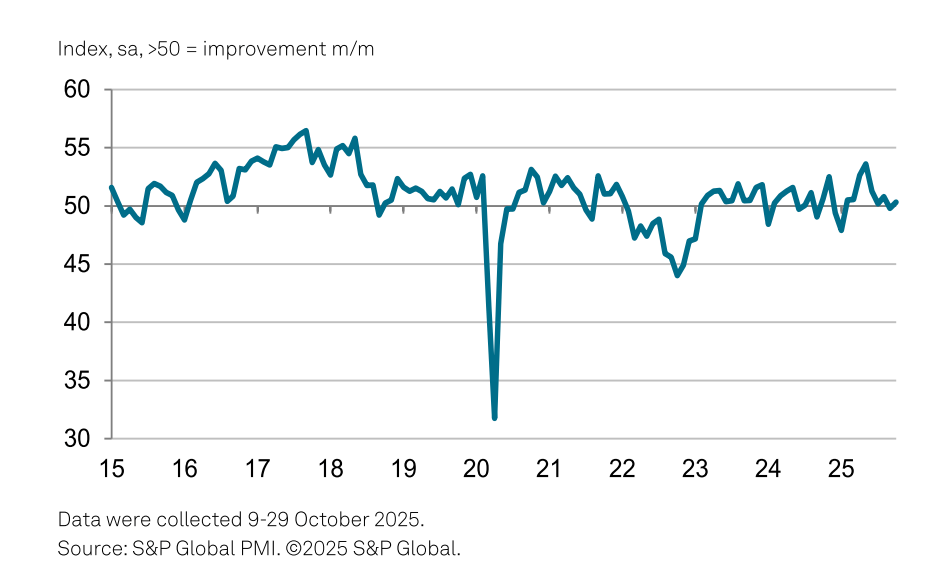
The S&P Global Ghana Purchasing Managers’ Index (PMI) moved back above the 50.0 no-change mark in October, rising to 50.3 from 49.8 in September. This indicated a marginal improvement in business conditions during the month. In line with the headline PMI, business activity returned to positive territory for the first time in four months, albeit slightly.
Factors Driving Growth
Improving customer demand played a significant role in this recovery, as price reductions helped improve the affordability of products. This led to a further increase in new orders and contributed to the renewed expansion in output. New orders expanded for the ninth consecutive month, with the latest increase being faster than in the previous survey period.
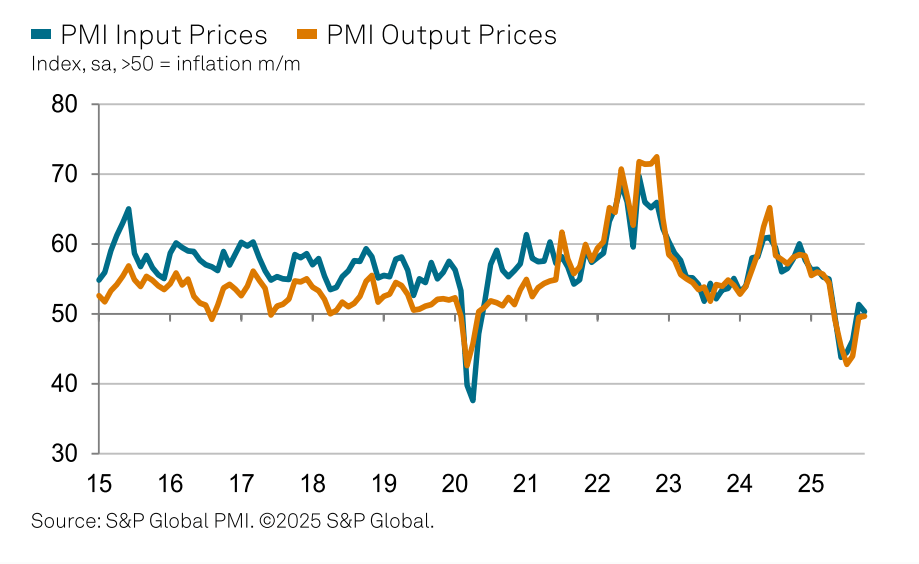
Demand was supported by a further reduction in selling prices by companies in Ghana, marking the sixth consecutive month of price cuts. Firms were able to continue offering discounts to customers amid muted cost inflation. However, the latest fall in charges was only marginal, representing the softest decline in the current sequence of falling output prices.
Cost Inflation and Employment Trends
Both purchase prices and staff costs increased only slightly in October, and to lesser extents than in September. Wage inflation eased to the joint-weakest level since February 2021, matching the rate seen in August 2023. Some respondents noted that exchange rate fluctuations added to their cost burdens during the month, while others reported that an appreciation of the cedi allowed them to reduce their purchase prices, resulting in only a marginal overall increase.
A renewed rise in business activity and success in filling previously vacant positions meant that employment continued to increase, extending the current sequence of job creation to nine months. Although employment rose solidly, it did so at the slowest pace since April.
Inventory and Purchasing Activity
Sustained hiring enabled firms to manage workloads and reduce outstanding business. However, new order growth limited the extent of spare capacity, meaning that backlogs of work decreased at the slowest pace in five months.
Expansion in Purchasing and Inventory
Rising new orders encouraged companies to expand their purchasing activity and inventory holdings in October. Input buying increased for the ninth month in a row, while stocks of purchases have now accumulated in each month for just over a year. Suppliers’ delivery times continued to shorten markedly, as good relationships with vendors ensured timely delivery of purchased inputs.
Business Confidence and Future Outlook
Although business confidence dipped to a six-month low in October, companies remained strongly optimistic about future output growth. Approximately 77% of respondents predicted an increase in activity, linked to expected new order growth and hopes for stability in exchange rates and prices.
Andrew Harker, Economics Director at S&P Global Market Intelligence, commented: “It was good to see business activity in Ghana return to growth in October. Although only marginal, the expansion hopefully sets the tone for further improvements over the rest of 2025 as new orders continue to rise.
“Firms continued to be helped by a benign inflation environment, with selling prices now reduced for six months in a row. Some panellists indicated that they would like a period of exchange rate stability, however, to help keep costs stable and provide more certainty about demand conditions in the months ahead.”