
President William Ruto’s Vision for Digital Empowerment
President William Ruto has issued a directive to all Members of Parliament, urging them to ensure the establishment of at least one Information, Communication and Technology (ICT) hub in every ward within their constituencies. This initiative is part of a broader strategy to expand Kenya’s digital infrastructure, create employment opportunities for young people, and foster innovation and e-commerce.
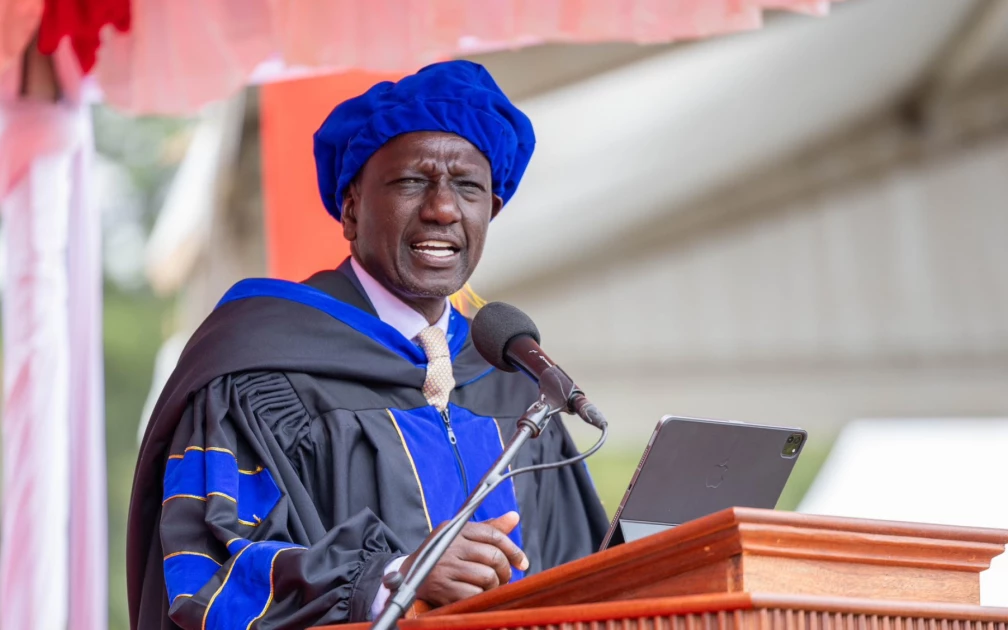
During a speech in Kakamega county on Friday, while launching the Nyota programme, Ruto emphasized that the initiative is designed to make digital opportunities accessible to youth across the country. He highlighted the government’s commitment to investing heavily in technology to bridge the digital divide and empower the younger generation.
“We have asked every Member of Parliament to build at least one ICT hub in every ward because we want to equip those hubs and enable between 200 and 300 young people to access digital jobs, e-commerce and other online opportunities,” the President stated. This approach aims to provide training and support for youth in areas such as digital freelancing, online business, innovation, and software development.
The government is also working on an ambitious project to roll out 100,000 kilometers of fiber optic cable across Kenya. So far, 30,000 kilometers have been completed, which is part of the effort to enhance internet connectivity and reduce the gap between urban and rural areas.
“Technology democratises opportunity,” Ruto said, underlining the importance of digital access in enabling young people to contribute meaningfully to national development. The ICT hubs will be equipped with computers, reliable internet, and workspaces where youth can engage in various digital activities.
Each hub is expected to serve between 200 and 300 young people, offering training and access to platforms that support remote work. Additionally, these hubs will connect young entrepreneurs to global markets and e-commerce platforms, further enhancing their economic prospects.
Ruto’s directive aligns with the Kenya Kwanza administration’s Digital Superhighway and Creative Economy pillar under the Bottom-Up Economic Transformation Agenda (BETA). This initiative seeks to position Kenya as a regional digital powerhouse while addressing unemployment and underemployment among the youth.
The plan will be implemented through partnerships with Members of Parliament, the Ministry of ICT, the Ministry of Youth Affairs, and the private sector. Legislators are expected to allocate resources for the construction of the hubs via the National Government-Constituency Development Fund (NG-CDF).
Several constituencies have already piloted similar projects, with digital innovation centers providing training in coding, graphic design, online writing, and digital marketing. These initiatives have laid the groundwork for the nationwide expansion of ICT hubs.
Ruto reiterated the government’s commitment to investing in programmes that empower young people through technology, emphasizing that digital transformation remains central to Kenya’s economic agenda.
“We want every young person, regardless of where they live, to have equal access to digital opportunities,” he said. “That is how we will grow our economy inclusively.”
The Ministry of ICT and the Digital Economy has previously launched related initiatives such as Ajira Digital and Jitume. These programmes aim to prepare youth for global online job markets. Under the Ajira Digital programme, thousands of young Kenyans have received training to access freelance and remote work opportunities online.
The Jitume programme, launched in partnership with the Ministry of Education and ICT, has provided digital access points and training labs in TVET institutions and universities. These efforts reflect the government’s ongoing commitment to leveraging technology for the benefit of the youth and the broader economy.