
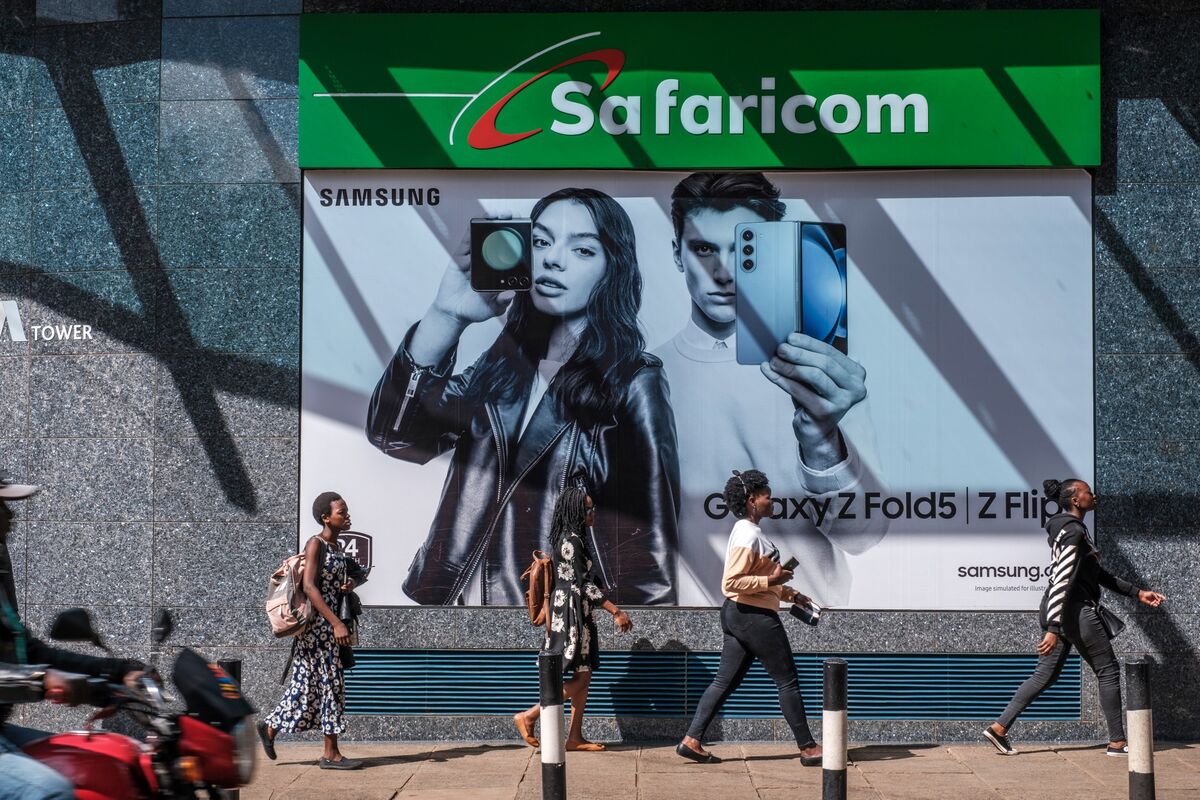
Safaricom Ethiopia Achieves Significant Reduction in Losses
Safaricom Ethiopia has reported a notable decrease in its losses, with a reduction of 52.83 percent during the six months ending September 2025. This marks a positive shift in the subsidiary’s performance, attributed to forex reforms and a more stable security situation in Africa’s second most populous nation.
Safaricom Plc, Kenya’s largest company by market value, launched commercial operations in Ethiopia in October 2022, breaking years of Ethio Telecom’s monopoly. However, Safaricom Telecommunications Ethiopia (STE) Plc, the subsidiary, has faced losses every financial year. Despite this, the losses have significantly declined to Ksh13.3 billion ($103.1 million) in the first half of the 2025/26 financial year, down from Ksh28.2 billion ($218.6 million) in the same period last year.
According to the group’s unaudited financial statements, nearly all key business lines, except for the mobile money service platform M-Pesa, are showing positive growth. Safaricom Group CEO Peter Ndegwa highlighted that the Ethiopian business continues to demonstrate encouraging momentum, driven by improving foreign exchange regime reforms and a stabilizing security situation in the Tigray and Oromia regions.
Revenue Growth and Key Business Lines
The interim financial statements reveal that Safaricom Ethiopia’s voice revenue quadrupled to Ksh1.37 billion ($10.62 million) in the six months to September 30, driven by increased customer activity and sustained growth in the customer base. Messaging revenue also tripled to Ksh74.15 million ($574,806), supported by a sharp rise in active SMS users.
Mobile data revenue doubled to Ksh4.13 billion ($32.01 million), driven by increased customer usage, strong growth in the subscriber base, and enhanced smartphone penetration initiatives. Fixed service and wholesale transit revenue rose 400 percent to Ksh93 million ($720,930.23), supported by increased connections.
However, M-Pesa revenue fell by 45.6 percent to Ksh8.7 million ($67,441.86) during the period under review. Service revenue more than doubled to Ksh6.19 billion ($47.98 million), supported by strong momentum in customer acquisition and increased usage.
Revenue Mix and Customer Growth
The revenue mix at Safaricom Ethiopia continued to evolve, with mobile data contributing 66.7 percent of the total, voice 22.1 percent, and the balance coming from messaging, M-Pesa, fixed service, and incoming revenue. Mobile data now contributes 66.7 percent to service revenue in Ethiopia, underscoring its central role in driving growth and digital inclusion.
The number of 90-day active customers surged by 83.7 percent to reach 11.15 million, while one-month active customers rose by 90 percent to 8.51 million. Mr. Ndegwa expressed encouragement by the accelerated momentum on customer acquisition in Ethiopia, highlighting positive shifts in brand perception and ecosystem collaboration.
Strategic Partnerships and Shareholders
The main shareholders of Safaricom Ethiopia are Safaricom Plc (55.7 percent), Sumitomo Corporation (27.2 percent), and CDC Group, now British International Investment, (10.9 percent). These companies are part of a consortium that also includes Vodacom Group, which holds a 6.2 percent stake, and the International Finance Corporation (IFC).
Safaricom Ethiopia, previously known as Global Partnership for Ethiopia BV (GPE), has expanded its 4G network to cover 55 percent of the country. The group’s overall net income rose by 52.3 percent to Ksh42.8 billion ($331.78 million) from Ksh28.1 billion ($217.82 million), supported by improving performance in both Kenya and Ethiopia.
Economic Reforms and Future Outlook
Safaricom recently revised the break-even point of its Ethiopian operations to 2027, a year later than previously projected owing to the significant depreciation of the Ethiopian currency (the birr) and ongoing foreign exchange reforms, which have raised operational costs.
Ethiopia is undertaking massive economic reforms to liberalise critical markets, including the financial sector, in a bid to attract foreign investment to an economy currently grappling with prolonged foreign currency shortages. Since Prime Minister Abiy Ahmed took over in 2018, the country has been gradually opening up its tightly controlled economy.
In December 2024, the Ethiopian Parliament approved a groundbreaking banking proclamation allowing foreign banks to enter the country’s financial sector. These reforms permit foreign financial institutions to establish subsidiaries, open branches or representative offices, and acquire shares in existing local banks.
Abiy’s administration had been facing mounting pressure from the World Bank and the International Monetary Fund to float the country’s currency and implement critical reforms in the foreign exchange market as a requirement for financial support from the Bretton Woods institutions.
The National Bank of Ethiopia has regularly been reviewing the performance of the foreign exchange market since the transition to a new forex regime on July 29, 2024. It also started implementing an interest rate-based monetary policy regime in July (2024) as part of key financial sector reforms aimed at aligning the sector to international best practices and pushing the country to a pole position to ease the operations of foreign banks.