
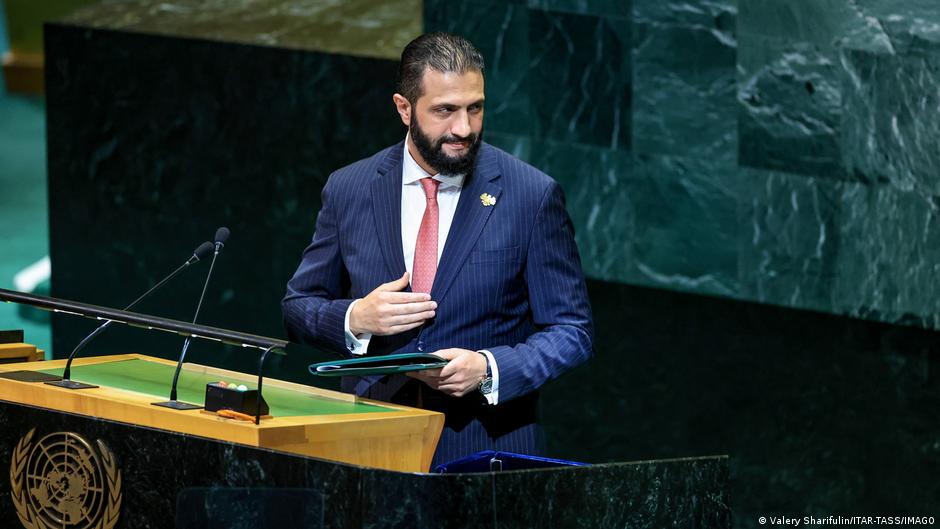
The Lifting of Sanctions and the New Era for Syria
The United Nations Security Council (UNSC) has taken a significant step by lifting sanctions on Syrian President Ahmed al-Sharaa, marking a turning point in the country’s political landscape. This decision comes as al-Sharaa prepares to travel to Washington for talks with US President Donald Trump at the White House.
The resolution, which was passed on Thursday, signals a shift in international perception regarding Syria. According to US Ambassador to the UN Mike Waltz, the move sends a strong political message that recognizes Syria is entering a new era following the ouster of former leader Bashar Assad. The resolution also lifted sanctions on Syrian Interior Minister Anas Khattab.
Out of the 15 UNSC members, 14 voted in favor of the resolution, while China abstained. The US had initially announced this policy change in May and has since been advocating for the easing of sanctions on Syria. Al-Sharaa’s upcoming visit to the White House on Monday will make him the first Syrian president to do so since the country gained independence in 1946.
Why Were They Sanctioned?
The two Syrian leaders were placed on the UNSC’s sanctions list due to their historical ties to the terrorist organization al-Qaeda. Following a 13-year civil war, former President Bashar Assad was ousted in December after forces led by the Islamist group Hayat Tahrir al-Sham (HTS) seized control of Damascus in a swift offensive.
HTS, formerly known as the Nusra Front, has been under UN sanctions since 2014. The group was an official affiliate of al-Qaeda in Syria until it severed ties in 2016.
Diplomatic Reactions
Syrian Foreign Minister Asaad al-Shaibani expressed gratitude to the US and “friendly countries” for their support. In a post on X, he stated, “Once again, and not for the last time, Syrian diplomacy reaffirms its active presence and its ability to achieve progress with steady steps.”
Representatives from the UK, Russia, France, and Pakistan described the move as an important step toward Syria’s economic recovery and support for its political transition. However, Chinese Ambassador Fu Cong criticized the US, claiming it did not fully consider the views of all members and pushed the Council to act despite significant differences among its members.
China has long raised concerns about the Eastern Turkistan Islamic Movement in Syria, which includes Uyghur fighters from China and Central Asia.
The Road Ahead
The lifting of sanctions is expected to have far-reaching implications for Syria. It could pave the way for increased diplomatic engagement and economic assistance. However, the path forward remains complex, given the ongoing challenges in the region and the need for continued international cooperation.
As Syria moves into this new phase, the role of key international players such as the US, Russia, and China will be crucial in shaping the country’s future. The recent developments highlight the evolving dynamics in the Middle East and the importance of multilateral efforts in addressing regional conflicts.