
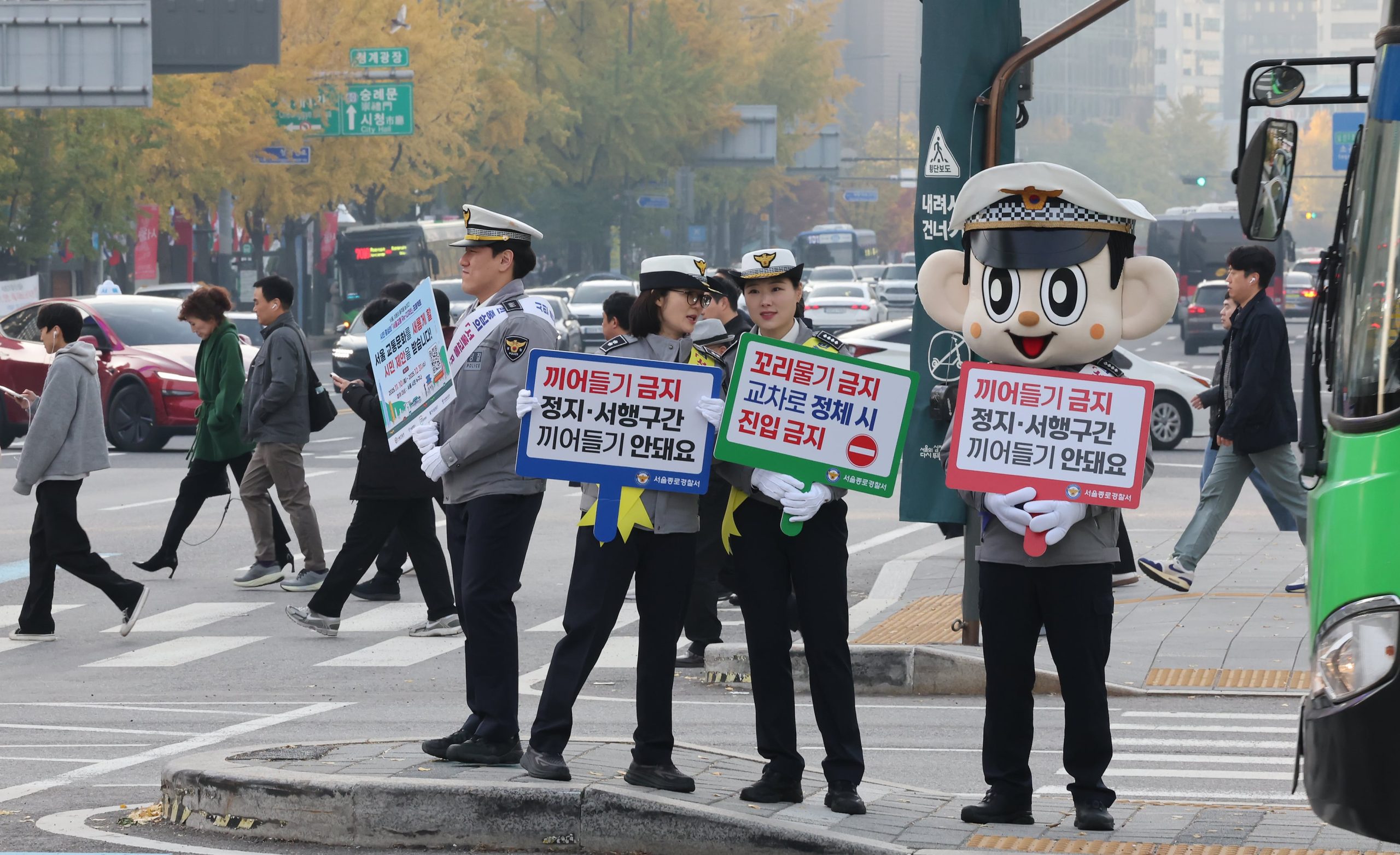
Campaign to Promote Traffic Improvements in Seoul
On the 7th, the Seoul Metropolitan Police Agency launched a campaign at Sejong-daero intersection in Jongno-gu, Seoul, at 8 a.m. The event aimed to promote the ‘Seoul Traffic Redesign’ project, which seeks to address traffic inconveniences faced by citizens. This initiative is part of a broader effort to enhance the city’s traffic environment and improve road safety.
The campaign was designed to educate the public about the ‘Smooth Traffic Enforcement’ initiative, a key component of the traffic redesign project. It also served as an opportunity for citizens to provide suggestions on how to further improve the city’s traffic system. In addition to these efforts, the police have been intensifying enforcement against reckless driving behaviors such as tailgating and cutting in during commuting hours since the 4th. These measures are part of ongoing traffic management strategies, including initiatives to prevent tailgating and ensure safer pedestrian crossings at crosswalks.
Collaboration Between Authorities
Earlier this week, the Seoul Metropolitan Police Agency announced its intention to work with various institutions, including the Seoul Metropolitan Government, the Autonomous Police Committee, and the Korea Road Traffic Authority, to advance the ‘Seoul Traffic Redesign’ project. The goal of this collaboration is to identify and address inconvenient aspects of the city’s traffic environment that directly impact daily life. By fostering a culture of safe driving, the project aims to make Seoul’s roads more accessible and secure for all users.
Park Jeongbo, the head of the Seoul Metropolitan Police Agency, emphasized the importance of a comprehensive approach to improving traffic conditions. He stated, “Through a comprehensive diagnosis covering safety, inconveniences, and citizens’ awareness, we will push for improvements in Seoul’s traffic and reduce the annual number of traffic fatalities in the city, which stands at 150 to 200 people.” His comments highlight the urgency of addressing traffic issues and the commitment of local authorities to making meaningful changes.
Key Objectives of the Traffic Redesign Project
The ‘Seoul Traffic Redesign’ project has several core objectives:
- Enhancing Safety: Implementing stricter enforcement of traffic laws to reduce dangerous driving behaviors and lower the number of accidents.
- Improving Convenience: Addressing traffic bottlenecks and inefficiencies that cause delays and frustration for drivers and pedestrians alike.
- Promoting Awareness: Educating citizens about safe driving practices and encouraging responsible behavior on the roads.
- Collaborative Efforts: Working with government agencies and other stakeholders to develop and implement long-term solutions for traffic management.
These goals reflect a holistic approach to tackling the challenges of urban mobility in one of the world’s most densely populated cities. By combining enforcement, education, and collaboration, the project aims to create a more efficient and safer traffic system for all residents.
Ongoing Measures and Future Plans
In addition to the campaign held on the 7th, the police have already begun implementing new traffic management strategies. These include increased patrols during peak hours, improved signage, and the use of technology to monitor and respond to traffic incidents in real time. The focus on pedestrian safety has also been a priority, with efforts to ensure that crosswalks are well-maintained and visible.
Looking ahead, the police plan to continue engaging with the public through similar campaigns and open forums. These events will provide opportunities for citizens to voice their concerns and contribute ideas for future improvements. By maintaining an open dialogue with the community, the Seoul Metropolitan Police Agency hopes to build trust and foster a shared commitment to safer streets.