
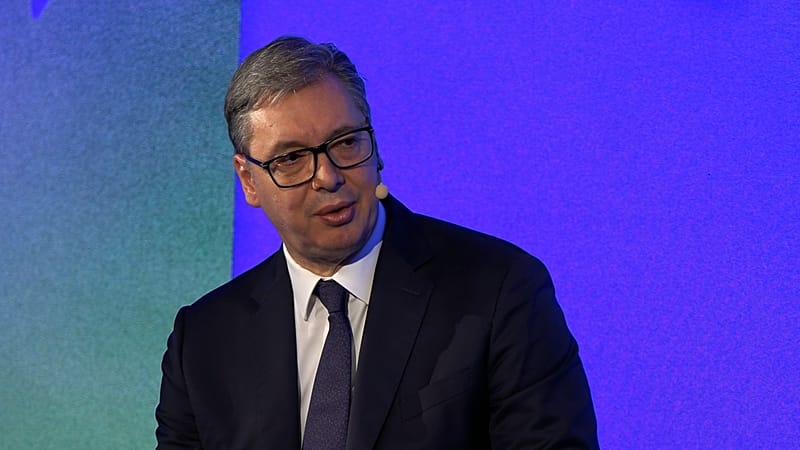
Serbian President Aleksandar Vučić has made a significant statement regarding his country’s potential to supply ammunition to the European Union, even if it eventually reaches Ukrainian forces in their conflict with Russia. Vučić emphasized that Serbia is prepared to sell its military supplies to any buyer, as long as it generates revenue for the nation. However, he acknowledged that there are instances where these munitions might end up in conflict zones.
“We need to sell it to someone, and we’ll sell it to whomever we can in order to earn some money, but we’ll try to take care and not see that ammunition end up in a war zone. But it happens from time to time,” Vučić stated during an interview on Euronews’ flagship show, The Europe Conversation.
He further explained that the necessity of selling ammunition is tied to the livelihoods of workers within the industry. “At the end [of the day], we’ll have to pay our workers,” he added. Vučić questioned the rationality of the situation, asking, “Tell me, is there something that is not rational?”
According to Vučić, Serbia produces up to 160,000 shells of various types and calibers, which he claims is equal to or slightly more than France’s production. This output is carried out by 30,000 workers who rely on the ability to sell this ammunition to others.
Vučić’s remarks suggest a shift in Serbia’s approach to arms sales. In June of last year, he halted all ammunition exports under pressure from Moscow, which was upset about some shells being used in the war against Ukraine. Despite this, Vučić reiterated his support for Ukraine’s territorial integrity but stopped short of endorsing EU sanctions against Russia.
“We are not an EU member state. I cannot do anything on this. I cannot influence it,” he said. Vučić also expressed skepticism about the effectiveness of sanctions, pointing to past international sanctions against Serbia and arguing that they often harm ordinary people rather than achieving their intended goals.
EU Criticism and Protests
The Serbian president addressed criticisms from the European Union regarding Serbia’s progress toward membership. A recent report from the EU Commission highlighted increased societal polarization in Serbia, fueled by mass protests reflecting public dissatisfaction with issues such as corruption. The report also criticized the excessive use of force against protesters and noted a decline in freedom of expression and academic freedom.
Recent protests in Serbia mark the first anniversary of a train station disaster in Novi Sad, which resulted in 16 fatalities. This event sparked a youth-led movement demanding political change. Vučić dismissed the criticism from Brussels and the protests by emphasizing Serbia’s economic achievements.
“I was facing protests since I became the prime minister in 2014,” said Vučić. “But even with that in mind, we have been progressing with good growth rates.” He also mentioned that public debt decreased when he took office due to fiscal discipline. The current public debt-to-GDP ratio stands at 43%, half the EU average.
Vučić pointed to other signs of economic progress, including improved credit ratings. In 2024, Standard & Poor’s upgraded Serbia’s foreign-currency bonds from BB+ to BBB- with a stable outlook, marking the first time the country received an investment-grade rating. This development was partly attributed to Serbia’s “Expo 2027” plan, an initiative aimed at attracting foreign investment through infrastructure and development projects.
“We have already received confirmation that 127 countries might participate in that expo,” said Vučić, highlighting the international interest in Serbia’s future plans.