
The Legal Dispute Over the Arrest Warrant Execution
During a trial held on the 7th at the Seoul Central District Court’s Criminal Division 35, former President Yoon Suk-yeol challenged the legality of the Corruption Investigation Office for High-ranking Officials’ execution of an arrest warrant. The case centered around the “obstruction of arrest” charges, with Yoon questioning whether the presidential residence was a regular road or private property.
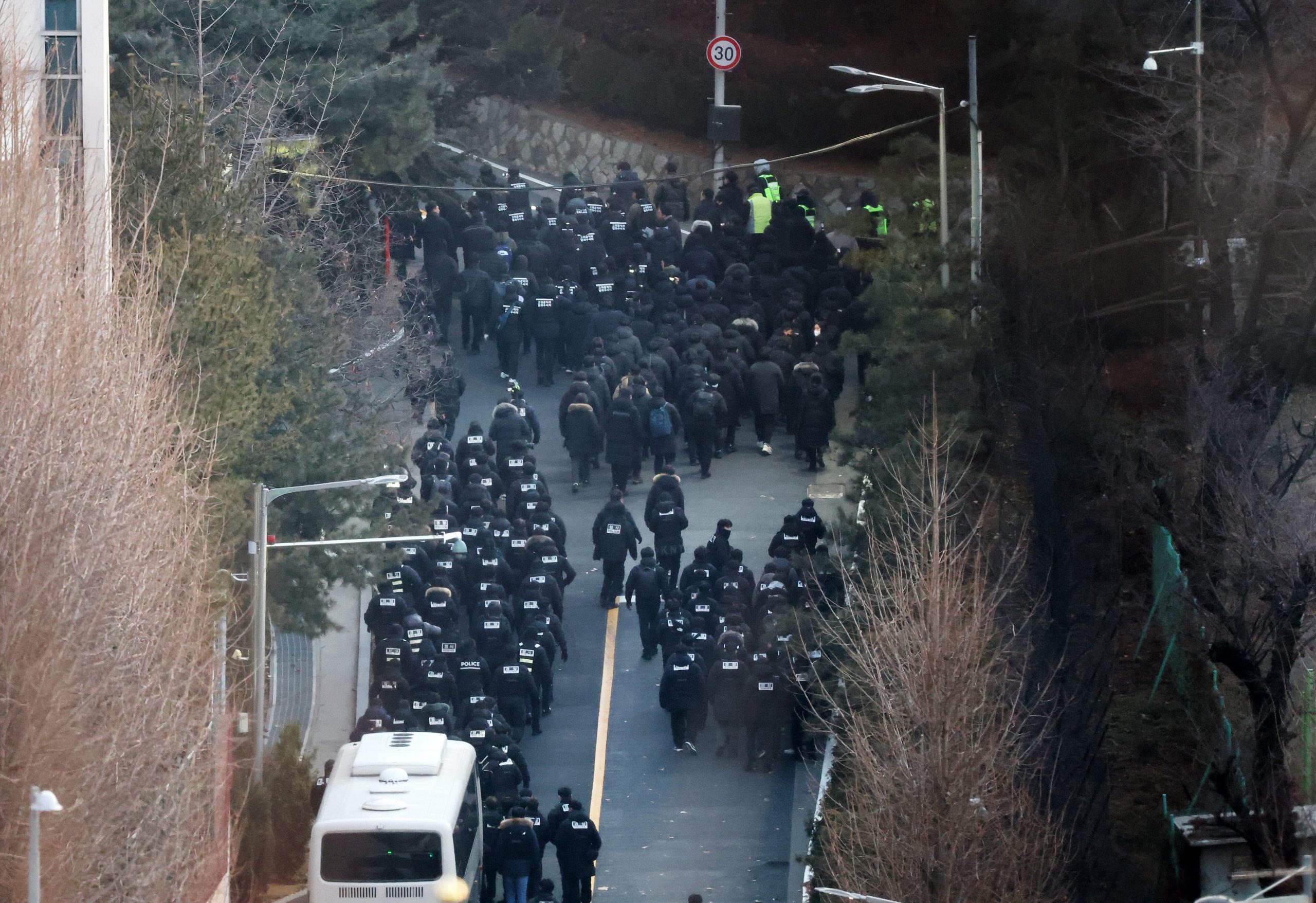
Yoon cross-examined Park Sang-hyun, deputy chief prosecutor of the Corruption Investigation Office for High-ranking Officials’ Investigation Division 4. Park had been sent to the presidential residence in Hannam-dong, Yongsan-gu, on January 3 of last year to execute the arrest warrant against Yoon. According to Park, the office presented the warrant to Lee Kwang-woo, head of the Presidential Security Service, at the first blockade line in front of the official residence complex gate. When Lee stated, “We will not cooperate,” the office began preparations to forcibly enter beyond the guard post to proceed with the warrant.
Park testified that tens to hundreds of individuals, presumed to be military personnel, formed a human chain blockade, creating a situation where it was impossible to pass without using significant physical force. However, someone inside later said, “Let’s cooperate,” and at some point, they could break through the blockade. Park remembered advancing through the gap that opened.
In response to a question from the special counsel’s side about whether the Corruption Investigation Office for High-ranking Officials had presented the warrant to the security service and requested entry as part of executing the search warrant, Park confirmed, “Yes.” Regarding why they attempted to enter the official residence complex despite the security service blocking their personnel, Park stated, “Because a search was necessary to execute the arrest warrant.”
Legal Arguments and Warrant Issues
Yoon’s legal team argued that a separate warrant was required for the access route to the residence (Hannam-daero 128-24), as it falls under a military facility protection zone not specified in the search warrant. Yoon’s attorney noted that cooperation requests were sent twice, on December 31 of last year and January 1 of this year. The second request included entry permits for 11 parcels of land not mentioned in the first, which were for accessing the security service’s premises beyond the 10 parcels listed in the search warrant. This implied the Corruption Investigation Office for High-ranking Officials knew entering without permits would be illegal.
Yoon directly questioned the witness, stating, “This is not a regular road or private property but a military facility protection zone. It is clearly a search of a place not specified in the warrant.” He added, “After obtaining the warrant, the Corruption Investigation Office for High-ranking Officials realized their mistake and requested entry permits for 11 parcels. Is this how investigations are conducted?” Park responded, “You made the same argument during the arrest review hearing, but it was dismissed.”
Questions About Warrant Jurisdiction
Yoon also criticized the Corruption Investigation Office for High-ranking Officials for requesting the warrant from the Seoul Western District Court instead of the Seoul Central District Court. He asked, “All insurrection-related cases were handled by the Seoul Central District Court. Why request a warrant for the leader of the insurrection from the Western District Court?” He further inquired, “Was there no internal debate within the Corruption Investigation Office for High-ranking Officials when applying for the warrant at the Western District Court?”
Park countered, “There were precedents where the Corruption Investigation Office for High-ranking Officials obtained warrants from other courts, and there was a recognition that the request was legally valid under the Corruption Investigation Office for High-ranking Officials Act.”
Key Points of Contention
- Military Facility Protection Zone: The access route to the presidential residence is classified as a military facility protection zone, raising questions about the legality of the search.
- Warrant Execution: The Corruption Investigation Office for High-ranking Officials executed the arrest warrant without proper permits for the access route, leading to legal disputes.
- Jurisdictional Concerns: The choice of court for the warrant application raised concerns about the legitimacy of the process.
- Cooperation Requests: Multiple requests for cooperation were made, with additional entry permits sought after the initial warrant was issued.
- Legal Precedents: The office cited past practices to justify its actions, emphasizing the perceived validity of the warrant request.
These points highlight the complexity of the legal battle surrounding the execution of the arrest warrant and the broader implications for future investigations involving high-ranking officials.