
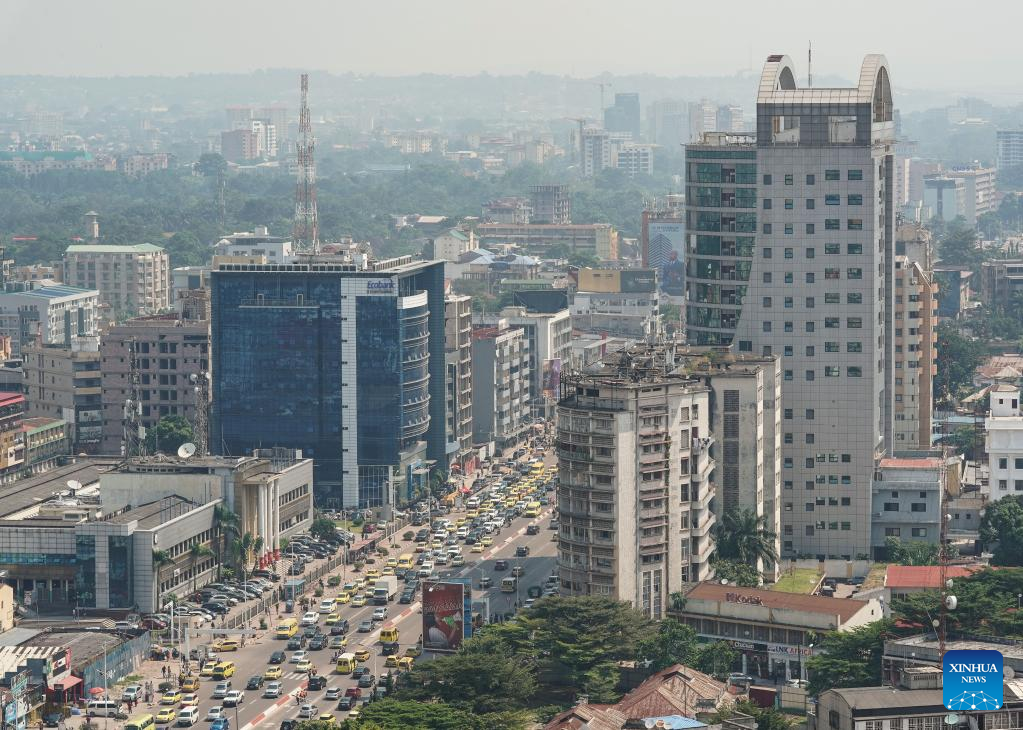
Ongoing Crisis in Eastern Democratic Republic of the Congo
The crisis in eastern Democratic Republic of the Congo (DRC) continues to escalate, with ongoing fighting displacing tens of thousands of people and creating severe food shortages, according to the UN World Food Programme (WFP). The situation has become increasingly dire as aid agencies struggle to reach affected areas.
UN agencies are facing significant challenges in accessing provinces that have been overrun by M23 rebel fighters, who are backed by Rwanda. However, the WFP also highlighted that funding shortfalls for humanitarian efforts have worsened the situation. While Kigali has consistently denied providing military support to the group, the WFP is urging for the establishment of a humanitarian air corridor to facilitate aid delivery.
“”
Cynthia Jones, WFP’s Country Director for DRC, emphasized the urgency of re-establishing air access. She stated that two airports in M23-controlled areas have been closed since the end of January, making it difficult to provide essential aid. “We’re urgently calling for a humanitarian air corridor to be established,” she said.
Escalating Food Insecurity
A recent report by the Integrated Food Security Phase Classification (IPC) platform, supported by the UN, warned that nearly 25 million people in DRC are experiencing high levels of food insecurity, classified as IPC3 on a scale of one to five, with five indicating famine. This includes an alarming three million individuals facing “emergency” levels of hunger—IPC4—which has nearly doubled since last year.
Jones explained the impact on families: “This means they’re skipping their meals, depleting all of their household assets. They’re selling off their animals.” According to the WFP, people are already dying of hunger in parts of eastern DRC.
Continuing Conflict and Displacement
Fighting between M23 militiamen and DRC government forces continues, leading to new displacement and forcing people to flee their homes repeatedly. As a result, about 5.2 million people have been displaced, including 1.6 million displaced this year alone. This makes DRC one of the world’s largest displacement crises.
Despite the worsening conditions, funding for humanitarian work is running out. The WFP has had to reduce the number of people it assists, from around one million at the start of the year to 600,000 now. “We will only be able to support a fraction of those in need,” Jones said, appealing for $350 million to support emergency food and nutrition assistance over the next six months.
Without this funding, the WFP warned of a “total pipeline break” in assistance by March 2026, which would mean a complete halt of all emergency food assistance in the eastern provinces.
Internal Challenges and Impact on Aid
The funding shortfall has also affected the WFP internally. “We’re starting to close downtown offices, we’re reducing our footprint, the number of staff, and juggling how to maintain operational capacity to deliver in a very complex environment,” Jones explained.
Aid remains critical for displaced populations in regions such as North Kivu, South Kivu, Ituri, and Tanganyika, where vital services have closed due to ongoing insecurity. “The banks are closed, there’s no money available, and this has just had a major impact on the population and on the humanitarian response,” Jones said. “It has devastated livelihoods and really put the food security of affected people in dire circumstances.”
Long-Term Consequences
As the conflict persists, families are seeking shelter in urban centers like Ituri, where host communities are struggling to cope. Additionally, millions of subsistence farmers have missed the planting season this year, either because they were forced from their homes or too fearful to access their land.
“The women, children, men, they’ve just been suffering devastating sequences of the violence, perpetrated by non-state armed groups and fleeing from conflict. They’re tired, exhausted, and need peace,” Jones insisted.