
France’s Strategic Role in the Adoption of UN Security Council Resolution 2797
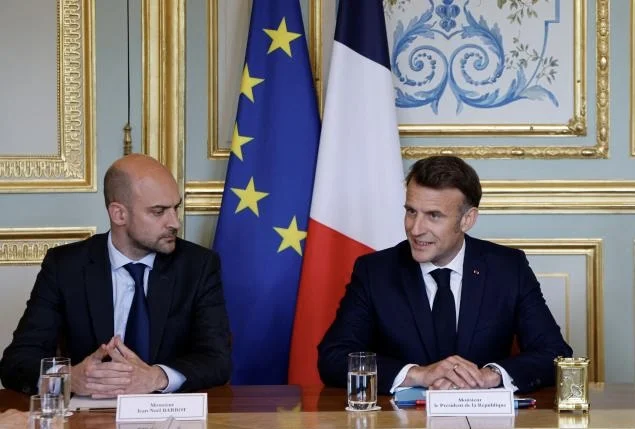
France has played a central role in the recent adoption of UN Security Council Resolution 2797, which addresses the ongoing situation in Western Sahara. This resolution, passed on October 31, marks a significant step in international efforts to resolve the long-standing conflict over the territory. Behind the scenes, French diplomacy worked tirelessly to align the positions of key European Union members on the Security Council—Greece, Slovenia, and Denmark—with the stance supported by both Paris and Washington.
French officials faced considerable challenges in securing the support of these three EU countries, all of which have strong commitments to the principle of self-determination. According to Africa Intelligence, Paris had to fight to the end to ensure that its European partners backed the resolution. French ambassadors collected amendment requests from Denmark, Greece, and Slovenia, reflecting their concerns about the initial U.S.-proposed text.
One of the main hurdles came from Slovenia, which initially hesitated to endorse the resolution. To address these concerns, President Emmanuel Macron personally intervened during his official visit to Ljubljana on October 20 and 21. The trip was part of the 12th Summit of Southern European Union countries, but Macron extended his stay for a bilateral visit with Slovenian leaders. During discussions with President Nataša Pirc Musar and Prime Minister Robert Golob, the two leaders reaffirmed their shared vision on major European and international issues, as reported by the Élysée Palace.
It is also worth noting that Algerian President Abdelmadjid Tebboune made a state visit to Slovenia last May, highlighting the complex regional dynamics at play in the Western Sahara issue.
Moving Forward: Morocco’s Autonomy Plan and International Negotiations
With the adoption of Resolution 2797, France is now collaborating with Morocco to draft a new document that incorporates the Moroccan autonomy plan. This proposal will be submitted to Staffan de Mistura, the personal envoy of the UN Secretary-General for Western Sahara. De Mistura has indicated that he is waiting for the updated version of the Moroccan proposal to restart the negotiation process involving the four parties: Morocco, Algeria, the Polisario Front, and Mauritania.
The Moroccan autonomy plan represents a key component of the country’s strategy for resolving the Western Sahara dispute. King Mohammed VI emphasized this during his speech on October 31, stating that Morocco will proceed with the updating and detailed formulation of the Autonomy Proposal. The goal is to submit the revised plan to the United Nations for further consideration.
This development underscores the importance of diplomatic engagement and multilateral cooperation in addressing one of the most enduring conflicts in the region. As the international community continues to monitor the situation, the role of France remains critical in facilitating dialogue and ensuring that all parties remain committed to a peaceful and lasting solution.
Key Players and Regional Dynamics
The involvement of multiple stakeholders, including France, the United States, Morocco, Algeria, and the Polisario Front, highlights the complexity of the Western Sahara issue. Each party brings its own interests and perspectives to the table, making the path to resolution both challenging and delicate.
France’s ability to navigate these complexities and secure the necessary support within the UN Security Council demonstrates its strategic influence in the region. By working closely with both European allies and key players like Morocco, France continues to shape the narrative around Western Sahara and promote a framework for sustainable peace.
As negotiations continue, the focus will remain on finding a solution that respects the rights of all parties involved while moving forward toward a stable and peaceful future for the region.