
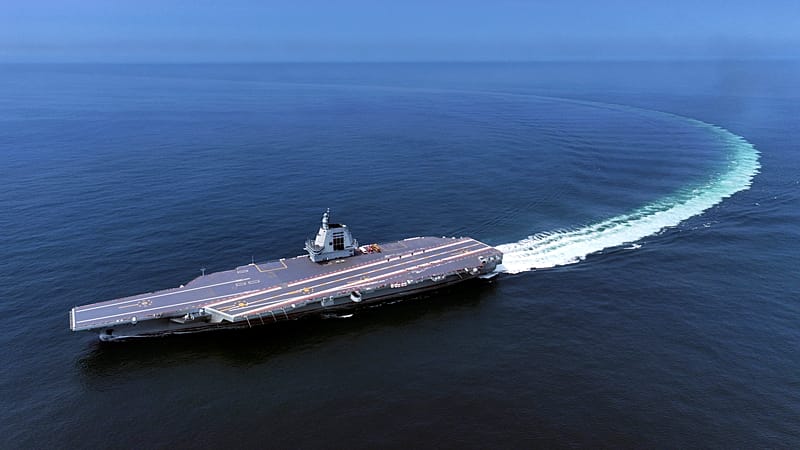
China has officially commissioned the Fujian, marking a significant advancement in naval technology. This aircraft carrier is the first of its kind to be powered conventionally and equipped with an electromagnetic catapult system. The introduction of this system represents a major leap forward in carrier operations, offering enhanced efficiency and performance.
The Fujian, weighing 80,000 tons, is designed to launch a variety of aircraft. Among the planes it can deploy are the J-15T, a multirole fighter jet, the J-35 stealth fighter, and the KJ-600 airborne early warning aircraft. These capabilities make the Fujian a versatile and powerful addition to China’s naval fleet.
The development of the Fujian was entirely carried out through domestic research and innovation. This achievement highlights the growing technological prowess of China’s defense industry. The electromagnetic catapult system used on the Fujian provides faster launch readiness and allows for extended combat range, making the carrier more effective in various operational scenarios.
Experts have praised the commissioning of the Fujian as a milestone in the evolution of aircraft carrier technology. Professor Lu Junyong from the Naval University of Engineering emphasized the significance of this development, stating, “It’s an unprecedented milestone in the history of carrier catapult technology.”
Key Features of the Fujian
-
Electromagnetic Catapult System: Unlike traditional steam-powered catapults, the electromagnetic system offers greater precision and efficiency. It allows for quicker turnaround times between launches, increasing the number of sorties that can be conducted in a given period.
-
Versatile Aircraft Deployment: The Fujian is capable of launching multiple types of aircraft, including both conventional and stealth fighters. This versatility enhances the carrier’s ability to conduct a wide range of missions, from air superiority to reconnaissance.
-
Extended Combat Range: The advanced systems on board the Fujian enable longer operational ranges, allowing the carrier to project power over greater distances. This capability is crucial for maintaining a strategic presence in key maritime regions.
-
Domestic Innovation: The entire development process of the Fujian was managed internally by Chinese engineers and scientists. This demonstrates the country’s commitment to self-reliance in critical defense technologies.
Implications for Naval Power
The commissioning of the Fujian signals China’s growing influence in naval warfare. With its advanced features and capabilities, the carrier enhances the country’s ability to conduct long-range operations and maintain a strong presence in international waters. It also serves as a symbol of China’s technological progress and military ambition.
The Fujian is expected to play a central role in China’s future naval strategy. Its deployment could shift the balance of power in the Indo-Pacific region, prompting other nations to reassess their own naval capabilities and strategies.
As the world watches the developments in China’s naval forces, the Fujian stands as a testament to the country’s determination to become a leading maritime power. The successful integration of cutting-edge technology into its design underscores the importance of innovation in modern naval warfare.
With continued investment in research and development, China is well-positioned to further enhance its naval capabilities in the years to come. The Fujian is not just a new carrier—it is a new chapter in the story of China’s rise as a global naval force.