
Political Realignments and Internal Struggles in the Opposition
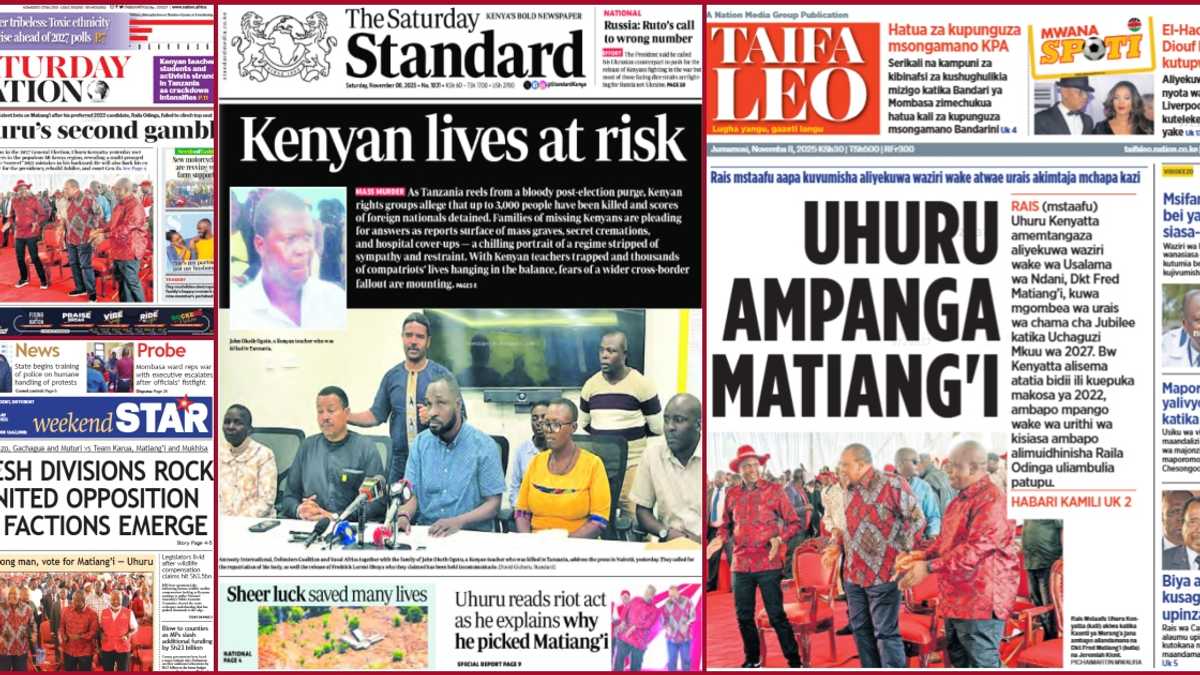
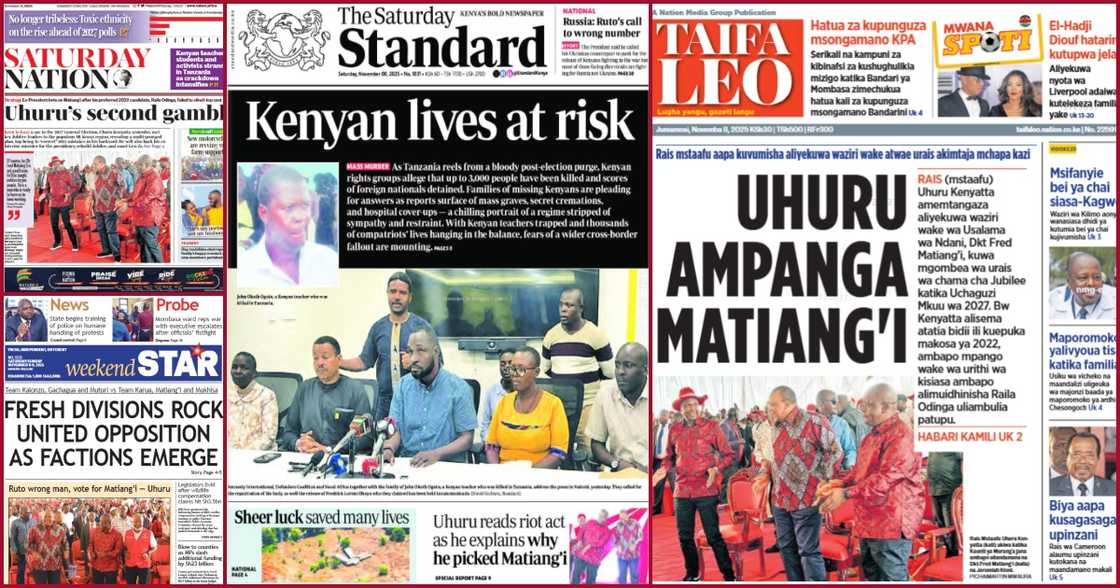
On Saturday, November 8, local newspapers highlighted significant political developments within the country, particularly focusing on the challenges faced by the united opposition. The opposition, which aims to challenge President William Ruto in the 2027 election, is experiencing internal conflicts despite efforts to maintain a unified front.
Struggles Within the United Opposition
According to reports, the united opposition is encountering difficulties in maintaining internal cohesion. While some leaders have publicly expressed their commitment to working together, behind-the-scenes divisions are becoming more apparent. For instance, leaders from the Wiper Party, such as Kalonzo Musyoka, and the Democratic Congress Party, including Rigathi Gachagua, have reaffirmed their support for the coalition. However, tensions are rising among different factions.
Pauline Njoroge, the deputy organizing secretary of Jubilee, acknowledged the growing fractures within the opposition. She attributed these issues to external interference and criticized members for engaging in mutual attacks rather than focusing on the government. This internal discord is creating obstacles for the opposition’s effectiveness.
Emerging Factions Within the Opposition
One of the most visible splits is between former Deputy President Fred Matiang’i and former Interior Cabinet Secretary. Both figures are vying for influence within the opposition. Sources indicate that two distinct camps have emerged. One group is led by Kalonzo Musyoka, Rigathi Gachagua, and Justin Muturi, while the other aligns with Martha Karua, Fred Matiang’i, and Mukhisa Kituyi.
Efforts to establish a joint secretariat have been hindered by mistrust among leaders. Some have chosen not to attend joint events, further complicating the coalition’s efforts. Reports suggest that Matiang’i, who was endorsed by the Jubilee Party as its presidential candidate, has been excluded from several meetings. This exclusion highlights the deepening divisions within the opposition.
Campaign Approaches and Public Statements
Rigathi Gachagua has advocated for a field-driven campaign approach, emphasizing the importance of grassroots engagement. He has publicly supported Kalonzo Musyoka’s bid for leadership. Gachagua argued that the presidency cannot be won through “boardroom deals,” indicating a preference for direct interaction with voters.
Political analysts have noted that the current coalition faces similar challenges to those experienced by previous alliances, such as NASA and Azimio. These past collaborations often struggled with internal disagreements and lack of unity, leading to their eventual dissolution.
Key Challenges Ahead
The opposition’s ability to overcome these internal struggles will be crucial in determining its success in the upcoming election. The presence of multiple factions and the lack of trust among leaders pose significant hurdles. Additionally, the influence of external factors, such as state interference, further complicates the situation.
As the opposition continues to navigate these challenges, the focus remains on building a cohesive and effective strategy. The outcome of these efforts will play a vital role in shaping the political landscape of the country in the coming years.