
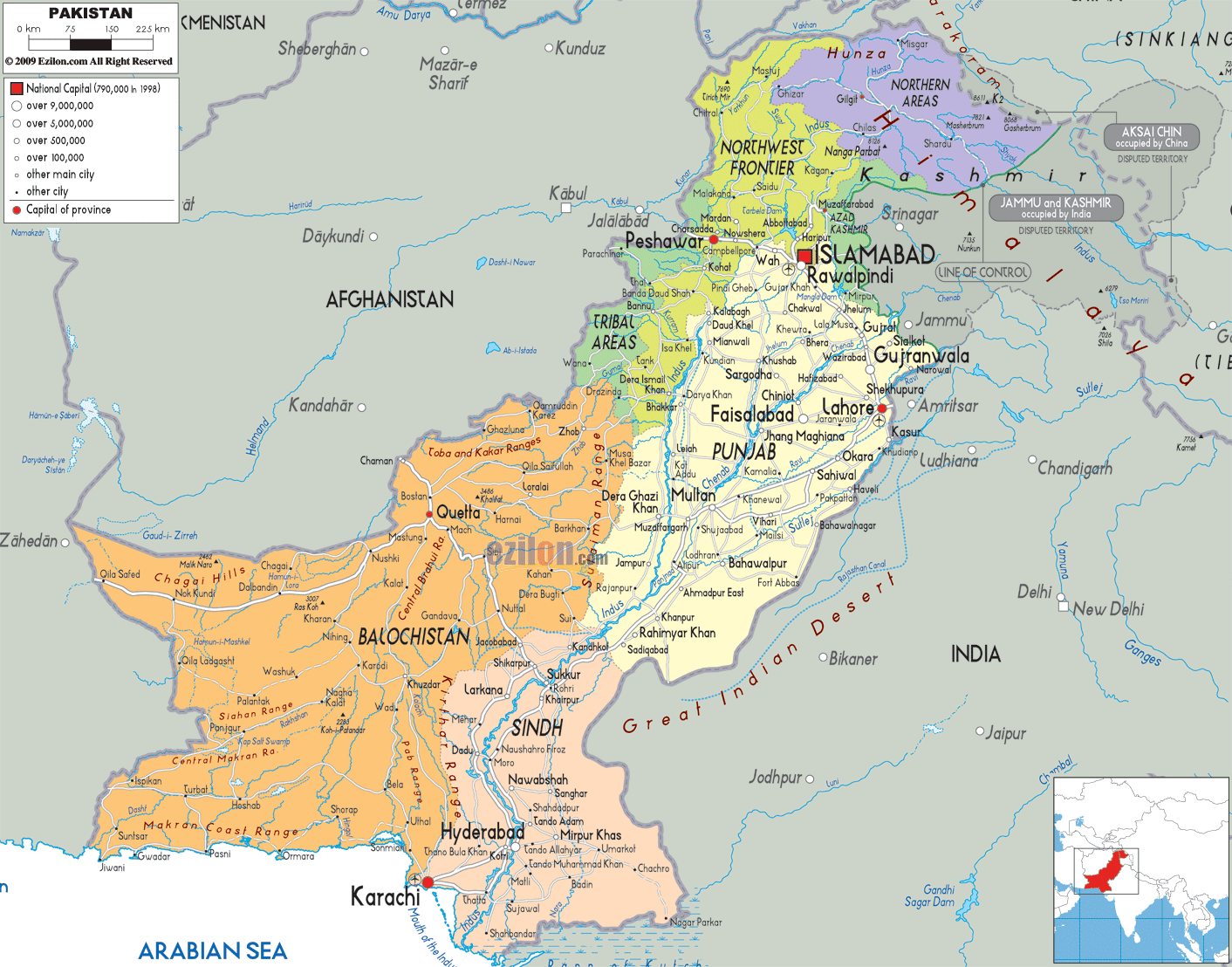
Pakistan Condemns India’s Suspension of Indus Waters Treaty
Pakistan has strongly condemned India’s unilateral and illegal suspension of the Indus Waters Treaty (IWT), urging the international community to prevent the ‘weaponisation’ of shared natural resources. The move by India has raised concerns over the stability of water-sharing agreements between the two nations.
India suspended the decades-old water-sharing accord in April, following the killing of 26 civilians in Indian Illegally Occupied Jammu and Kashmir (IIOJK). The country blamed Pakistan without providing evidence, a claim that Islamabad has firmly rejected. This decision has led to increased tensions between the two neighboring countries, with Pakistan viewing it as an act of aggression.
At a UN Security Council meeting, Pakistan’s Permanent Representative to the UN, Ambassador Asim Iftikhar Ahmad, described India’s move as a ‘textbook example’ of the deliberate weaponisation of shared natural resources. He warned that such actions undermine trust in international water law and set dangerous precedents for ‘resource-based coercion’ elsewhere.
‘For over six decades, the Treaty has served as a model of cooperation, ensuring equitable and predictable sharing of Indus Basin waters between Pakistan and India-even during times of war,’ the envoy noted, stressing that India’s actions threaten ecosystems and the livelihoods of millions dependent on the Indus River.
Ambassador Ahmad emphasized that India’s unilateral step should alarm the UN and the global community. He reiterated that the IWT, brokered by the World Bank, is a binding international agreement that allows no provision for suspension. The treaty has been instrumental in maintaining peace and cooperation between the two nations, even during periods of conflict.
Islamabad has repeatedly maintained that any attempt by India to block Pakistan’s water share would amount to ‘an act of war.’ The country has consistently stressed the importance of upholding the treaty and respecting the rights of both nations to the shared water resources.
The envoy also referenced the Permanent Court of Arbitration’s June 27 ruling, which upheld Pakistan’s position and confirmed that India could not unilaterally suspend the accord. He said Pakistan expected India to return to compliance with the Treaty in line with the court’s decision.
Concluding his remarks, the envoy urged for swift global action to resolve ongoing conflicts and integrate environmental concerns into UN peacekeeping and political missions to mitigate climate-related security risks.
Key Points from the Statement
- Pakistan strongly condemns India’s unilateral suspension of the Indus Waters Treaty.
- The move is seen as an attempt to weaponise shared natural resources.
- India blamed Pakistan for the killing of 26 civilians in IIOJK without evidence.
- Pakistan has rejected India’s claims and called the suspension an act of war.
- The IWT, brokered by the World Bank, is a binding international agreement.
- The Permanent Court of Arbitration ruled in favor of Pakistan, confirming that India cannot unilaterally suspend the treaty.
- Ambassador Ahmad urged the international community to take swift action to address conflicts and integrate environmental concerns into peacekeeping efforts.