
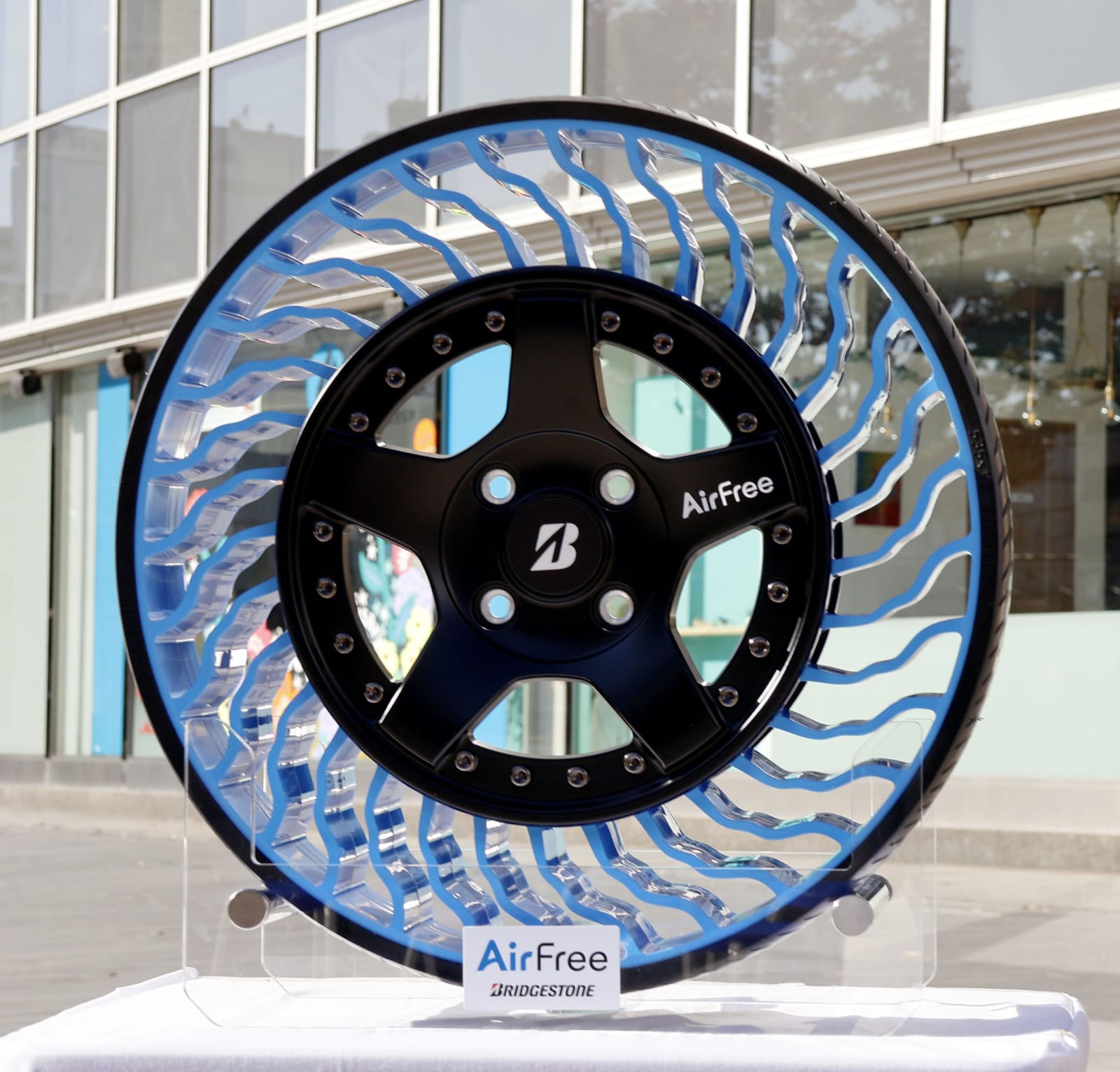
Introduction to the Airless Tire Innovation
In a significant step towards sustainable and efficient transportation, Bridgestone Corp. has initiated a trial of its new puncture-proof airless tires in Toyama, Japan. This innovative technology, known as AirFree tires, was officially introduced during a ceremony that marked their first use on a local electric bus. The event took place in the central Japanese city of Toyama, highlighting the growing interest in eco-friendly solutions within the automotive industry.
The Trial Begins
The trial began on Saturday with the launch of a bus equipped with AirFree tires, which made its first public journey carrying passengers. This milestone represents a major advancement in tire technology, as these tires are designed to eliminate the need for traditional air pressure, thereby reducing the risk of punctures and maintenance requirements.
The bus, named Boule BaaS, operates at a speed of less than 20 kilometers per hour and is capable of transporting nine passengers. It departed from Toyama Station on Saturday morning, accompanied by local residents and officials from both the city and Bridgestone. This event not only showcased the potential of the new tire technology but also emphasized the collaborative efforts between the company and local authorities.
Features of AirFree Tires
One of the standout features of the AirFree tires is their use of recyclable resin spokes. This design not only contributes to environmental sustainability but also enhances the efficiency of the bus. The blue spokes are specifically engineered for high visibility, even in low-light conditions, which the company believes will significantly improve safety compared to conventional tires.
Yoshinori Iwabuchi, head of Bridgestone’s AirFree development division, highlighted the importance of this trial. He stated that the company aims to collect valuable data from the trial, which will be used to refine the technology and prepare for a broader rollout in the next year. This commitment to continuous improvement underscores Bridgestone’s dedication to innovation in the tire industry.
Potential Impact on the Industry
The introduction of airless tires could have far-reaching implications for the transportation sector. By eliminating the need for regular tire maintenance and reducing the likelihood of flats, these tires can lead to cost savings for both manufacturers and consumers. Additionally, the use of recyclable materials aligns with global efforts to reduce waste and promote sustainability.
As cities around the world seek to implement greener transportation solutions, the success of this trial in Toyama could serve as a model for other regions looking to adopt similar technologies. The potential benefits extend beyond just the performance of the tires themselves; they represent a shift towards more environmentally conscious practices in the automotive industry.
Conclusion
The trial of Bridgestone’s AirFree tires marks an exciting development in the quest for safer, more efficient, and sustainable transportation. With the support of local authorities and the positive response from the community, this initiative has the potential to set a new standard for tire technology. As Bridgestone continues to gather data and refine its approach, the future of airless tires looks promising, paving the way for a cleaner and more efficient mode of transport.