
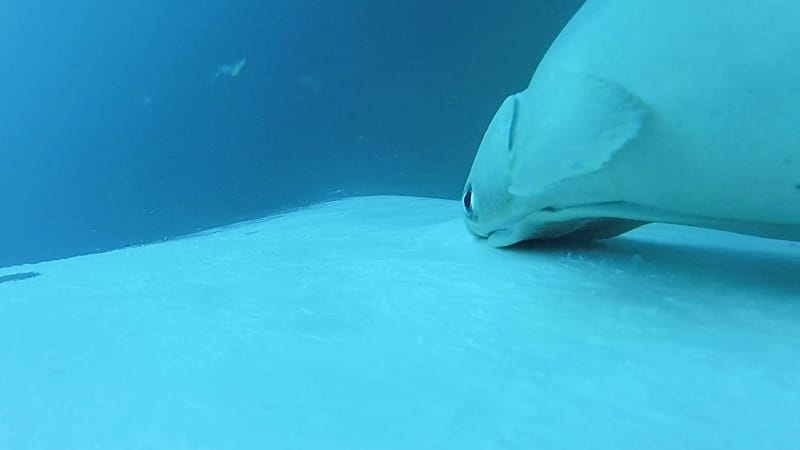
Off the east coast of Australia, scientists have captured stunning footage that showcases the unique relationship between remora fish and humpback whales. These small but fascinating creatures, often referred to as “suckerfish,” are known for their ability to attach themselves to larger marine animals. In this case, they are seen clinging to humpback whales as the massive mammals breach and dive through the ocean.
The remoras use specialized suction plates on their heads to latch onto these 40-ton giants. This allows them to travel vast distances across the ocean without expending much energy. In addition to the free ride, they also feed on dead skin and sea lice that they find on the whales’ bodies. This symbiotic relationship benefits both species — the whales get a natural cleaning service, while the remoras gain protection and food.
The videos were filmed by Dr. Olaf Meynecke from Griffith University, and they offer a rare glimpse into this unusual partnership. The footage shows up to 50 remoras swimming in perfect synchronization with the whales. It is clear that the fish have adapted well to their environment, using the whales as both transportation and a source of nourishment.
One of the most intriguing aspects of the footage is the behavior of the humpback whales. They are seen breaching the surface of the water, which could be an attempt to shake off the remoras. However, the fish seem undeterred, continuing to cling to the whales even during these dramatic movements.
This kind of footage not only highlights the complexity of marine ecosystems but also provides valuable insights into how different species interact. Remoras are not the only fish that form such relationships; many other species, including sharks and turtles, also host smaller organisms that benefit from their presence.
There are several reasons why remoras choose to attach themselves to whales. One theory is that it helps them avoid predators. By staying close to a large animal like a humpback whale, they reduce the risk of being targeted by other predators. Additionally, the movement of the whale allows the remoras to cover great distances without having to swim themselves.
Another interesting aspect of this relationship is the way the remoras move. They are able to adjust their position on the whale’s body, often moving from one side to the other depending on where the whale is heading. This suggests a level of coordination and awareness that is not fully understood.
Scientists continue to study these interactions to better understand the dynamics of marine life. The footage captured by Dr. Meynecke adds to a growing body of research that explores how different species coexist and depend on one another for survival.
As technology improves, more opportunities arise to observe and document these kinds of interactions. High-quality video recordings like those shown here provide a window into the hidden world of the ocean, revealing behaviors that would otherwise go unnoticed.
In conclusion, the footage of remoras clinging to humpback whales offers a fascinating look at one of nature’s most unusual partnerships. It serves as a reminder of the intricate web of life that exists beneath the waves, where even the smallest creatures play a vital role in the balance of the ecosystem.