
Rising Credit Transaction Loan Balances Amid Market Volatility
The domestic stock market has experienced significant volatility in recent days, driven by growing concerns over the potential formation of an “AI bubble.” Despite these worries, the credit transaction loan balance—a key indicator of debt-fueled investment—has continued to climb, reaching record highs. This trend highlights the increasing reliance on borrowed funds for stock market participation.
According to the Korea Financial Investment Association, as of the 6th, which marks the latest available data, the credit transaction loan balance reached 25.8782 trillion won. This figure surpassed the previous record for the second consecutive day, signaling a persistent upward trajectory. The breakdown of this balance shows that it stood at 16.0934 trillion won on the KOSPI and 9.7848 trillion won on the KOSDAQ.
The credit transaction loan balance represents the total amount that investors have borrowed from securities firms for stock investments but have not yet repaid. Even short-term borrowing incurs interest rates starting at mid-5% annually, with rates rising to as high as 9% for longer periods. The willingness of investors to bear such high costs reflects their confidence in future stock price increases. As a result, this metric serves as a crucial gauge for assessing levels of debt-fueled investment in the market.
Since the beginning of this month, the credit transaction loan balance has shown a consistent upward trend. Notably, on the 5th, when the KOSPI fell nearly 3% from the previous day due to a sharp decline in the New York stock market amid AI-related concerns, the balance hit 25.8225 trillion won. This figure exceeded the previous record of 25.6540 trillion won, which was set on September 13, 2021.
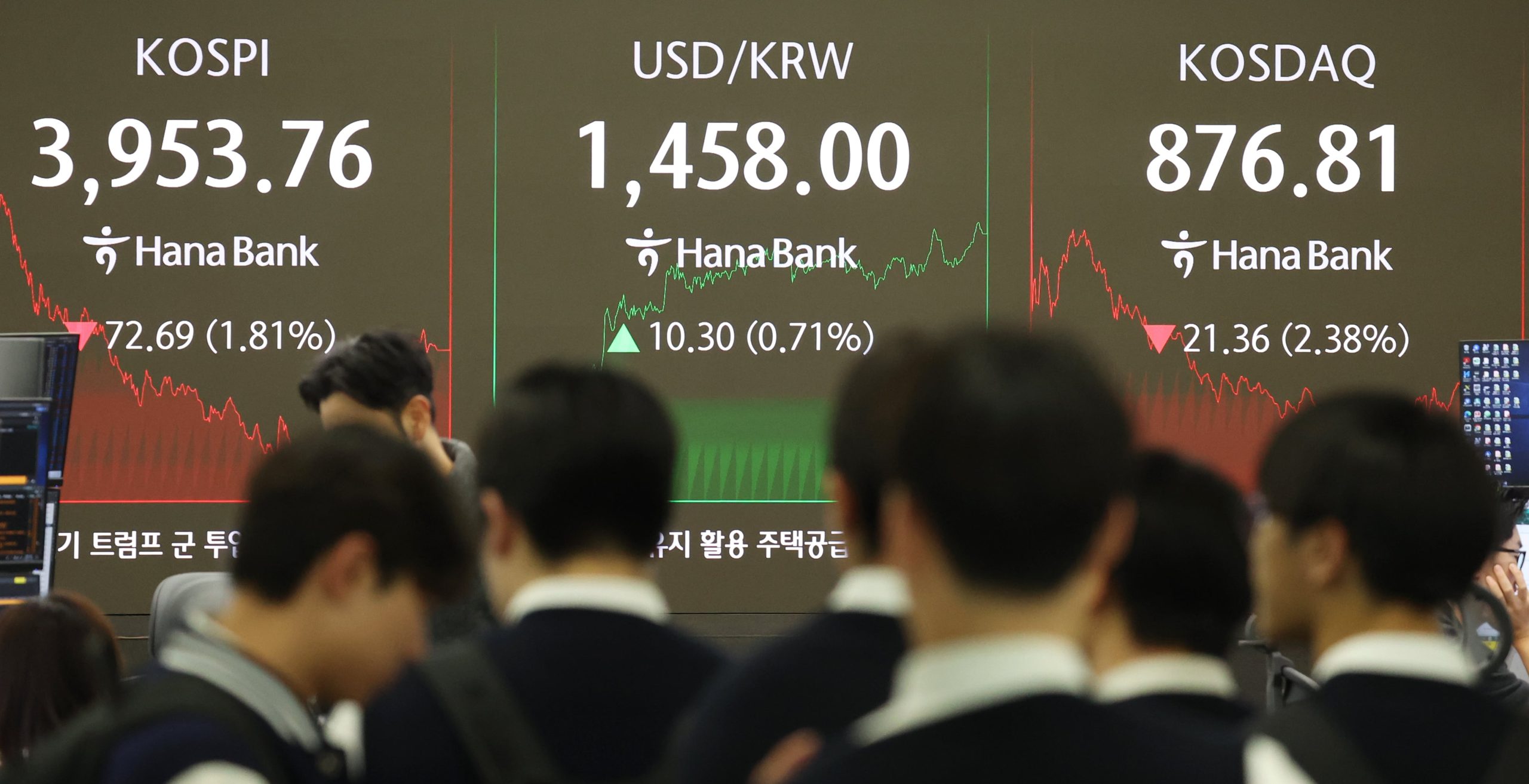
Despite the overall market decline, the KOSPI closed at 3,953.76 on the 7th, falling below the 4,000 mark for the first time in nine trading days since the 24th of last month (3,941.59). However, individual investors remained active in the market, continuing to make aggressive purchases.
This month, foreign investors sold 6.0467 trillion won worth of stocks, while individual investors responded with net purchases of 7.0433 trillion won. Kang Jin-hyeok, a researcher at Shinhan Securities, noted that the structure where individuals are absorbing the volume sold by foreigners is still ongoing. He added that foreign investors’ profit-taking selling could continue until additional positive factors emerge in the market.
Key Insights into Debt-Fueled Investment
- Credit Transaction Loan Balance: This measure tracks the amount of money investors have borrowed for stock purchases but have not yet repaid.
- Interest Rates: Borrowing for even one day incurs interest rates starting at mid-5% annually, with higher rates for longer periods.
- Market Trends: The balance has risen continuously since the start of the month, despite market volatility.
- Investor Behavior: Individual investors have been actively purchasing stocks, offsetting the sales made by foreign investors.
- Future Outlook: Analysts suggest that foreign investors may continue to sell until new positive developments arise in the market.
These developments highlight the complex interplay between investor sentiment, market performance, and financial leverage. As concerns over an AI bubble persist, the continued rise in credit transaction loan balances underscores the risks and opportunities present in the current market environment.