
Key Concerns Raised by Legislative Leaders
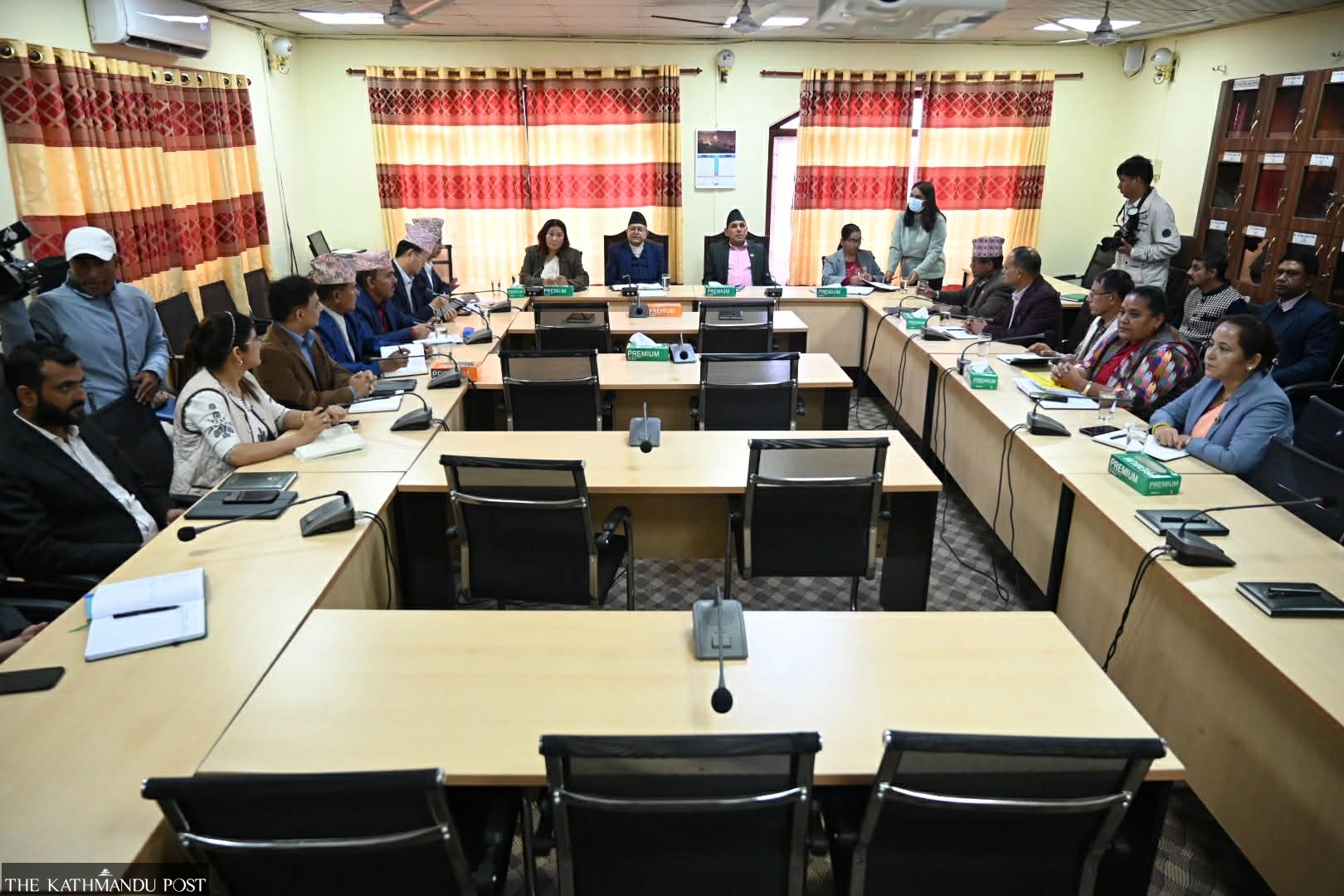
In Kathmandu, on November 8, a significant meeting took place between the Speakers and Deputy Speakers of the federal parliament and provincial assemblies, along with the chair and vice-chair of the National Assembly. These officials brought to the attention of President Ramchandra Paudel the recent cuts in resources made by the federal government. They emphasized that the decision taken by the Sushila Karki administration was an interference in the jurisdiction of the federal and provincial legislatures. As a result, they urged the President to highlight the importance of consultation before any decisions were made regarding these bodies.
The officials from the federal and provincial parliaments had previously concluded that the government’s decision to cut personal assistants for lawmakers was an attack on their authority. This move came as part of the interim government’s effort to reduce the budget approved under the previous KP Sharma Oli administration. The government decided to cut funding for personal assistants of members of the federal parliament and provincial assemblies.
There are two houses within the federal parliament: the National Assembly, which has 59 members, and the House of Representatives, consisting of 275 members. Additionally, the seven provincial assemblies have a total of 550 members. Although the government chose not to remove the personal secretarial facilities for the seven provincial Speakers, the Speaker of the House of Representatives, and the chairperson of the National Assembly, the number of lawmakers losing their personal secretaries is estimated at 875.
Legal and Administrative Implications
Ekram Giri, the spokesperson for the federal parliament’s secretariat, stated that the Speakers and Deputy Speakers highlighted the principle of separation of powers during their discussions with the President. According to Clause 25 of the Remuneration and Facilities of Federal Parliament Officials and Members, 2016, the government is allowed to amend the schedule in the Nepal Gazette, provided such changes do not negatively impact the officials or members.
However, the government invoked this clause to revise the schedule, leading to the termination of personal secretaries and staff privileges for deputy speakers of the House of Representatives and the National Assembly, chairs of parliamentary committees, chief whips, whips, and lawmakers. This decision has caused dissatisfaction among members of the federal parliament and provincial assemblies.
Before meeting with President Paudel, Speaker Dev Raj Ghimire, National Assembly Chairperson Narayan Prasad Dahal, Deputy Speaker Indira Rana, National Assembly Vice-chairperson Bimala Ghimire, and senior officials at the parliament secretariat expressed serious concerns over the staff cuts. They emphasized that all three organs of the state—the legislature, the executive, and the judiciary—must function with checks and balances, coordination, and consultation.
Impact on Parliamentary Operations
During the meeting, Speaker Ghimire questioned the legal grounds on which the government made its decision. The officials pointed out that while the law allows changes to the schedule, provided they do not affect the officials or members, the government-effected changes directly impacted them.
Chairperson Dahal also expressed dissatisfaction, stating that although the House of Representatives is currently dissolved, the National Assembly remains functional, and staff cuts would immediately affect its work. He urged the prime minister to review the decision, noting that the National Assembly has four thematic committees whose work would suffer without adequate staff.
In addition to personal secretaries, parliamentary officials, including opposition leaders, chief whips, and party whips, have also been receiving staff support, a provision that has now been terminated.
Government’s Stance and Remaining Benefits
According to officials at the parliament’s secretariat, Prime Minister Karki stated that the government’s goal was to enforce fiscal discipline but assured that she was serious about addressing parliamentary concerns. She promised to hold discussions with the finance minister and relevant officials.
Although personal secretaries have been removed, deputy speakers and vice-chairpersons still retain other facilities, including one computer operator, two drivers, two office assistants, a computer with a printer, two bicycles, monthly hospitality expenses of Rs2,000, one personal security officer, and one guard each.
In the National Assembly, the leaders of the ruling and opposition parties and the chief whip of the ruling party have also lost their entitlement to a personal secretary (second-class gazetted officer) each. However, the facilities for the Speaker and the National Assembly chairperson remain unchanged.
Both retain one first-class, one second-class, and one third-class personal secretary, as well as one computer operator, two first-level drivers, and two first-level office assistants. They also get a computer with a printer, two bicycles, a monthly hospitality allowance of Rs25,000, one security officer, one guard, and 10 army personnel each.
Austerity Measures and Expectations
As part of its austerity measures, the Karki government decided to impose budget cuts at both the federal and provincial levels. Its decision to cut the provincial budget was revoked following objections from the chief ministers last week. The Speakers and deputies from the federal and provincial levels are expecting the revocation of the decision to remove their assistance.