
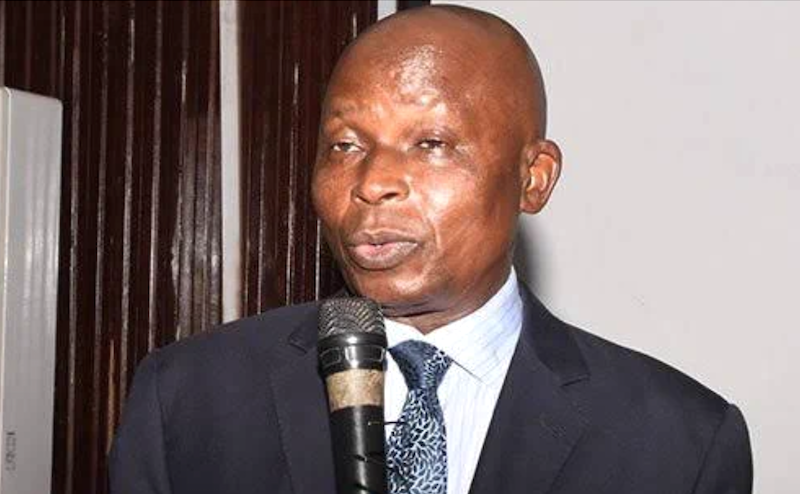
Legal Proceedings Against Nnamdi Kanu Continue
The legal battle surrounding Nnamdi Kanu, the detained leader of the Indigenous People of Biafra (IPOB), is reaching a critical stage. The Federal High Court in Abuja has set November 20 as the date for delivering its judgment on the terrorism charges brought against him. This decision was made by Justice James Omotosho after Kanu failed to present his defense within the six days allocated to him.
Failure to Present Defense
Justice Omotosho emphasized that since Kanu did not take advantage of the time provided to defend himself, he could not claim that his constitutional right to a fair hearing had been violated. The judge stated that the court had ensured a fair process and that Kanu’s failure to engage in the proceedings constituted a waiver of his rights.
Kanu had previously been granted six consecutive days—October 23 to 30—to open and close his defense. However, he exhausted all the days without entering any formal defense. He maintained that there were no valid charges against him, arguing that the previous Terrorism (Prevention and Prohibition) Act had been repealed, making the charges invalid.
Challenging the Trial
On October 16, following a declaration from the Nigerian Medical Association that Kanu was fit to continue with his trial, Justice Omotosho allowed him the six-day window. Despite this, Kanu continued to challenge the legitimacy of the charges. On Friday, he filed a motion to have the “purported plea of not guilty” removed from the court records, claiming it was based on deception and in defiance of the Supreme Court’s decision.
In his motion, Kanu also sought an order to set aside all subsequent proceedings, arguing they were founded on a nullity. He further requested the court to hold that the charges disclosed no offense under the law, as they were allegedly based on a repealed terrorism law. Kanu asked for an order to strike out the charge for lack of jurisdiction and to direct his release.
Government’s Response
Counsel for the Federal Government, Adegoboyega Awomolo (SAN), responded to Kanu’s motion, stating that there was no need for a counter-affidavit. He argued that the prosecution relied on the court’s records and urged the judge to take judicial notice of the relevant legal developments. Awomolo stressed that the trial was being conducted within the ambit of the law and that Kanu was simply refusing to enter his defense.
Court’s Position
In his ruling, Justice Omotosho reiterated the court’s position that no preliminary objections would be determined at this stage of the case. He noted that the case, which was filed in 2015, had faced several delays before being re-assigned to his court earlier this year. The case received accelerated hearing, with the prosecution calling five witnesses and tendering several exhibits before closing its case on June 19, 2025.
The judge observed that multiple adjournments were granted at the instance of the defendant, who sought to cross-examine prosecution witnesses. He recalled that Kanu’s no-case submission had been overruled, and he had been directed to open his defense. Justice Omotosho emphasized that the court had ensured a fair hearing but noted that Kanu, despite initially agreeing to enter his defense, abandoned it and began claiming that there was no existing law under which he was being tried.
Final Ruling
The judge concluded that Kanu had not demonstrated seriousness in the proceedings. He added that he had personally appealed to Kanu “in God’s name” to present his defense and engage counsel. Citing Supreme Court authorities, Justice Omotosho held that if a defendant fails to utilize the opportunity of a fair hearing, the court cannot compel him to enter his defense. Based on this, the judge ruled that Kanu had waived his right to defense and proceeded to fix November 20 for judgment.