
Foreign Investment and Currency Volatility
Last week, foreign investors significantly reduced their holdings in the KOSPI index, selling off over 7 trillion won worth of stocks. This massive sell-off had a direct impact on the value of the South Korean won against the U.S. dollar, causing it to drop by nearly 2% over the course of the week. The exchange rate for the won reached its highest level in seven months, reflecting heightened market uncertainty.
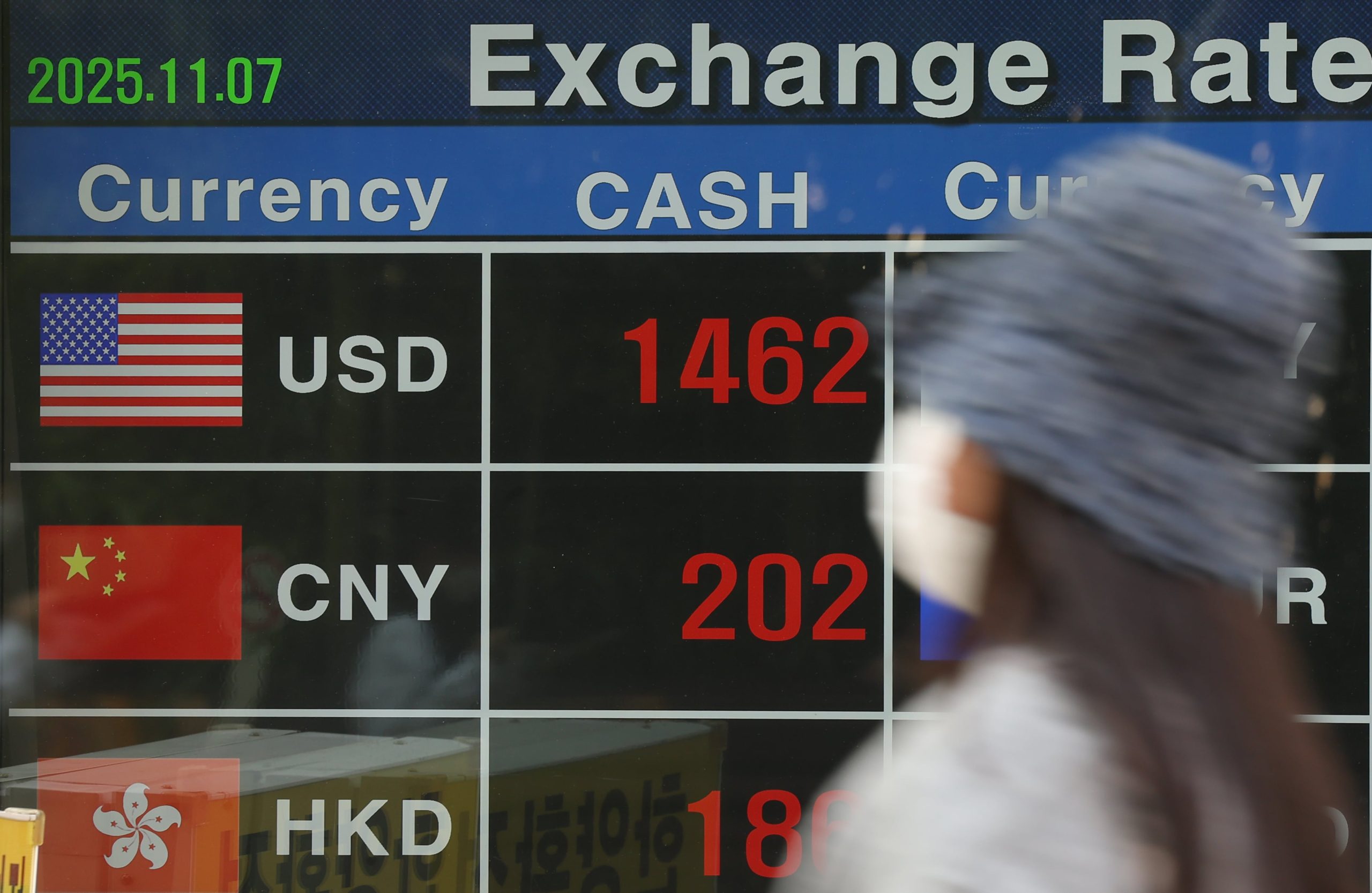
According to the Seoul foreign exchange market on the 9th, the won’s exchange rate against the dollar closed at 1,461.5 won during overnight trading on the 7th. This marked a significant increase compared to the previous week, with the rate rising to 1,461.5 won—nearly matching the level seen on April 9 of last year when the U.S. introduced reciprocal tariffs and tensions between the U.S. and China escalated.
Exchange Rate Movements and Market Trends
The won’s depreciation against the dollar was not isolated. During the same period, the U.S. Federal Reserve’s expectations for interest rate cuts weakened, which contributed to an appreciation of the dollar index. This index measures the dollar’s value against the currencies of six major countries and rose by approximately 0.15% during the week.
Among the currencies that make up the dollar index, several saw strength against the dollar. The euro of the European Union (EU) gained 0.23%, the Japanese yen increased by 0.33%, and the British pound strengthened by 0.11%. In contrast, the Swiss franc, Swedish krona, and Canadian dollar weakened against the dollar, but the declines were relatively minor compared to the drop in the won.
Other Asian currencies also showed stronger performance than the won. The Australian dollar fell by 0.66%, the Taiwanese dollar declined by 0.59%, and the Chinese offshore yuan decreased by 0.05%. These figures highlight the relative weakness of the South Korean won in comparison to its regional counterparts.
Foreign Investor Activity and Market Impact
The net selling volume by foreign investors last week reached 7.2638 trillion won, which played a key role in dragging down the value of the won. This activity was particularly notable as foreign investors sold off stocks for five consecutive trading days, from the 3rd to the 7th, in the securities market.
This level of selling activity surpassed the net buying volume by foreign investors in the previous month, which stood at 5.3447 trillion won. It is also approaching the total net buying volume for the entire month of September, which was recorded at 7.4465 trillion won.
Summary of Key Developments
- Foreign Investors’ Sell-Off: A significant reduction in foreign investment in the KOSPI index led to a decline in the value of the South Korean won.
- Exchange Rate Changes: The won’s exchange rate against the dollar reached its highest level in seven months, with a nearly 2% drop over the week.
- Dollar Index Movement: The dollar index appreciated due to weaker expectations for U.S. interest rate cuts.
- Regional Currency Performance: Several Asian currencies, including the Australian dollar and the Taiwanese dollar, performed better than the won.
- Investor Behavior: Foreign investors continued to sell stocks for multiple days, surpassing previous monthly net buying volumes.
These developments underscore the complex interplay between investor sentiment, currency values, and broader economic conditions in the current financial landscape.