
The Fall of El-Fasher and Regional Implications
The fall of El-Fasher, the capital of North Darfur, into the hands of the Rapid Support Forces (RSF) militias marks a significant turning point in the ongoing conflict in Sudan. This event has not only shifted the balance of power but also triggered a series of strategic responses from regional and international actors.
Egypt’s Strategic Response
Egypt has taken a more active role in the region by reinforcing its military presence along the southern border with Sudan. This move is aimed at providing increased logistical support to the Sudanese Armed Forces, which are now engaged in counter-offensives against the RSF in Kordofan. A joint Sudanese-Egyptian command center has been established in this region, highlighting its strategic importance for the defense of Khartoum, the federal capital.
For Egypt, the capture of El-Fasher serves as a warning. The city’s fall has effectively separated Darfur, a vast western region of Sudan now under RSF control, from the rest of the country. This development raises concerns about the potential partition of Sudan. Another possibility is that the RSF could once again threaten Khartoum, a city that was evacuated by militias in March, as well as the neighboring city of Omdurman via Kordofan.
Security Concerns and Strategic Alliances
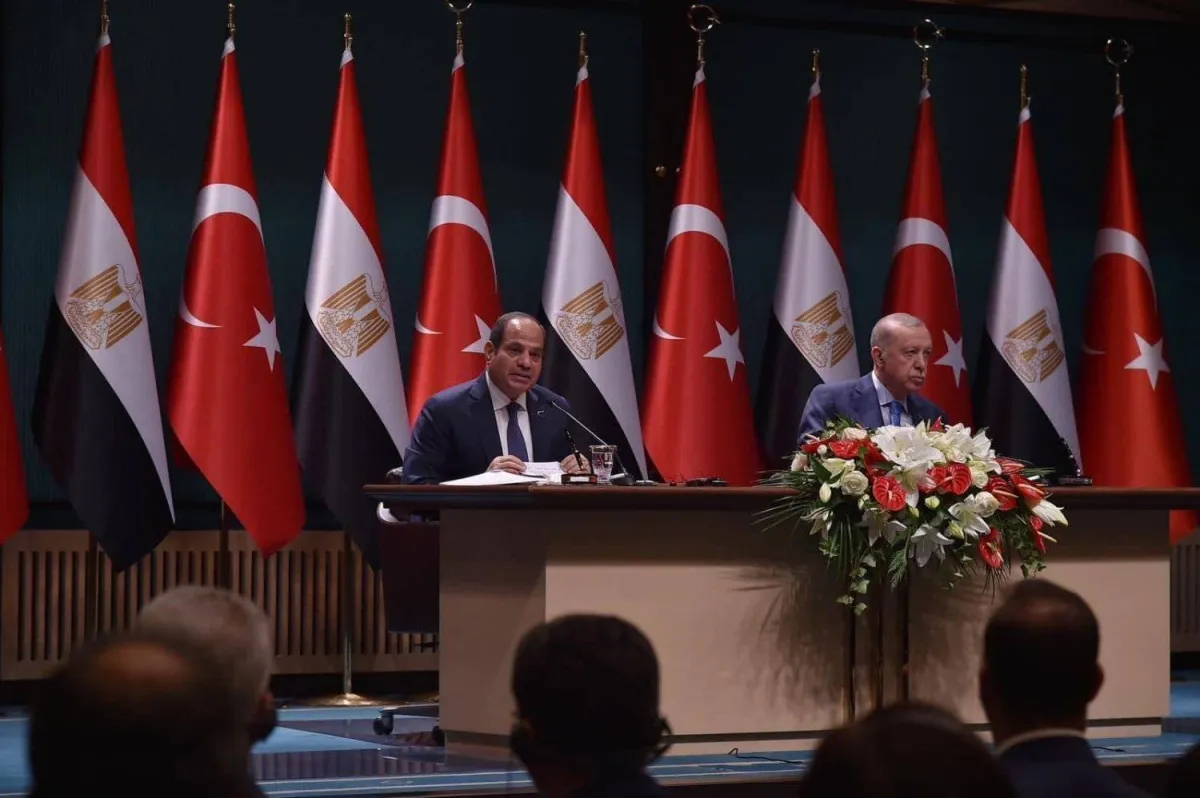
The situation is further complicated by the fact that the RSF now controls smuggling routes to Libya and Chad, increasing the risks to Egyptian security. In response, Turkey has aligned itself with Egypt, using armed drones to strike supply convoys traveling from the Libyan region of Cyrenaica and Chad toward RSF strongholds in Darfur. These supplies are facilitated by the United Arab Emirates (UAE) through a logistics chain that runs through Bosaso in Somalia’s Puntland before reaching southern Libya or eastern Chad and finally arriving in western Sudan by land.
Paradoxical Alliances and Regional Conflicts
The proxy war being waged in Sudan by various powers has led to paradoxical alliances. While Egypt and the UAE are allies in their fight against political Islam and the Muslim Brotherhood, which are protected by Turkey, they find themselves on opposing sides in the context of Sudan. Conversely, Cairo and Ankara cooperate in supporting General Abdel Fattah al-Burhan, whose government includes representatives of political Islam.
Religious and Peace Initiatives
In addition to these geopolitical developments, the conflicts in Sudan and South Sudan will be a central topic of discussion at the Plenary Assembly of the Sudan’s Catholic Bishops’ Conference (SCBC). This assembly, attended by bishops from both Sudan and South Sudan, will officially open on November 10 in Malakal, South Sudan. The theme of the gathering is “Peace, healing wounds and promoting unity.”
Ongoing Challenges and Future Outlook
As the situation in Sudan continues to evolve, the involvement of external actors and the complex web of alliances and conflicts highlight the challenges faced by the region. The fall of El-Fasher has not only altered the dynamics of the conflict but also underscored the need for coordinated efforts to address the humanitarian and security crises affecting the region.
With the potential for further escalation and the involvement of multiple stakeholders, the path to peace and stability in Sudan remains uncertain. The actions of regional powers and the initiatives of local communities will play a crucial role in shaping the future of the country and its people.