
Ongoing Negotiations and Persistent Challenges in Nigeria’s Public Universities
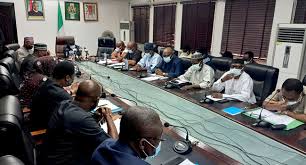
The Academic Staff Union of Universities (ASUU) has recently shared updates regarding its ongoing negotiations with the Federal Government. These discussions aim to address long-standing issues that have repeatedly led to crises within Nigeria’s public university system. The union is currently engaged in talks with the government, hoping for a swift resolution, as the one-month deadline for the government to respond to their concerns approaches.
Prof. Christopher Piwuna, the President of ASUU, provided this update during the Toyin Falola Interview, which was part of the “Conversation with ASUU President” event. The interview took place on Sunday night via Zoom and other social media platforms. Over 1.2 million people from no fewer than 27 countries participated in the discussion, which featured Prof. Toyin Falola as the anchor and four other distinguished panelists: the National President of the Nigeria Labour Congress (NLC), Mr. Joe Ajaero; Prof. Sheriffdeen Tella; Prof. Francis Egbokhare; and Mrs. Grace Edema of The Punch Newspapers.
According to Piwuna, the leadership of the union is concluding its national executive meeting in Taraba State, and the terms of the agreement with the government are beginning to take shape. He expressed hope that within the next week or two, the union would be able to provide a definitive statement on what needs to be done. However, he emphasized that the current salary offer from the government is not acceptable, and the union is prepared to go to any length to secure fair compensation for its members.
Piwuna highlighted that Nigeria’s public university system still operates as though it were in the 17th century, not only in terms of salaries and conditions of service but also in many other critical areas. He pointed out that:
- Salaries are insufficient, and public universities lack the endowments and infrastructure needed for growth.
- Wealthy individuals, including billionaires, show little interest in public university education, preferring to invest in private institutions instead.
- Over the years, the union has fought, negotiated, and gone on strike to achieve minimal progress. These small gains are the result of their struggle against government neglect.
- Colleagues work tirelessly, often sleeping in their offices and bringing their families to campus, yet they cannot secure endowments or improve available resources.
He also outlined reasons why successive governments have failed to take ASUU’s struggles seriously. One major issue is the mindset of government officials, who do not view education as a personal concern. For example:
- The Minister of Finance sees education as the Education Minister’s problem.
- The Minister of Science and Technology views it as someone else’s issue.
- This mindset prevents a coordinated response to the challenges faced by public universities.
Another factor is the ideological divide. While ASUU sees education as a public good essential for national development, some government officials view it through a capitalistic lens, prioritizing profit over public benefit. This has led to calls for hedge funds to support private universities rather than public education.
Additionally, self-interest among officials plays a role. Some prioritize personal gain and contract inflation over meaningful investment in education. Funds meant for development, such as TETFUND allocations, have become marketplaces for profit rather than tools for improving universities.
Addressing Educational Challenges in Africa
Speaking earlier, Prof. Toyin Falola, a renowned historian and the Jacob and Frances Sanger Mossiker Chair in the Humanities at the University of Texas at Austin, emphasized the importance of finding a workable and lasting solution to the perennial problems plaguing Nigeria’s public education system and that of other African countries.
He noted that Nigeria’s educational challenges mirror those of many African nations, highlighting the urgent need for collective efforts to address them and make the continent a better place for all.
Key Issues and Future Prospects
As the negotiations continue, the focus remains on resolving the most pressing concerns, particularly around salaries and institutional support. The union is determined to push for fair compensation and improved conditions, despite the challenges posed by government attitudes and systemic issues.
With the upcoming deadline approaching, the pressure is on the Federal Government to deliver on its promises. The outcome of these negotiations could significantly impact the future of Nigeria’s public university system and the broader educational landscape in Africa.