
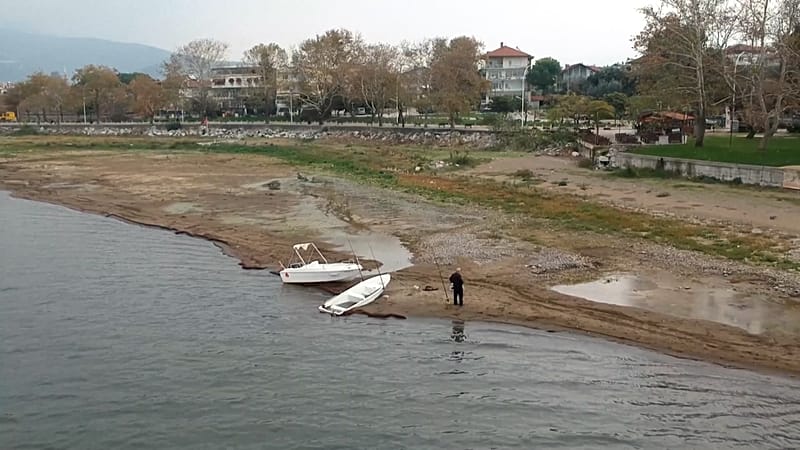
Lake Iznik, one of Turkey’s most significant freshwater sources, is experiencing a rapid decline in water levels. The lake’s shoreline is receding at an alarming rate, with some areas shrinking by as much as 350 meters. This dramatic change has left visible traces of the once-thriving aquatic ecosystem. Underwater reed beds that were previously submerged are now exposed, and former boat launch areas have transformed into expansive stretches of dry mud.
Experts have raised concerns about the factors contributing to this environmental crisis. Poor water management practices and the diversion of feeder streams for agricultural irrigation are cited as key reasons behind the lake’s deterioration. These actions have disrupted the natural flow of water into the lake, leading to its gradual shrinkage. The situation has sparked calls for more sustainable water usage policies to prevent further damage to this vital resource.
Aerial footage captures the extent of the problem, showing exposed piers and vast dry zones along the lake’s shrinking shoreline. The images highlight the drastic transformation that Lake Iznik has undergone in recent years. What was once a bustling area for boating and recreation is now a landscape dominated by dry land and exposed infrastructure.
In response to the growing concern, local authorities have implemented restrictions on agricultural irrigation from Lake Iznik during the summer season. These measures aim to conserve water and reduce the pressure on the lake’s resources. However, many experts argue that more comprehensive and long-term solutions are needed to address the root causes of the issue.
The drying of Lake Iznik has far-reaching implications. As a major freshwater source, it supports both human populations and local ecosystems. The loss of water not only affects agriculture but also threatens biodiversity, as many species depend on the lake for survival. Additionally, the economic impact on communities that rely on tourism and fishing cannot be overlooked.
Several factors contribute to the ongoing decline of Lake Iznik. Climate change has led to reduced rainfall and increased evaporation, exacerbating the problem. At the same time, population growth and industrial activities have placed additional demands on water resources. The combination of these pressures has created a complex challenge for policymakers and environmentalists alike.
Efforts to restore and protect Lake Iznik require a multi-faceted approach. Conservation initiatives, such as the restoration of wetlands and the implementation of water-saving technologies, could help mitigate the effects of the lake’s shrinkage. Public awareness campaigns are also essential to encourage responsible water use and foster a sense of stewardship among local communities.
In addition to these efforts, scientific research and monitoring play a crucial role in understanding the dynamics of Lake Iznik. By studying the changes in water levels, temperature, and quality, scientists can provide valuable insights that inform policy decisions. Collaboration between government agencies, researchers, and local stakeholders is necessary to develop effective strategies for the lake’s preservation.
The situation at Lake Iznik serves as a stark reminder of the importance of sustainable water management. It highlights the need for proactive measures to ensure that natural resources are protected for future generations. As the global demand for water continues to rise, the lessons learned from Lake Iznik could serve as a model for other regions facing similar challenges.
Ultimately, the fate of Lake Iznik depends on the collective actions of individuals, communities, and governments. By working together, it is possible to reverse the trend of its decline and secure a more sustainable future for this vital freshwater source.