
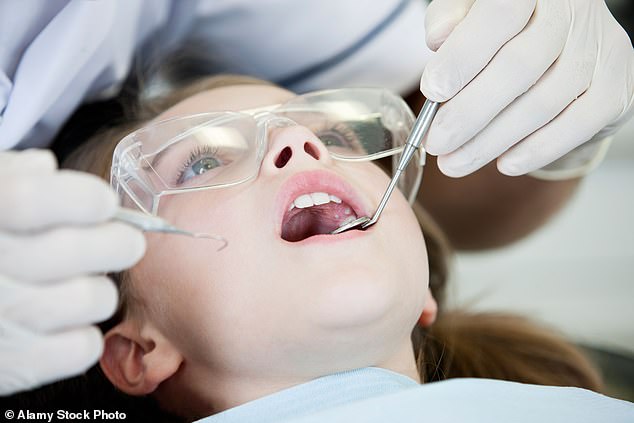
The Ongoing Crisis of Children’s Oral Health in England
A recent report has revealed that more than a quarter of five-year-olds in England still suffer from tooth decay, highlighting a persistent and alarming issue within the country’s healthcare system. Despite various efforts to address this problem, health experts continue to express concern over the high rates of dental issues among young children.
The situation came into sharp focus a year ago when the poor state of children’s oral health was first brought to light, prompting urgent government action. However, while some progress has been made, millions of children are still facing preventable dental problems. According to the latest data, 26.9% of five-year-olds in England have tooth decay, a condition often linked to excessive consumption of sugary foods and drinks.
Researchers have also found that children living in the most deprived areas of England are more than twice as likely to experience tooth decay compared to those in less deprived areas. This disparity is particularly evident in regions like West Yorkshire, where 950 school days were lost due to dental issues across nine schools in a single academic year.
The report, titledImproving Children’s Oral Health Update, was compiled by scientists from the Universities of Leeds and Sheffield as part of the Child of the North initiative. It acknowledges the government’s recent efforts to improve children’s oral health, including the introduction of a national supervised toothbrushing program. Additionally, there have been bans on the sale of high-caffeine energy drinks to children and restrictions on junk food advertising before 9 p.m.
However, the report also highlights ongoing challenges, particularly regarding access to NHS dentists. Professor Mark Mon-Williams, who edited the report, stated that the number of children with rotten teeth is a strong indicator of broader issues affecting child wellbeing across the UK.
Baroness Anne Longfield, founder of the Centre for Young Lives, welcomed the government’s actions but emphasized the need for more comprehensive measures. She called for evidence-based strategies and a national plan to tackle the widespread issue of poor oral health among children, especially in deprived areas.
In an effort to address the crisis, health ministers announced that children in the most deprived areas of England would gain access to a supervised toothbrushing program. This initiative aims to help up to 600,000 children develop healthy brushing habits. Since its launch in March, the program has reached 240,000 children in nurseries and primary schools.
Other initiatives include expanding water fluoridation in the North-East of England to help prevent tooth decay. In September, it was revealed that tooth decay is the leading cause of hospital admissions among children aged five to nine in England. According to NHS England, 21,162 children in this age group were admitted to hospitals in 2024/2025 due to dental issues, surpassing the number of admissions for acute tonsillitis.
Dr. Charlotte Eckhardt, Dean of the Faculty of Dental Surgery at the Royal College of Surgeons of England, described the figures as a public health emergency. She emphasized that tooth decay is entirely preventable and urged the government to overhaul the dental contract to improve access and outcomes.
A spokesperson for the Department of Health and Social Care acknowledged the challenges inherited from years of neglect and outlined the government’s efforts to fix the NHS dental system. These include rolling out 700,000 extra urgent dental appointments, reforming the dental contract to focus on prevention, and providing free dental products to families.
Despite these efforts, the crisis continues to affect millions of children across the UK. The question remains: will the current measures be enough to ensure better dental health for future generations?