
The Rise of the Baguette-Sized Missile in Modern Warfare
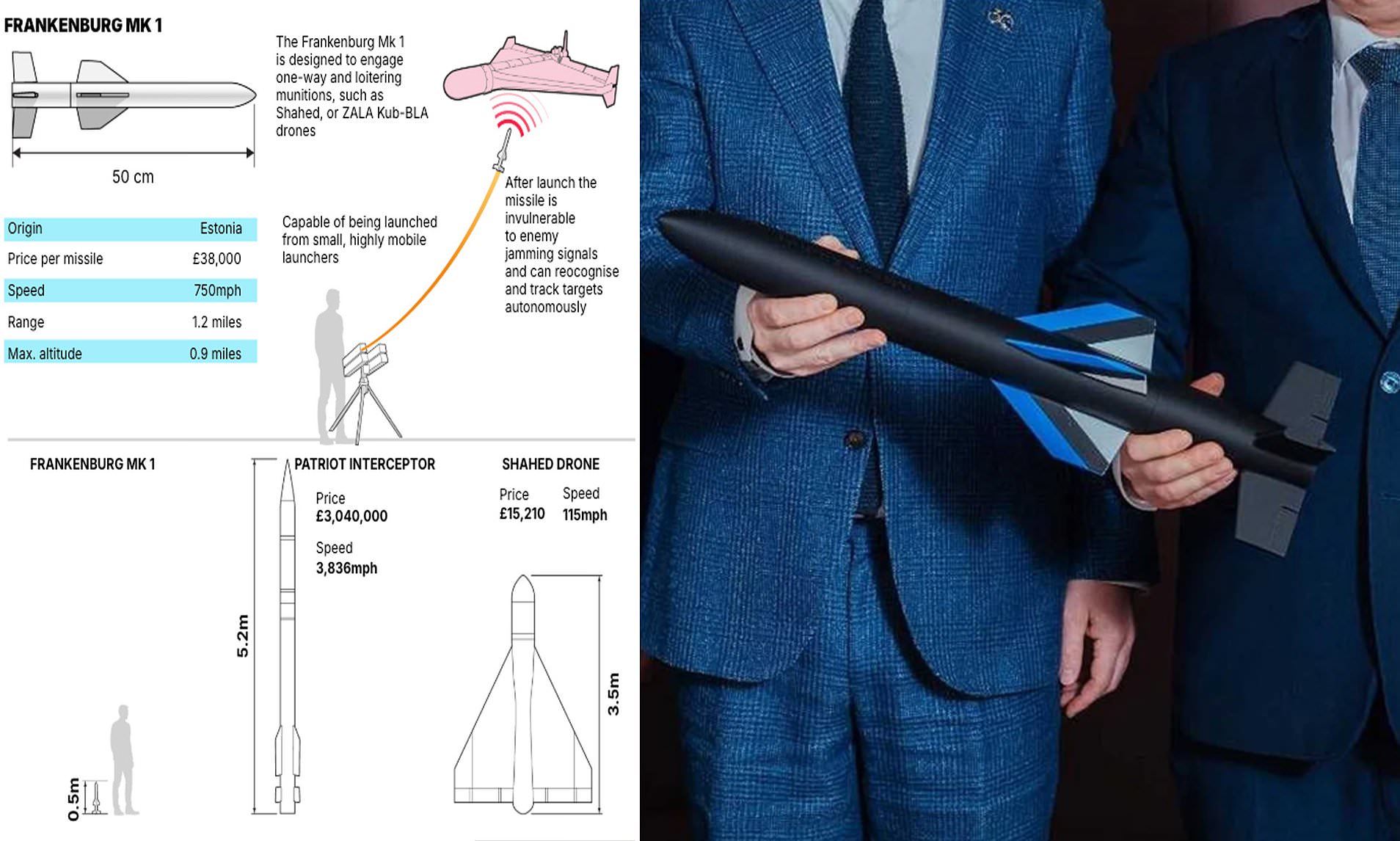
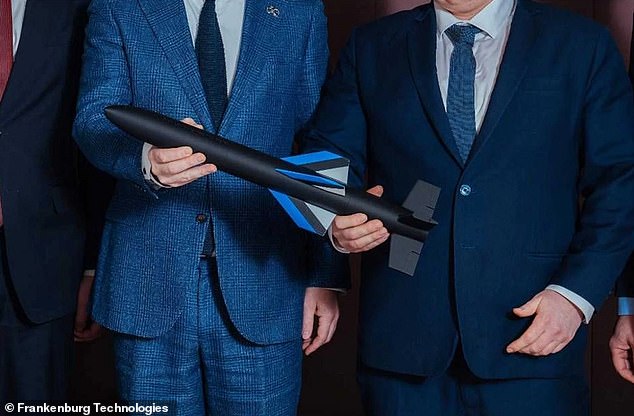
In an era where drones are becoming increasingly prevalent on the battlefield, a new weapon is emerging as a potential game-changer. The Mark 1, a missile developed by Frankenburg Technology, is being hailed as a revolutionary solution to the growing threat posed by Russian drones. Despite its small size—only 65cm long and smaller than the average human arm—the Mark 1 is designed to be a crucial asset in countering Moscow’s expanding drone capabilities.
The concept behind the Mark 1 is simple: as Russia continues to develop lethal, low-cost drones that are highly scalable, especially during the war with Ukraine, the need for interceptors that are quick to deploy and affordable has never been more urgent. The Mark 1 is positioned as a cost-effective air defense system optimized for mass production, making it ideally suited for addressing the short-range aerial threats of the 21st century.
“We aim to produce missiles 10 times cheaper and 100 times more than what’s currently possible,” said Kusti Salm, the former chief civil servant in Estonia’s defense ministry. “It’s about redefining the economies of air defense… and this is, frankly speaking, the only reason why the Russians are putting all their efforts into drone manufacturing.”
A Cost-Effective Solution for Drone Warfare
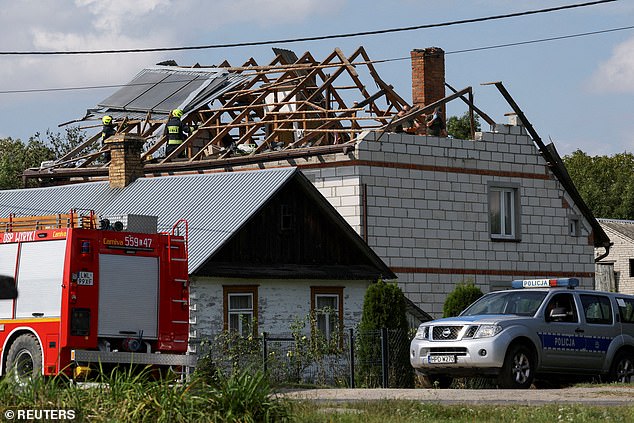
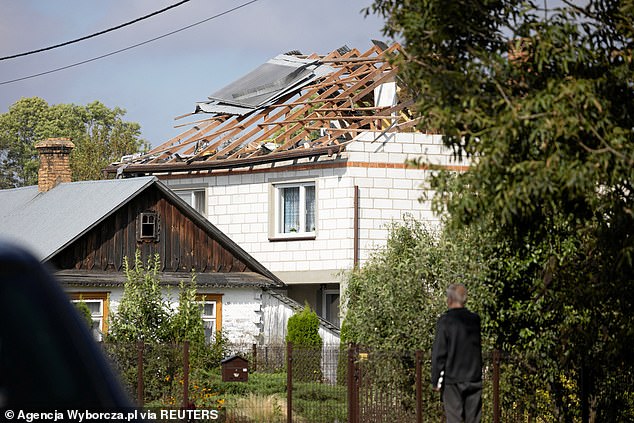
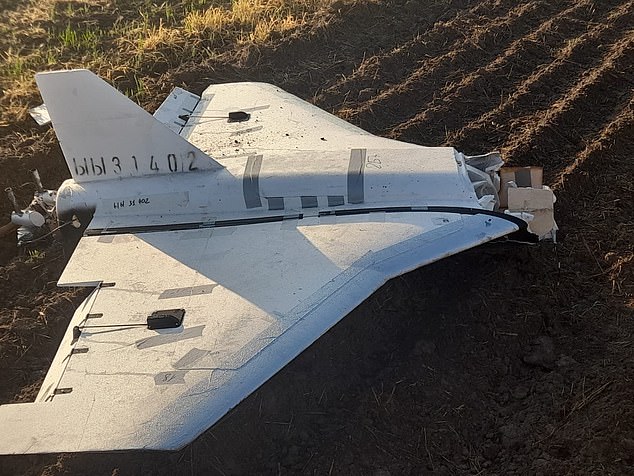
On September 9, after 20 Russian drones intercepted the Poland border in an unprecedented incursion, NATO was forced to deploy F-16s worth around £500,000 to shoot them down. However, such tactics are not economically sustainable in the long term, as Russia’s Iranian-designed Shahed drones only cost around £50,000 each. This stark contrast highlights the urgent need for more affordable and efficient counter-drone solutions.
Traditional missile systems are costly and slow to produce, but the Mark 1 offers a different approach. It is designed to be agile, AI-guided, and affordable, promising to equip Europe with a modern response to the realities of drone warfare. The company claims that the Mark 1 will be the world’s smallest guided missile, capable of intercepting low, slow, massed unmanned aerial vehicles (UAVs) at an altitude of two kilometers—similar to the typical flight patterns of Shahed-131 and Shahed-136 (Geran-2) drones.
Design and Production of the Mark 1
The Mark 1 is designed for serial production rather than bespoke performance, striking a balance between affordability and capability. As of September, the company reported that 53 live fire tests have taken place, with accuracy hovering at around 56 percent—a figure it hopes to eventually boost to 90 percent. Factories have already been set up in two NATO nations, with the goal of producing hundreds of missiles per day.
Although Salm has not yet disclosed the exact price of the weapon, he confirmed that it is roughly a tenth of existing rocket defense systems. For reference, the European IRIS-T system markets for around €400,000. In comparison, the Mark 1 represents a significant cost reduction.

Innovation in Air Defense Manufacturing
To innovate air defense manufacturing, Frankenburg Technology has hired world-renowned experts, including chief engineer Andreas Bappert, who designed the highly sought-after Iris-T air defense system. The company also employs the chief engineer working on the Spear III missile at MBDA UK, alongside Latvian experts. According to Salm, these professionals bring expertise that cannot be learned from online tutorials or YouTube videos.
“There are no Rocket Science for Dummies books that you can order from Amazon,” Salm said. “This is serious engineering.”
Strategic Implications for NATO and Europe
As part of a dangerous race with Russia to improve drone technology, Ukraine is currently developing its own cheap interceptor drones that cost $1,000 to $5,000 per unit. These drones can accelerate to a speed of about 330 kilometers per hour before hitting their targets.
The Mark 1 uses solid rocket propellant and is guided to its target using AI, enabling real-time situational awareness to detect, track, and neutralize UAVs. The system can be mounted on a moving platform or a static installation, and once fired, it does not require a persistent data link to the launcher—keeping the engagement chain short and less vulnerable to electronic interference.
The Broader Context of Drone Warfare
Extensive use of cheap drones by Moscow in the Ukraine war has necessitated the development of corresponding cost-effective counter-drone technology across NATO. Russia launched nearly 6,900 drones at Ukraine in September, according to Commander-in-Chief Oleksandr Syrskyi, including more than 3,600 Shaheds. Originally designed in Iran and mass-produced in Russia under the name Geran-2, these drones have become a central part of Vladimir Putin’s onslaught and are frequently used to target cities and civilian infrastructure.
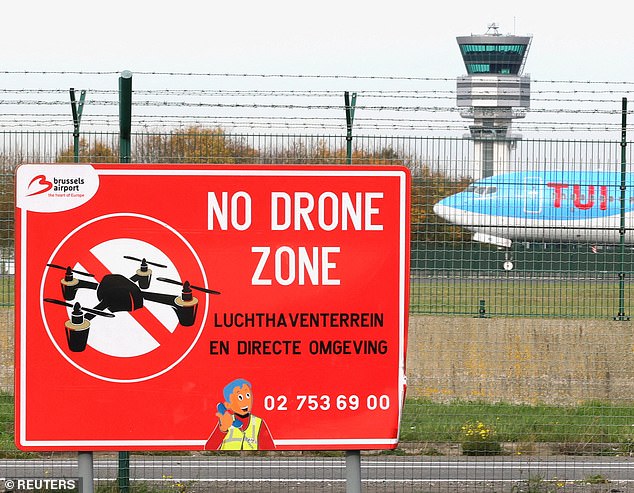
Salm has previously accused the West of doing “virtually nothing” to solve the recurring drone threat that has plagued European airspace over recent months. Short-range air defense (SHORAD) will be the “biggest need in the world” over the next five to ten years, he said, if NATO is to stand a chance against Russia.
While a conventional IM-92 Stinger missile costs close to half a million dollars, the cheap and scalable Mark 1 might be the key to European air defense in the future.