
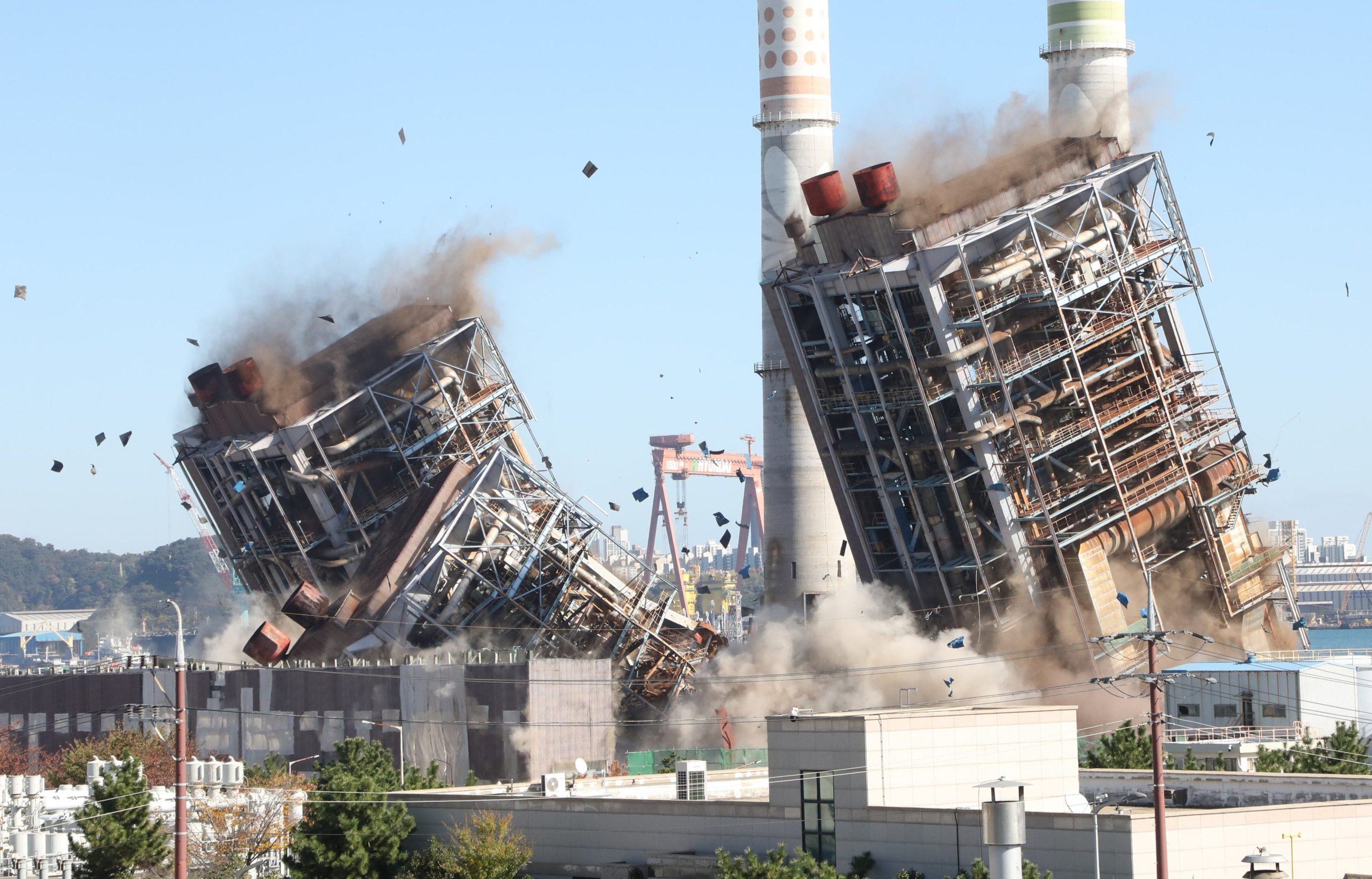
“3, 2, 1, detonation!”
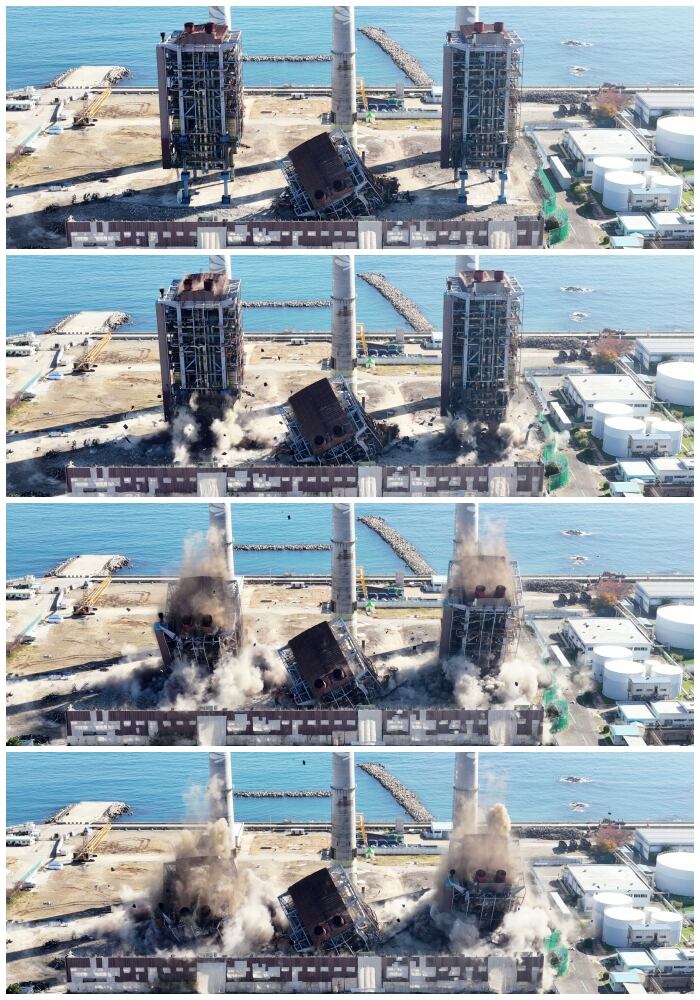
At noon on the 11th, two large boiler buildings (towers) at the Korea East-West Power Ulsan Thermal Power Plant collapsed in a massive explosion. These structures measured 63 meters in height, 25 meters in width, and 15 meters in depth. The detonation reportedly used 140 kg of explosives and 120 detonators—enough to bring down a 20-story building in just five seconds.
As the explosives attached to the boiler buildings’ pillars detonated, the structures collapsed forward. Tremors from the explosion were felt even on the accident site access road, over 300 meters away. After the blast, thick dust rose into the air. Fragments as thick as an adult’s finger flew over 300 meters, and a pungent smell of gunpowder lingered. It took approximately three minutes for the dust from the collapsed structure to settle.
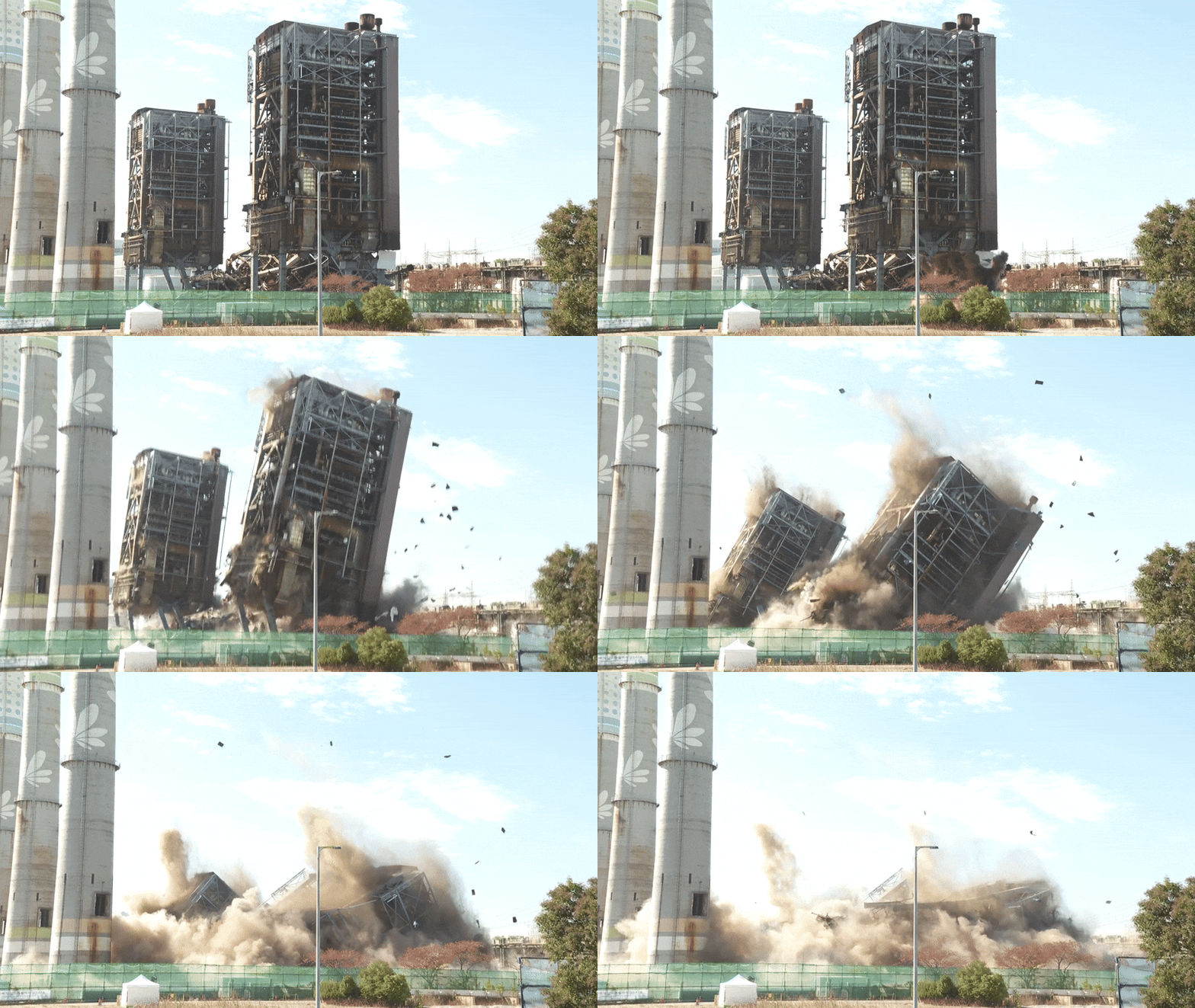
The boiler buildings collapsed in the planned direction, opposite the sea. Approximately one hour after the detonation, the Central Accident Control Headquarters stated, “The boiler tower detonation proceeded as scheduled at 12 p.m.,” adding that “expert diagnoses on the pre- and post-detonation status of Unit 5 and the feasibility of securing access routes are ongoing.”
About two hours and 40 minutes later, at 3:40 p.m., fire authorities announced the resumption of rescue operations. Large cranes were deployed to the site, and rescue workers were busy holding situation meetings.
According to fire authorities, the locations of two of the four buried individuals have been confirmed. One is toward Unit 4, and the other is toward Unit 6—both within 5 meters of the entrance. However, rescue workers have been unable to reach them due to collapsed steel structures.
The rescue team plans to cut and dismantle the steel structures using cutting equipment to secure access routes. Supports will also be installed under the steel structures to ensure the safety of rescue workers.
For the remaining two individuals whose locations are unknown, rescue dogs and buried-person detectors will be used in the search. Fire authorities stated, “We will operate for 24 hours until the buried individuals are rescued.”
Rescue Efforts and Challenges
The rescue operation has faced several challenges, primarily due to the structural damage caused by the explosion. The collapse of the boiler buildings has created hazardous conditions, with debris and unstable steel structures posing risks to both rescuers and victims.
- Rescue teams have had to use specialized equipment to navigate through the rubble.
- The deployment of large cranes has allowed for more efficient removal of heavy debris.
- Safety measures are being prioritized, with supports installed to prevent further collapses during the operation.
Ongoing Investigations and Assessments
Experts are currently conducting assessments of the pre- and post-detonation conditions of Unit 5. This includes evaluating the stability of surrounding structures and determining the feasibility of securing access routes for further rescue efforts.
- Engineers are analyzing the structural integrity of nearby units.
- Environmental factors, such as air quality and potential hazards, are being monitored.
- Communication between different agencies is critical to ensure a coordinated response.
Public Response and Information Sharing
As the situation unfolds, updates are being shared with the public through official channels. Authorities are emphasizing transparency and providing regular reports on the progress of the rescue mission.
- Information about the status of the victims is being released as it becomes available.
- Updates on the safety of the surrounding area are being communicated to local communities.
- Media outlets are playing a role in disseminating accurate information to the public.
Future Steps and Long-Term Implications
In the coming days, the focus will remain on locating and rescuing the remaining individuals. Once this phase is complete, the emphasis will shift to assessing the long-term impact of the explosion on the power plant and its surrounding environment.
- A thorough investigation into the cause of the explosion is expected to follow.
- Safety protocols may be reviewed and updated based on the findings.
- The incident highlights the importance of rigorous safety measures in industrial settings.
Conclusion
The controlled demolition of the boiler buildings was a complex operation that required careful planning and execution. While the primary objective of the detonation was achieved, the aftermath has presented significant challenges for the rescue teams. The ongoing efforts to locate and save the trapped individuals underscore the dedication and professionalism of the emergency responders involved. As the situation develops, continued support and coordination will be essential in ensuring the safety and well-being of all those affected.