
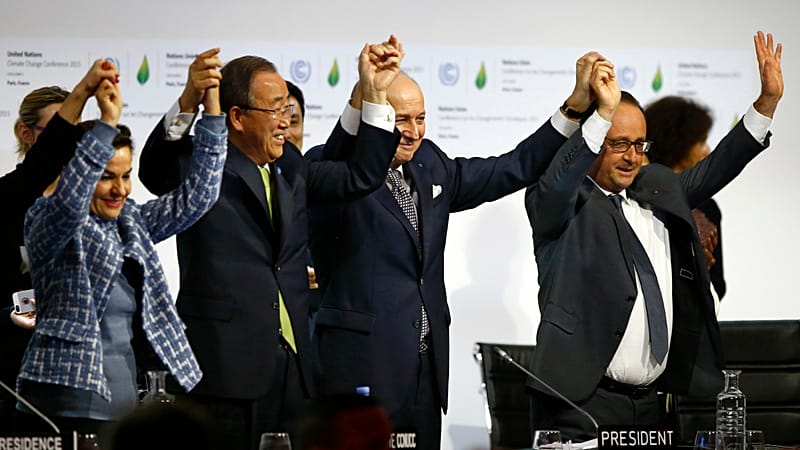
A Decade of Climate Progress and Setbacks
The world has undergone significant changes over the past ten years since leaders celebrated a historic climate agreement in Paris. However, these changes have not occurred as expected or desired. Earth’s warming climate has become more severe and has accelerated faster than society has been able to reduce its reliance on burning coal, oil, and natural gas—sources of carbon pollution that contribute to global warming.
Despite this, there has been some progress. Scientists and officials note that future warming projections have decreased by more than 1 degree Celsius since 2015. Nevertheless, this progress is not enough, and it will be a central topic of discussion during the next two weeks as diplomats meet in Belem, Brazil, for the annual United Nations climate negotiations.
Johan Rockstrom, director of the Potsdam Institute for Climate Research in Germany, emphasized the need for honesty about the current situation. He stated that the harms of warming are occurring faster and more severely than scientists predicted. However, diplomats remain committed to their goals.
Christiana Figueres, former UN climate chief, who played a key role in the Paris Agreement, noted that while the direction set by the agreement is being followed, the speed is slower than anticipated. She highlighted that the gap between current progress and the necessary actions is still present and widening.
Inger Andersen, Executive Director of the UN Environment Programme, stated that the world is “obviously falling behind.” She warned that humanity is essentially sawing the branch on which it sits.
Danger Signs
Since 2015, the planet’s annual temperature has increased by approximately 0.46°C, one of the most significant 10-year temperature rises on record, according to data from the European climate service Copernicus. This year is expected to be either the second or third hottest on record. Each year since 2015 has been hotter than the year of the Paris climate deal.
Deadly heat waves have affected regions beyond traditional hotspots like India and the Middle East, reaching even temperate areas such as the Pacific Northwest in North America and Siberia in Russia. The decade has seen an increase in costly, dangerous, and extreme weather events. Records from the US National Oceanic and Atmospheric Administration show that the past 10 years have had the most Category 5 Atlantic hurricanes and the most billion-dollar weather disasters in the United States.
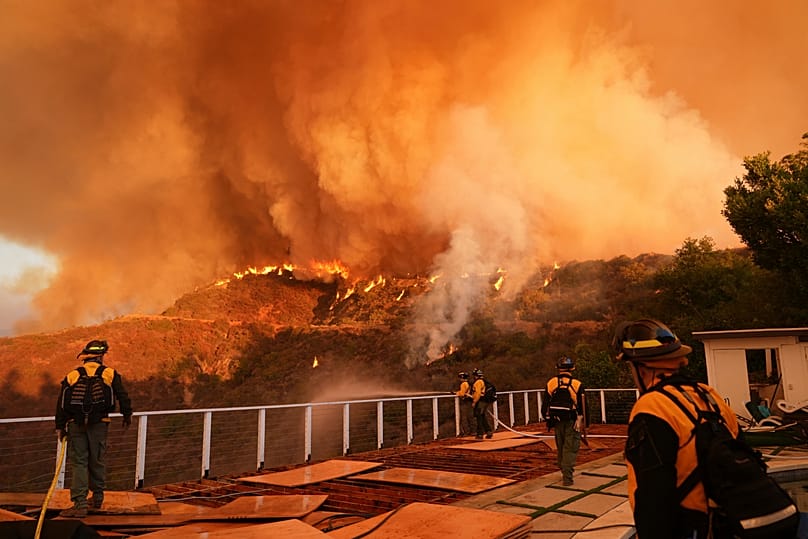
The US has experienced 193 disasters costing at least $1 billion (€864 million) over the past decade, with a total cost of $1.5 trillion (€1.3 trillion). Wildfires have devastated parts of Hawaii, California, Europe, and Australia. Floods have caused significant damage in Pakistan, China, and the American South. Many of these events have been linked to human-caused climate change, according to scientific calculations.
Since 2015, more than 7 trillion tonnes of ice in the world’s glaciers and ice sheets in Greenland and Antarctica have disappeared, according to ice scientists. This is equivalent to more than 19 million Empire State Buildings. Sea levels are rising at an accelerating pace. In the past decade, the world’s seas have risen by 40 millimeters, which is enough water to fill 30 lakes the size of Lake Erie, according to Steve Nerem, a University of Colorado professor who researches sea level rise.
Even the Amazon, where the climate negotiations will take place, has shifted from a region that absorbs heat-trapping gases to one that sometimes emits them due to deforestation.
Success in Bending the Curve
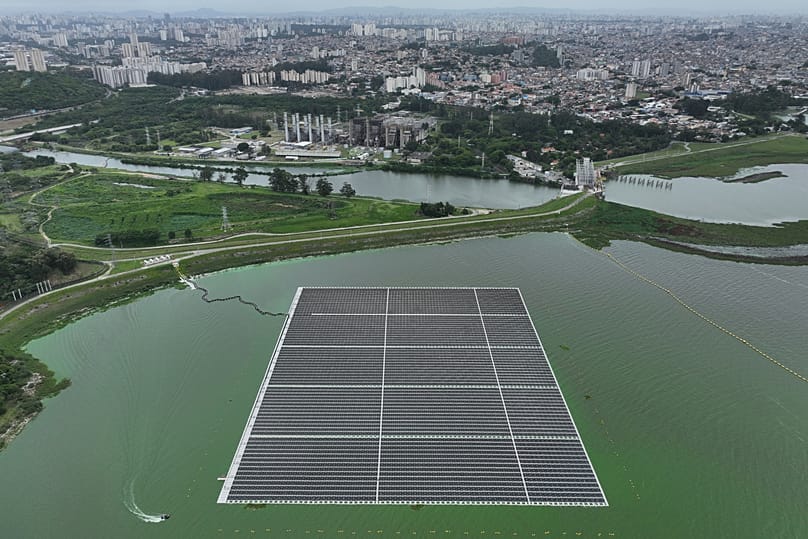
Despite these challenges, there have been notable successes over the past decade. Renewable energy is now cheaper in most places than polluting fossil fuels. According to two July UN reports, 74% of the growth in electricity generated worldwide last year came from wind, solar, and other green sources.
In 2015, half a million electric vehicles were sold globally, and this number rose to 17 million last year. Todd Stern, former US Special Climate Envoy, who helped negotiate the Paris Agreement, stated, “You cannot hold back the tides.”
In 2015, UN projections indicated a path for almost 4°C of warming since the mid-1800s. Now, the world is on track to warm 2.8°C, possibly even less if countries fulfill their promises. However, this is far from the goal of keeping warming below 1.5°C, a level considered critical by scientific reports and the Paris Agreement.
Rockstrom stated that ten years ago, there was a more orderly pathway for avoiding 1.5°C of warming. Now, he said, “We have failed.” A report examining dozens of indicators of progress found that none were on pace for keeping warming at or below the 1.5°C goal.
Pollution Keeps Growing
Methane levels in the atmosphere increased by 5.2% from 2015 to 2024, while carbon dioxide levels rose by 5.8% in the same period, according to NOAA data. Several developed countries, including the United States, have reduced their carbon dioxide emissions by about 7% since 2015. However, other countries have seen their emissions soar, with China’s increasing by 15.5% and India’s by 26.7%, according to data from the Global Carbon Project.
Oxfam International analyzed global emissions by income level and found that the richest 0.1% of people increased their carbon emissions by 3% since 2015, while the poorest 10% reduced their emissions by 30%. Joanna Depledge, a climate negotiations historian from the University of Cambridge, noted that the Paris Agreement has underperformed. She described the situation as a “half-full, half-empty” scenario, where it cannot be declared a failure, but nor can it be considered a dramatic success.