
Soaring Profits and Market Volatility
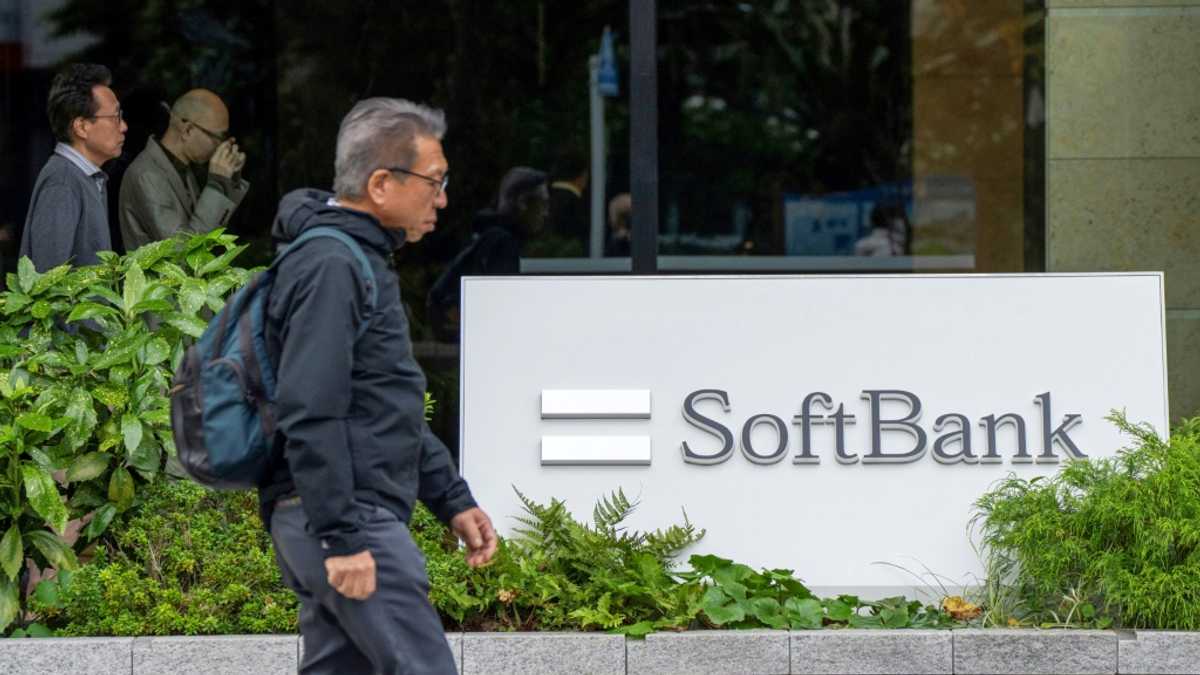
Japan’s SoftBank Group revealed on Tuesday that its net profit more than doubled in the second quarter, driven by a surge in AI-related stock prices that has raised concerns about a potential market bubble. The tech investment giant, which is a significant investor in OpenAI, the company behind ChatGPT, reported a net profit of 2.5 trillion yen (approximately $16.2 billion) for the period from July to September. This marks a substantial increase from the 1.2 trillion yen recorded during the same period in the previous year.
In addition to the impressive earnings, SoftBank announced that it sold $5.8 billion worth of shares in US chipmaker Nvidia last month, after the end of the quarter. The company’s financial results often fluctuate significantly due to its heavy investments in technology startups and semiconductor firms, whose stocks are known for their volatility.
The AI Boom and Market Concerns
Recent months have seen a surge in optimism surrounding AI technology, leading to numerous multi-billion-dollar deals and a significant rise in tech stock values globally. The Nasdaq index, which is heavily weighted towards technology stocks, has increased by 25 percent since May. However, this rapid growth has sparked fears of a market bubble that could eventually collapse, similar to the dot-com crash at the turn of the millennium.
The concerns over inflated AI stock valuations led to a market sell-off last week. Nvidia, a key player in the AI industry, recently became the first company to surpass a $5 trillion valuation, although its market cap has since dropped to around $4.8 trillion. SoftBank did not provide an explanation for the sale of its Nvidia shares in its earnings report, but some analysts suggest it may be related to the company’s founder, Masayoshi Son, aiming to enhance his influence in the AI sector.
Vision for the Future
Son, who is 68 years old, believes that “artificial superintelligence” is on the horizon, which he sees as the beginning of a technological revolution that will bring new inventions and medical advancements. He was seen alongside former US President Donald Trump at the White House in January when SoftBank partnered with OpenAI and Oracle to lead the $500 billion Stargate project aimed at building AI infrastructure in the United States.
According to some estimates, OpenAI has secured approximately $1 trillion in infrastructure deals for 2025, including a $300 billion agreement with Oracle. SoftBank’s stock has experienced a strong performance, with a Jefferies equity research report published last month noting that the recent surge appears to be fueled by excitement around its exposure to OpenAI. The firm has risen more than 140 percent so far in 2025.
Caution and Competition
Despite the positive momentum, Jefferies highlighted several reasons for caution. While OpenAI has strong consumer visibility, its presence in the enterprise market is still limited. The company’s transition from a non-profit to a for-profit entity remains unresolved, and its relationship with Microsoft is still evolving. Additionally, the competitive landscape in the AI industry is intense, with companies like Google, Anthropic, and Grok investing heavily in their own AI initiatives.
SoftBank also announced last month that it would acquire Swiss-Swedish firm ABB Robotics for nearly $5.4 billion as part of its strategy to develop what it calls “physical AI.” This acquisition underscores the company’s commitment to expanding its presence in the AI sector and exploring new opportunities in the field.