
Bangladesh’s Trade Unions Present 10-Point Demands for COP30
Bangladeshi trade unions have issued a comprehensive set of 10 demands ahead of the United Nations Climate Change Conference (COP30), emphasizing the need for workers’ inclusion in all stages of climate policymaking and implementation. The goal is to ensure a just and equitable transition as the world grapples with the impacts of climate change.
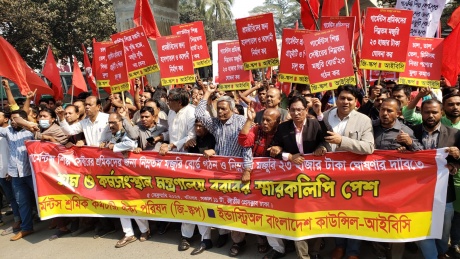
The demands were unveiled during a press conference titled “Bangladeshi Workers and Trade Unions’ Demands for COP-30,” held at the Jatiya Press Club in Dhaka. The event was organized by the National Alliance for Just Transition Bangladesh (NAJTB) in collaboration with the Bangladesh Labour Foundation (BLF), Bangladesh Institute of Labour Studies (BILS), and Mondiaal FNV.
The press conference was presided over by Anwar Hossain, Vice Chairman of BILS and President of the Jatiyatabadi Sramik Dal, and conducted by Yasin Arafat, Senior Programme Officer of BLF. Speakers highlighted the importance of integrating workers’ rights into climate policy discussions, stressing that no worker or community should be left behind in the transition to a sustainable, low-carbon, and inclusive economy.
Key Demands from Trade Unions
The key demands include:
- The inclusion of workers’ representatives in all stages of climate-related policy formulation, implementation, and monitoring.
- Fair inclusion of workers in climate finance.
- Ensuring occupational safety and a just transition for all workers.
- Integrating workers’ fundamental rights into national climate policies.
- Establishing an independent monitoring authority to oversee the implementation of these measures.
NCCWE’s Naimul Ahsan Jewel pointed out that workers in sectors such as agriculture, garments, and tannery are among the most vulnerable to climate change impacts. However, their voices are largely absent from policy discussions, which he said must change.
Syed Sultan Uddin Ahmed, Executive Director of BILS, emphasized that while Bangladeshi workers bear the brunt of climate impacts, they are not responsible for global carbon emissions. He called on the government and corporations to take responsibility for protecting affected workers.
Amirul Haque Amin of IBC urged the government and relevant authorities to implement the proposed demands, while SKOP’s Abdul Kader Hawlader called on the media to help convey workers’ concerns to the broader public.
Anwar Hossain highlighted the role of journalists in amplifying workers’ issues amid the growing climate crisis, stating that their voices can help bring these demands to the attention of policymakers.
Recognition and Calls for Action
Speakers also acknowledged Bangladesh for being the only South Asian country to include a separate chapter on Just Transition in its NDC 3.0. They urged COP30, to be held from November 11-21 in Belem, Brazil, to focus on “turning commitments into implementation.”
They called on global leaders to prioritize people over profit, rights over production, and sustainability over short-term gain.
Leaders from major labour federations, including Abdul Kader Hawlader, Joint Coordinator of the Sramik Karmachari Oikya Parishad (SKOP); Syed Sultan Uddin Ahmed, Executive Director of BILS; Naimul Ahsan Jewel, Member Secretary of the National Coordination Committee for Workers’ Education (NCCWE); and Amirul Haque Amin, Senior Leader of IndustriALL Bangladesh Council (IBC), also spoke at the event.