
The Political Landscape of Côte d’Ivoire’s Presidential Election
Côte d’Ivoire’s recent presidential election, which saw President Alassane Ouattara secure a fourth term with an overwhelming 89.77% of the vote, highlights the complex and often contentious nature of democratic governance in the country. Despite the official results, only 50.10% of the electorate participated in the October 25 polls, raising concerns about the state of democracy in the nation.
The low voter turnout reflects a climate of fear and political tension that has persisted for years. This situation is not surprising given the fragility of Ivorian democracy, especially when it comes to elections, even after 35 years of multiparty politics. The opposition’s dissatisfaction with the electoral process has been a recurring theme, as they have raised questions about the neutrality of the Independent Electoral Commission (CEI) and the reliability of the electoral roll.
Several factors contributed to the tensions surrounding the election. First, the opposition questioned the CEI’s impartiality and called for reforms. They also demanded an audit and revision of the electoral list, citing concerns over its accuracy. Additionally, the exclusion of key figures like Laurent Gbagbo and Tidjane Thiam from the electoral list following court rulings was seen as a deliberate attempt by the authorities to eliminate major contenders.
Ouattara’s bid for a fourth term reignited debates over the legality of his candidacy, given the constitutional two-term limit. These issues underscored the deep-seated divisions within the political landscape of Côte d’Ivoire.
Observations and Incidents During the Election
Various observer missions, including the National Human Rights Council, Indigo Côte d’Ivoire, West African Network for Peacebuilding, and the ECOWAS-AU mission, reported that the voting process was generally peaceful. However, leading up to the election day, several incidents were reported in areas such as Abidjan, Bonoua, Dabou, Daloa, Divo, Gagnoa, Grand-Moutcho, and Yamoussoukro. These incidents were primarily caused by opposition supporters protesting against their candidates’ exclusion, despite a two-month ban on public protests.
The demonstrations led to disruptions in traffic, destruction of property, and election materials. In Nahio, clashes between residents resulted in at least a dozen deaths, although no official toll has been released. These events highlight the volatile nature of the political climate in the country.
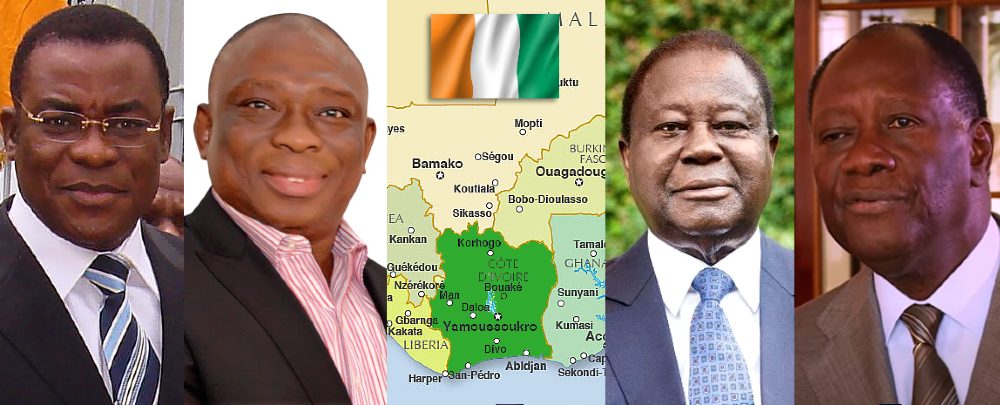
Since 1995, successive presidential elections in Côte d’Ivoire have struggled to move beyond personal rivalries among aging political leaders or attempts by those in power to exclude opponents. Weak national cohesion and a lack of independence of electoral institutions, including the judiciary, are central to these divisions.
Ongoing Challenges and Future Prospects
The outcome of the election remains uncertain, as the scars of the tense process may influence the socio-political climate in the coming weeks and months. The two main political parties that did not participate in the polls, the PPA-CI and PDCI, have criticized the process, describing the election as a ‘civilian coup d’état’ and an ‘electoral heist’. They have also labeled Ouattara’s fourth term as unconstitutional.
The ability of the opposition to mobilize and assert its demands will determine the future of this political standoff. Meanwhile, the government’s determination to prevent and contain unrest remains intact. While elections are naturally moments of political contestation, Côte d’Ivoire’s violent and turbulent political history underscores the need to avoid normalizing instability.
The Path Forward
With his swearing-in scheduled for December 8, Ouattara will begin his final term under the current constitution. Among the many challenges he faces, it is essential that he leaves behind a credible and consensual democratic system. To achieve this, a thorough revision of the electoral and related laws, including the nationality code and penal code, is needed. The format and membership of the electoral institutional framework, centered on the CEI, must also be overhauled.
Electoral reforms have emerged from ad hoc political dialogues, but such agreements rarely survive the shifting interests of political actors. Given the impact of election-related tensions on Côte d’Ivoire’s stability, reform efforts should not be confined to closed-door negotiations. Broader consultation and public debate are necessary to ensure that Ivorian society is not held hostage to elite disputes.
Restoring trust in the judiciary is also vital. The institution is regularly accused of being exploited by successive governments for political purposes, particularly during election season. An independent judiciary would strengthen national cohesion and ensure credible polls.
Regional and International Context
The stakes of Côte d’Ivoire’s presidential election were not merely national. Voting occurred amid regional insecurity and political instability, marked by coups and growing criticism about the relevance of the traditional democratic model. It also occurred in an international context characterized by a crisis of liberal democracy affecting several Western democracies.
The struggle for influence in West Africa between authoritarian powers and Western nations has made Western powers reluctant to openly promote democratic values. Côte d’Ivoire is viewed as a pillar of stability and socioeconomic development in the subregion. Strengthening its democracy could help ensure the country’s long-term stability.
Regional and international partners such as ECOWAS, the AU, United Nations, and European Union should support efforts to improve governance, including anti-corruption efforts, electoral reform, judicial independence, and social cohesion.