
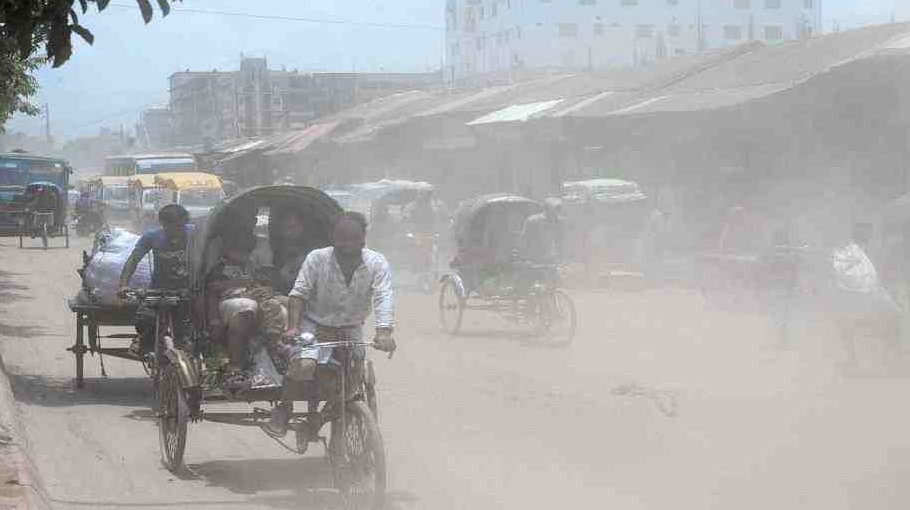
Dhaka Faces Severe Air Pollution Crisis
Dhaka, the densely populated capital of Bangladesh, is struggling to breathe as it ranks among the most polluted cities in the world. The city recently recorded an air quality index (AQI) score of 2:21 at 8:59 am on Tuesday, which is classified as ‘very unhealthy’. This alarming situation highlights the urgent need for action to address the deteriorating air quality.
In the latest global ranking of polluted cities, Dhaka takes the third position. India’s Delhi, Pakistan’s Lahore, and Uzbekistan’s Tashkent occupy the first, second, and fourth spots respectively, with AQI scores of 762, 463, and 208. These figures underscore the severity of air pollution across several South Asian cities.
The AQI is a crucial tool used by government agencies to communicate daily air quality information to the public. It helps people understand how clean or polluted the air is in a specific city and what health risks might be associated with it. The index measures various pollutants and provides a clear picture of the air quality’s impact on human health.
Understanding AQI levels is essential for assessing the risk to public health. When the AQI value for particle pollution falls between 50 and 100, the air quality is considered ‘moderate’, and sensitive individuals should limit prolonged outdoor exertion. Between 101 and 150, the air quality is deemed ‘unhealthy for sensitive groups’. If the AQI ranges from 150 to 200, it is categorized as ‘unhealthy’. A reading between 201 and 300 is considered ‘very unhealthy’, while a score above 301 is labeled ‘hazardous’, posing serious health risks to residents.
In Bangladesh, the AQI is calculated based on five criteria pollutants: Particulate Matter (PM10 and PM2.5), Nitrogen Dioxide (NO2), Carbon Monoxide (CO), Sulfur Dioxide (SO2), and Ozone. These pollutants contribute significantly to the overall air quality issues faced by the country.
Dhaka has long been battling air pollution problems. The city’s air quality typically becomes unhealthy during the winter months and improves during the monsoon season. However, this seasonal variation does not alleviate the ongoing crisis that affects millions of residents.
Factors Contributing to Air Pollution
With the arrival of winter, Dhaka’s air quality begins to deteriorate rapidly. This is primarily due to the massive discharge of pollutant particles from various sources, including construction activities, poorly maintained roads, brick kilns, and other industrial processes. These factors contribute to the accumulation of harmful particulates in the air, making it increasingly difficult for residents to breathe.
The problem is not unique to Dhaka. Air pollution consistently ranks among the top risk factors for death and disability worldwide. According to numerous studies, breathing polluted air increases the likelihood of developing heart disease, chronic respiratory diseases, lung infections, and cancer. These health risks highlight the importance of addressing air pollution as a critical public health issue.
The Need for Immediate Action
As the situation continues to worsen, there is an urgent need for comprehensive measures to combat air pollution in Dhaka. This includes stricter regulations on industrial emissions, improved urban planning, and increased public awareness about the dangers of air pollution. Additionally, promoting sustainable practices and investing in cleaner energy sources can play a significant role in improving air quality.
The health of the population depends on the effectiveness of these interventions. Without immediate and sustained efforts, the air quality in Dhaka and other affected cities will continue to pose serious threats to public health.