
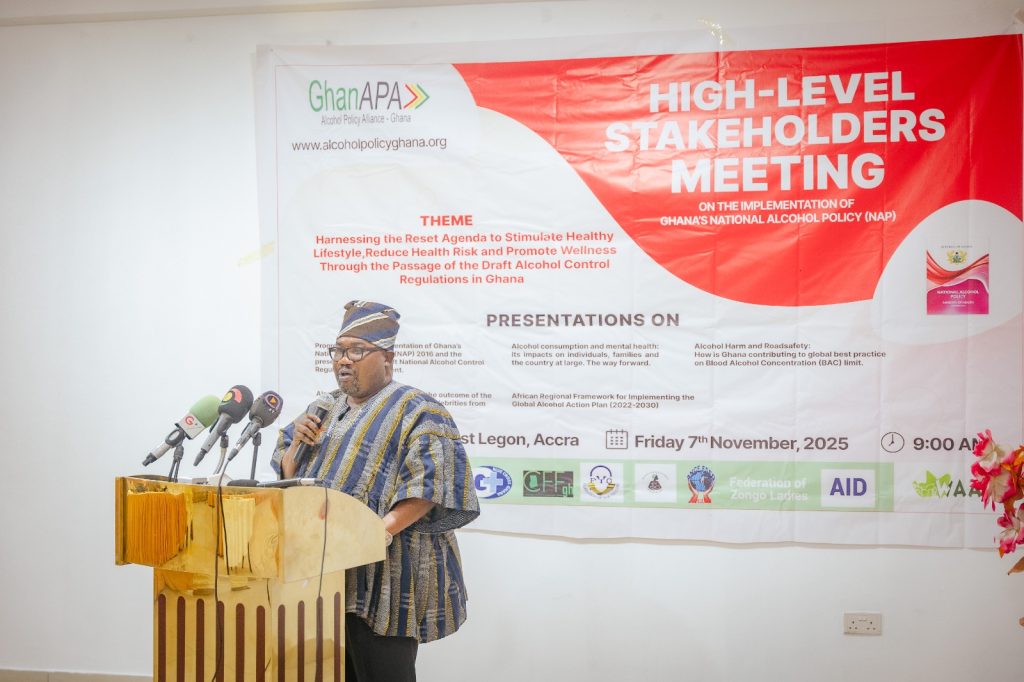
Key Takeaways from the High-Level Meeting on Alcohol Control Regulations
Participants at the end of a 2nd High-Level Meeting in Accra have emphasized the urgent need for duty bearers to fast-track the passage of the draft National Alcohol Control Regulations. The meeting, themed “Harnessing the Reet Agenda to stimulate healthy lifestyle, reduce health risks and promote wellness through the passage of the draft National Alcohol Control Regulations in Ghana,” was organized by the National Policy Alliance – Ghana (GhanAPA) in Accra on Friday.
The event brought together representatives from various institutions, including the Food and Drugs Authority, Ghana Health Service, National Health Insurance Authority, Mental Health Authority, National Road Safety Authority, Ghana Revenue Authority, and the West African Alcohol Alliance, among others. These stakeholders highlighted the importance of ensuring that the government, Ministry of Health, and Parliament prioritize the presentation and passage of the regulations.
They also urged the government to safeguard public health policies and the National Alcohol Policy from commercial and vested interests. The participants recommended that the Ministry of Health, Ministry of Finance, and Parliament allocate adequate and sustainable financing for the implementation of the National Alcohol Policy 2016 and Section 173 (3)(f) of the Public Health Act 2012.
Additionally, they called on Parliament to expedite actions on the passage of the Amended Road Traffic Act and requested that the National Road Safety Authority be adequately funded. They further suggested that tax revenue generated from alcoholic beverages should be used for the prevention of alcohol-related diseases, with rehabilitation centers being established and properly funded.
A Call to Action for Ghana
Mr. Benjamin Anabila, Chairman of GhanAPA, expressed concern that Ghana, which had an alcohol policy in place before other countries in West Africa formed alliances, does not yet have a national alcohol control regulation policy. He pointed out that countries like Sierra Leone, Gambia, and Liberia, which previously looked up to Ghana, have developed their policies in 2022, 2023, and 2024 respectively, and have already advanced their draft regulations before their parliaments.
“This should be a wake-up call for Ghana to expedite the draft regulations that are currently with the Ministry of Health, Cabinet, and Parliament for passage,” Mr. Anabila stated. He emphasized that alcohol consumption, according to the World Health Organization, has no safe level, and the statistics were alarming.
“I hope that we shall move from this stage to see the alcohol legislation in parliament and its passage by next year, so that we can meet again for another high-level meeting like this,” he concluded.
Government Assurance and Next Steps
Dr. Mark Kurt Nawane, Chairman of the Health Committee of Parliament and Member of Parliament for Nabdam, who presided over the meeting, assured participants that the committee would not hesitate to pass the regulations into law as soon as they are presented to Parliament.
“As we speak now, the bill has been passed into law, but I think the L.I. or the regulations are with the Ministry of Health, and it is supposed to go to Cabinet before it comes back to Parliament,” Dr. Nawane explained.
He added, “As your parliamentarian and the chairman of the health committee, I can assure you that once it goes through the process, that is through the Executive Arm of government and comes back to Parliament, we will ensure that the health committee with the Subsidiary Legislation Committee will sit down and within the shortest possible time pass it into regulation for the country.”
Recommendations for Effective Implementation
The meeting produced several key recommendations aimed at ensuring the effective implementation of the National Alcohol Control Regulations:
- Allocation of Resources: The Ministry of Health, Ministry of Finance, and Parliament must ensure adequate and sustainable funding for the implementation of the National Alcohol Policy 2016 and relevant sections of the Public Health Act 2012.
- Legislative Prioritization: Parliament should prioritize the passage of the Amended Road Traffic Act, with the National Road Safety Authority receiving sufficient funding.
- Revenue Utilization: Tax revenue generated from alcoholic beverages should be directed towards the prevention of alcohol-related diseases and the establishment of rehabilitation centers.
- Public Awareness Campaigns: Institutions such as the Ghana Health Service and the National Road Safety Authority should lead initiatives to raise public awareness about the risks associated with alcohol consumption.
These steps are crucial in aligning Ghana’s policies with global health standards and ensuring the well-being of its citizens.