
Rising Gold Prices in Vietnam Amid Global Trends
Gold prices in Vietnam have seen a notable increase on Monday morning, reflecting a broader upward trend in the global market. This surge is largely attributed to growing uncertainties surrounding the U.S. economic outlook, which has prompted investors to seek safer assets.
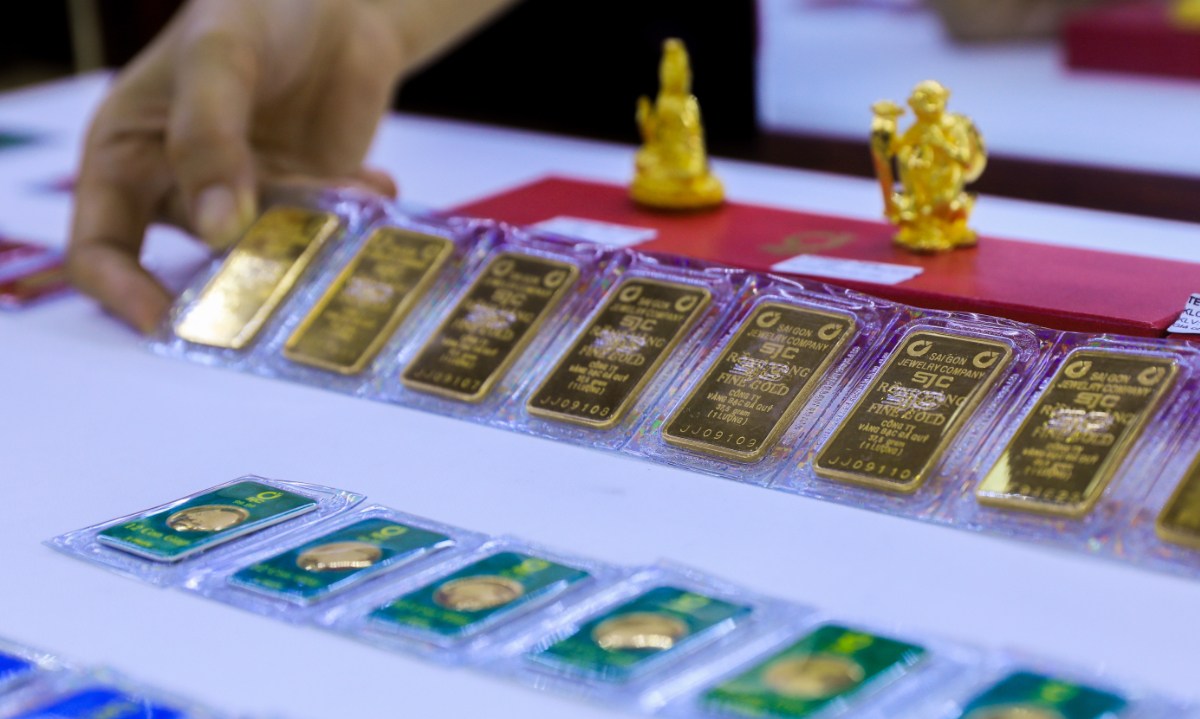
At the local level, the Saigon Jewelry Company reported that gold bars increased by 0.81%, reaching VND149.6 million (US$5,687.69) per tael. Similarly, gold rings saw a rise of 0.96%, with the price per tael now standing at VND147.2 million. A tael, commonly used in the jewelry industry, is equivalent to 37.5 grams or 1.2 ounces. These figures highlight the increasing demand for gold in the Vietnamese market.
Since the beginning of the year, Vietnam’s gold prices have surged by an impressive 78%, indicating a strong and sustained upward movement. This growth is not isolated to the domestic market but is part of a larger global trend. During Asian trading hours on Monday, gold prices rose by 1.3% to approximately $4,050 per ounce. According to financial data platform FXStreet, this increase is driven by concerns over the U.S. economic outlook.
Factors Influencing the Gold Market
One of the key factors contributing to the rise in gold prices is the uncertainty surrounding the U.S. economy. Recent data releases, including weaker-than-expected private employment numbers and a pessimistic University of Michigan Consumer Sentiment Index, have raised concerns among investors. These indicators suggest a potential slowdown in economic activity, leading traders to reassess their investment strategies.
In response to these developments, traders have increased their bets on a possible U.S. interest rate cut. A reduction in interest rates could lower the opportunity cost of holding gold, making it a more attractive investment. Unlike traditional financial assets that generate income, gold does not yield returns, but it often performs well during periods of economic uncertainty.
Impact of Interest Rates on Gold
The relationship between interest rates and gold prices is complex. When interest rates are low, the cost of borrowing decreases, which can stimulate economic growth. However, it also reduces the return on savings and other interest-bearing assets. This dynamic makes gold more appealing as an alternative investment.
Furthermore, a lower interest rate environment can lead to higher inflation, which erodes the purchasing power of fiat currencies. In such scenarios, gold often serves as a hedge against inflation, further supporting its price. The current economic climate, marked by mixed signals from the U.S. economy, has created conditions favorable for gold.
Conclusion
The recent rise in gold prices in Vietnam reflects broader global trends and economic uncertainties. As investors navigate an unpredictable economic landscape, gold continues to play a crucial role as a safe-haven asset. With ongoing discussions about potential interest rate cuts and mixed economic data, the gold market is likely to remain volatile in the coming weeks. Investors and consumers alike should closely monitor these developments to make informed decisions.