
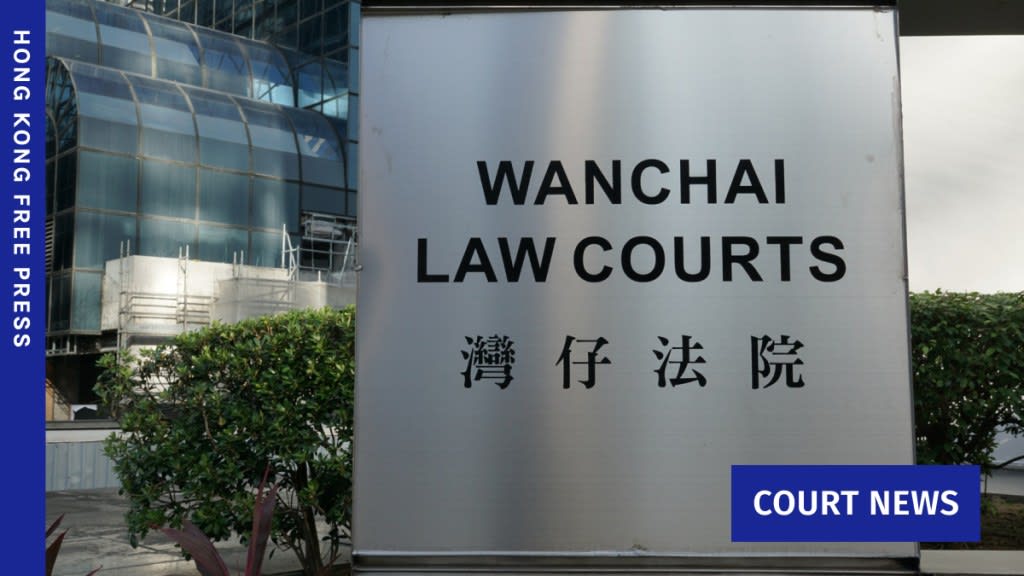
A Hong Kong judge has approved a temporary closed-door hearing for the trial of three individuals – two police officers and a retiree – who are accused of impersonating national security personnel three years ago, as reported by local media.

Deputy District Judge Peng Leung-ting allowed the closed-door hearing on Monday, following a joint request from both the prosecution and the defense. This came after two of the defendants sought to apply for a “permanent stay of proceedings,” which would halt the case against them, according to The Witness.
The lawyers for retiree Lee Suet-fai and police officer Chong Kong-wai argued in their application that “sensitive information relating to national security” could be revealed during the proceedings, as stated by prosecutors in court. The three men – Lee, Chong, and police officer Tang Hui-yeung – are charged with conspiring to defraud between March 27 and April 1, 2022.
According to local reports, the trio allegedly posed as national security police officers and blackmailed a man surnamed Cheung, demanding money to settle a transaction between two companies based in Shenzhen. They also reportedly claimed that the Guangdong provincial national security department had suspected Cheung of fraud and warned that Hong Kong authorities might investigate him. The two police officers have since been suspended from duty.
The three suspects were first brought to court in September 2022. A trial was scheduled to begin on Monday. However, due to the joint request from the prosecution and defense for a closed-door hearing, the case will now proceed under this restricted setting.
The request cited a provision under Hong Kong’s domestic security law, the Safeguarding National Security Ordinance, known locally as Article 23. This rule allows a judge to order criminal proceedings to be held in a closed court to protect national security, including preventing the disclosure of state secrets, safeguarding public order, justice, and for “any other proper purpose.”
Prosecutors informed the court that the defense was expected to raise “sensitive issues” in their application, even if they did not constitute state secrets. They emphasized the need for caution. Judge Peng agreed with the defense’s request and granted the closed-door hearing. He added that the court would provide further instructions on whether the trial would be conducted in an open court.
This is believed to be the first time the closed-door hearing rule under Article 23 has been invoked since the law was passed in March 2024.
Unlike the 2020 Beijing-enacted security law, the Safeguarding National Security Ordinance targets offenses such as treason, insurrection, sabotage, external interference, sedition, theft of state secrets, and espionage. It permits pre-charge detention of up to 16 days and may restrict suspects’ access to lawyers, with penalties ranging from fines to life imprisonment.
Article 23 was initially proposed in 2003 but was shelved due to mass protests and remained a sensitive topic for years. It was finally enacted on March 23, 2024, after being fast-tracked and unanimously approved by Hong Kong’s legislature, which lacks opposition voices.
The law has drawn criticism from human rights organizations, Western governments, and the United Nations, who describe it as vague, overly broad, and “regressive.” However, authorities argue that it is necessary to address perceived foreign interference and to “close loopholes” following the 2019 protests and unrest in the region.
