
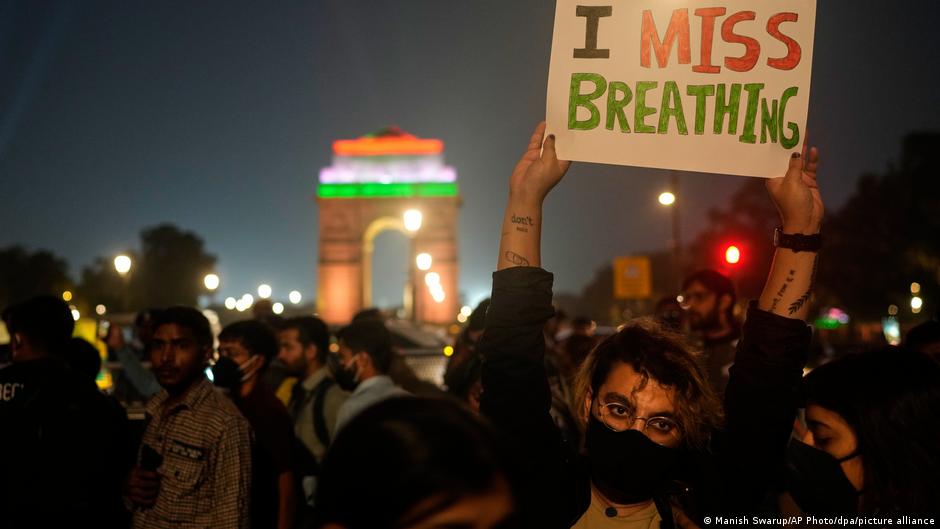
Protests Erupt in New Delhi Over Escalating Air Pollution Crisis
Hundreds of citizens took to the streets of New Delhi to voice their frustration over what they perceive as government inaction in addressing the city’s deteriorating air quality. The situation reached a critical point over the weekend, with air quality levels plummeting to “severe” and even “hazardous” ranges, sparking widespread public concern.
The protests, which drew large crowds, were held in response to a growing public health crisis exacerbated by rampant air pollution. Demonstrators gathered at the symbolic India Gate plaza, demanding immediate action from authorities. However, riot police intervened, dispersing the protesters and detaining dozens, citing that the demonstration was not permitted at that location.
Opposition leaders condemned the arrests, emphasizing the importance of the right to peaceful assembly. Notably, Rahul Gandhi, a prominent figure from the Indian National Congress (INC), highlighted that “the right to clean air is a basic human right.” His remarks underscored the deepening divide between the ruling party and opposition factions over how to address the environmental challenges facing the city.
By Monday morning, New Delhi’s air quality index had reached approximately 344, well above the World Health Organization’s recommended limits for safe exposure. On Sunday, the index reportedly surged to 390, indicating an alarming level of pollution. These figures have raised serious concerns about the health risks faced by residents, particularly those with preexisting medical conditions.
The Seasonal Challenge of Air Pollution in New Delhi
New Delhi, home to around 30 million people, is frequently ranked among the most polluted cities globally. Each year, the city experiences a sharp rise in air pollution during the winter months, driven by factors such as construction dust, vehicle emissions, and the burning of agricultural waste in neighboring regions. This combination leads to the formation of a thick smog that poses severe health risks, including respiratory and cardiovascular issues, eye and throat irritations, headaches, skin discomfort, and persistent coughing.
Lawyer Tanvi Kusum, speaking to AFP, expressed frustration with the lack of progress in addressing the issue. “Year after year, it is the same story but there is no solution,” she said. “We have to build pressure so that the government at least takes up the issue seriously.”
Over the weekend, air pollution levels spiked across the region, with parts of the wider area experiencing “severe” and “hazardous” conditions. According to the National Air Quality Index (NAQI), these levels pose significant health risks, especially for vulnerable populations.
Government Measures and Ongoing Concerns
In response to the crisis, Delhi officials have implemented measures under the Graded Response Action Plan (GRAP). These include stricter controls on dust from construction sites, restrictions on diesel generators and engines, and attempts to induce rainfall through cloud seeding. However, a more stringent application of GRAP would involve halting construction activities and closing schools, moving classes online. While officials are considering this step, it has not yet been enforced.
The ruling Bharatiya Janata Party (BJP) has reiterated its commitment to tackling pollution, stating that it will continue “every possible effort to rid us of pollution.”
Despite these efforts, the problem remains urgent. A report by IQAir, a Swiss-based air quality monitoring database, revealed that the majority of the world’s most polluted cities are located in India. Additionally, a study published inThe Lancet Planetary Healthlinked long-term exposure to air pollution with approximately 1.5 million deaths annually in the country.
Voices of the Protesters
Protesters like Namrata Yadav have voiced their fears for the future. Speaking to AFP, she said, “I am here because I don’t want to become a climate refugee.” Her words reflect the growing anxiety among citizens who feel that the government is failing to protect their health and well-being.
As the crisis continues, the call for meaningful action grows louder, with citizens demanding solutions that prioritize public health and environmental sustainability.