
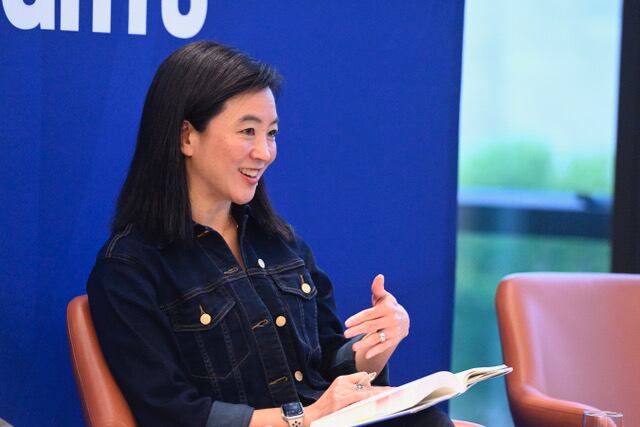

A Vision for Democracy Through Citizen Participation
Han Hari, a 50-year-old Korean-American political scientist at Johns Hopkins University, has made it her mission to understand how the political engagement of ordinary people can transform society. Recently honored as a 2025 MacArthur Fellow, Han emphasizes that “citizen participation and the organization of social movements are the twin engines essential to revitalizing democracy.” Her work centers on how these forms of involvement can lead to meaningful change and a more inclusive democratic system.
The MacArthur Fellowship: A Recognition of Innovation
The MacArthur Foundation, known for its generous support and enigmatic selection process, awarded Han one of the 22 fellowships in 2025. This prestigious award, often referred to as the “Genius Grant,” provides recipients with $800,000 over five years without any restrictions. The foundation, founded by the owners of Bankers Life, selects individuals who have shown exceptional creativity and innovation in their respective fields.
Han’s recognition was based on her contributions to understanding which forms of citizen participation are most sustainable and impactful. She highlights the importance of grassroots democracy, stating, “A better society emerges when people feel they can write their own future. At the heart of everything lies the question: How can we engage people in self-governance projects?”
Concerns About Digital Media and Political Influence
Despite the benefits of digital media, Han warns about the growing influence of platforms like YouTube and social media in politics. While she acknowledges that these tools are not inherently harmful, she points out that many were not designed with democratic values in mind. “The trend of digital media gaining political influence through platforms like YouTube and podcasts clearly has problems,” she says.
She also raises concerns about the extreme rhetoric used by political influencers. “The ‘anger-inducing content’ created by influencers triggers negative cycles as people react to it. This issue is global and will weaken democracy over time,” Han explains. Additionally, she warns that advancements in artificial intelligence (AI) pose a threat to democracy by enabling the rapid spread of disinformation. “The technology we have today makes it far easier to disseminate false information, posing a major threat to democracy. Governments clearly have a responsibility to regulate this area,” she adds.
Lessons from the New York City Mayoral Election
In discussing the recent New York City mayoral election, which brought Zohran Mamdani—a 34-year-old Muslim immigrant with limited political experience—to power—Han observed, “This election process revealed that people of all ages yearn for new ways to participate in public life. The challenge lies in harmonizing the demand to engage in politics with the opportunities to do so.”
Background and Influences
Born to parents who immigrated to the U.S. in the early 1970s, Han attended Harvard University and earned a Ph.D. in political science from Stanford University. After teaching at Wellesley College and the University of California, Santa Barbara, she joined Johns Hopkins in 2019. There, she leads the SNF Agora Institute for the study of global democracy.
Reflecting on her upbringing, Han shares, “I was deeply influenced by stories my grandparents and parents told about growing up in a divided homeland. They raised me with the belief that we have a responsibility to imagine and realize a world of possibilities—a mindset that still shapes my life today.”
Key Takeaways from Han Hari’s Work
- Han Hari’s research focuses on the role of citizen participation in strengthening democracy.
- She highlights the importance of grassroots movements and the need for sustainable forms of political engagement.
- Han expresses concerns about the impact of digital media and AI on democratic processes.
- Her work underscores the need for governments to address the challenges posed by disinformation and extreme rhetoric.
- Personal experiences and family history have significantly shaped her perspective on democracy and civic responsibility.