
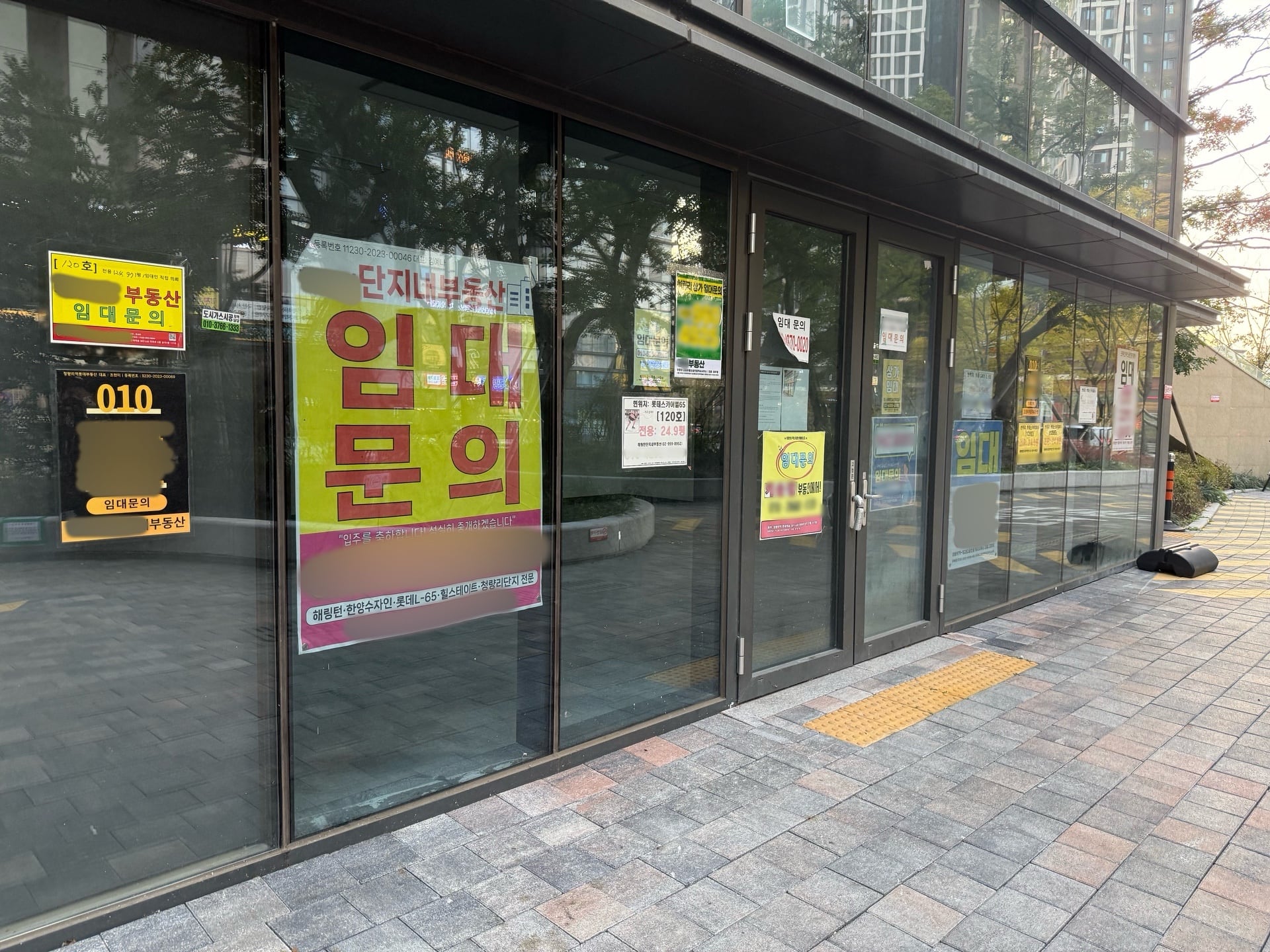
On the afternoon of the 5th, the commercial area within the Olympic Park Foreon Apartment complex in Seoul’s Gangdong-gu appeared desolate. Many first-floor storefronts were vacant, with some units along the main road standing empty and littered with flyers on the floor. Despite being located in an apartment complex that houses over 12,000 households, the situation was far from ideal. Some units with “Lease Inquiry” signs hosted temporary pop-up stores selling underwear and winter gear. In fact, only 58 out of 155 first-floor units were operational, resulting in an occupancy rate of just 37.4%.
A real estate agent in the complex explained that despite first-floor lease prices dropping from 1 million won per 3.3㎡ during the initial sale to 400,000–500,000 won today, inquiries remain rare. Aside from real estate agencies, few businesses are interested in the first floor. The second floor, with lease rates around 300,000 won per 3.3㎡, is more affordable, which discourages merchants from opting for the first floor.
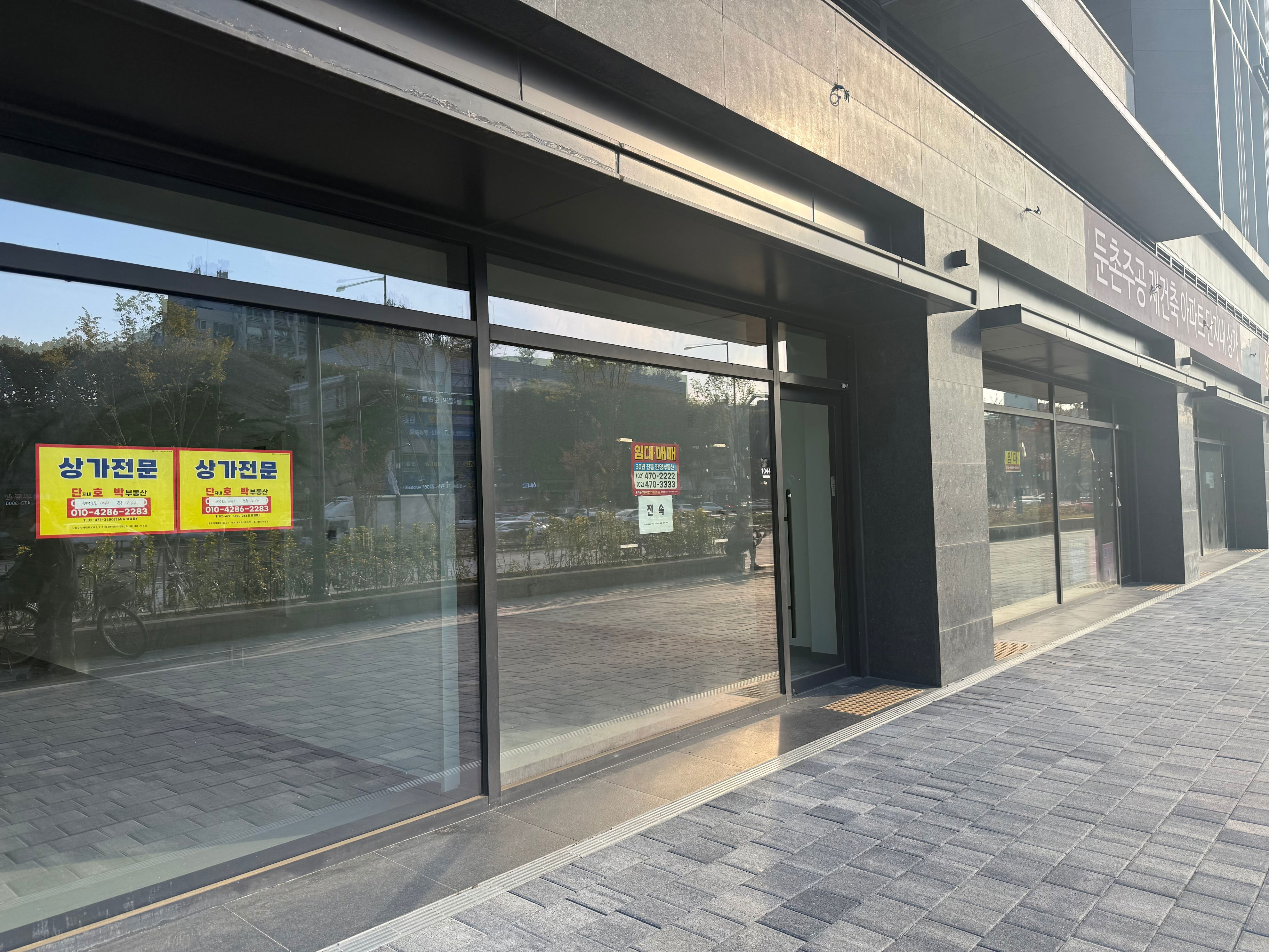
High-rise apartments near Cheongnyangni Station in Dongdaemun-gu faced similar issues. The Art Forest commercial area within the mixed-use Cheongnyangni Station Hansae Yangzuin Graciel, which residents moved into in June 2023, had only 7 of its 47 first-floor units operational, yielding a 14.9% occupancy rate. Despite over 1,000 households residing there, the commercial area was nearly empty on the afternoon of the visit. Across the street, the Sky L65 apartment’s first-floor units along the main road had no vacancies, but its second to fourth floors were mostly empty except for a few laundromats and convenience stores.
The reason apartment commercial areas—once considered “lottery tickets” due to guaranteed high returns from large resident populations—are facing vacancies lies in their initially high sale prices. To maximize profits, associations set high sale prices, leaving buyers unable to lower lease rates due to loan repayments. First-floor lease rates, often inflated due to high foot traffic, also contribute to vacancies. Unlike upper floors, which attract hospitals and academies, first floors target food, beverage, and retail businesses. However, the rise of online shopping has reduced foot traffic, leaving these stores struggling.
According to the Korea Real Estate Board, the average lease rate for collective commercial spaces in Seoul was 49,300 won per ㎡ in the third quarter of 2025, but first-floor units in new apartments typically range from 100,000 to 150,000 won per ㎡.
To prevent such issues, redevelopment associations are increasingly reducing or excluding commercial areas in reconstruction projects. The Daechi Woosung 1st and Daechi Ssangyong 2nd apartment associations are pursuing reconstruction without new commercial areas, offering existing commercial owners apartment residency rights instead. The Jamsil Woosung 4th apartment association in Songpa-gu is also considering building only apartments, reflecting commercial owners’ opinions.
Experts predict that the exclusion of commercial areas in future apartment reconstructions will grow. Professor Seo Jin-hyeong of Kwangwoon University’s Real Estate Department stated, “Even with high foot traffic, vacancies are inevitable if demand isn’t reflected. Commercial areas already facing vacancies must diversify businesses and attract pop-up stores to actively draw customers by linking with external commercial districts.”