
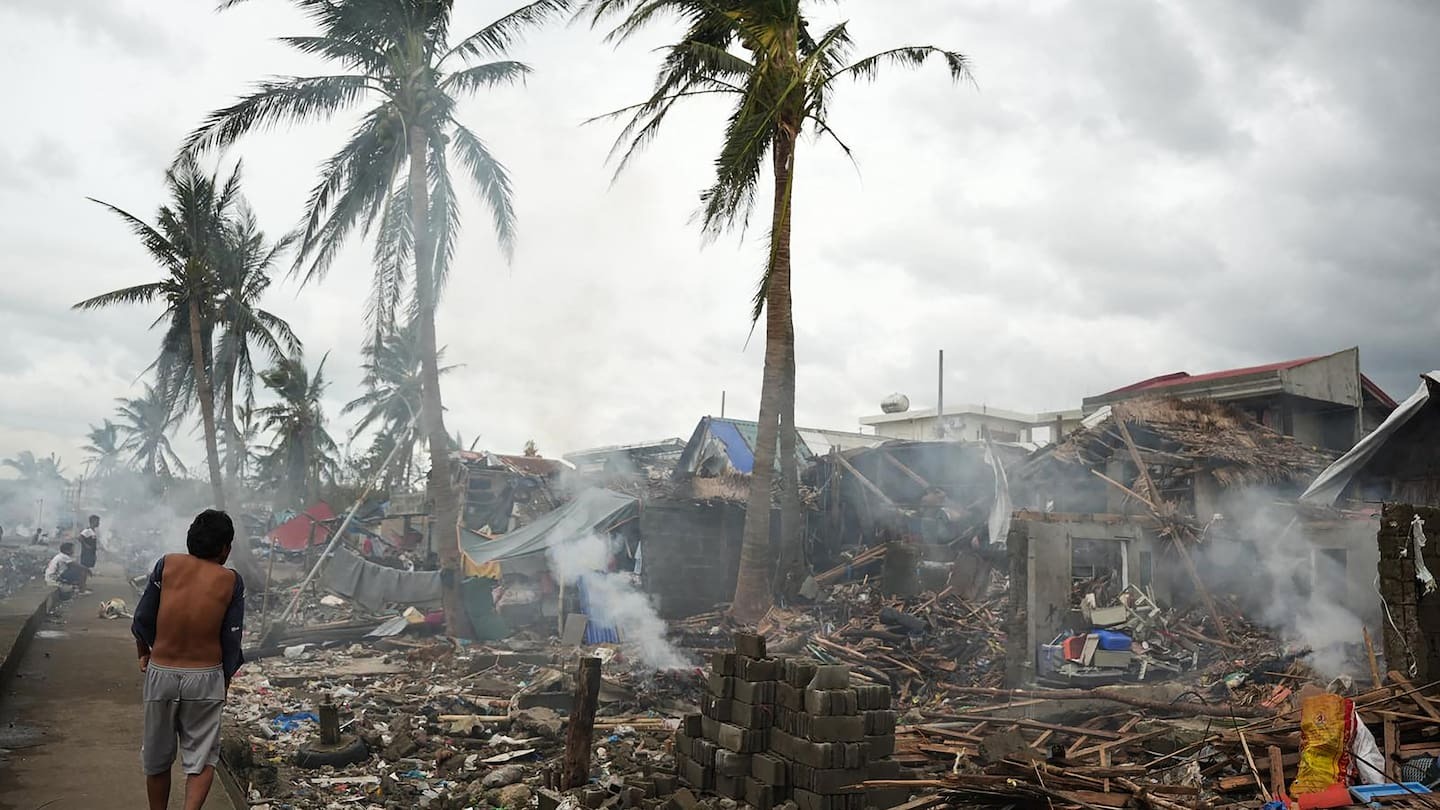
Ongoing Rescue Efforts Amid Typhoon Devastation
Rescuers in the Philippines have been working tirelessly to clear the devastation caused by Typhoon Fung Wong, using backhoes and chainsaws to dig through the wreckage. As floodwaters receded in hundreds of villages, the death toll from the storm has risen to 18. Fung Wong, which displaced 1.4 million people, had weakened into a severe tropical storm even as it began dumping heavy rain on neighboring Taiwan ahead of an expected Wednesday landfall.
This marks the second major typhoon to hit the Philippines in recent days, following Typhoon Kalmaegi, which last week wreaked havoc across the central islands of the archipelago. According to the latest figures, Kalmaegi was responsible for 232 deaths.
In coastal Isabela province, a town of 6,000 residents remained cut off from help on Tuesday, according to a civil defense spokesman. Parts of neighboring Nueva Vizcaya province were also isolated, with landslides preventing rescuers from reaching affected areas.
“We are struggling to access these areas,” said Alvin Ayson, a spokesman for the Cagayan Valley region. He added that many residents were now in evacuation centers, but returning home would be a long process filled with challenges.
A 10-year-old boy in Nueva Vizcaya was killed by one of the landslides, bringing the total number of deaths to 18, as reported by national civil defense deputy administrator Rafaelito Alejandro. In a phone interview, Alejandro told AFP that early recovery efforts would take weeks. “The greatest challenge for us right now is the restoration of lifelines, road clearing, and restoration of power and communication lines, but we are working on it.”
In Catanduanes island, which was among the hardest-hit areas, issues with the water supply could take up to 20 days to fix, he said.
Impact on Taiwan
Schools and offices were closed on Tuesday in multiple counties in Taiwan as the approaching storm intensified the northeast monsoon, triggering heavy rain. Up to 400 millimeters (nearly 16 inches) of rain is expected over the next 24 hours, according to government and weather officials there. President Lai Ching-te urged people to avoid mountainous areas, beaches, and “other dangerous locations” to “get through this period safely.”
A Record-Breaking Storm
In Cagayan, part of the Philippines’ largest river basin, provincial rescue chief Rueli Rapsing told AFP on Monday that a flash flood in neighboring Apayao province had caused the Chico River to burst its banks, sending nearby residents scrambling for higher ground. “We received reports … that some people were already on their roofs,” he said, adding most had been rescued.
Mark Lamer, 24, a resident of Cagayan’s Tuao town, described the storm as the “strongest typhoon I have ever experienced.” “We didn’t think the water would reach us. It had never risen this high previously,” he said.
More than 5,000 people were safely evacuated before the overflowing Cagayan River buried the small city of Tuguegarao about 30 kilometers (20 miles) away. “Tuguegarao is underwater now,” Rapsing said.
Climate Change and Increasing Storm Intensity
Scientists warn that storms are becoming more powerful due to human-driven climate change. Warmer oceans allow typhoons to strengthen rapidly, and a warmer atmosphere holds more moisture, resulting in heavier rainfall.
Fung Wong’s death toll rose further on Monday after five-year-old twins and an elderly man in two northern Luzon provinces were reported killed in landslides. The two children were killed at around 2:00 a.m. as their family slept inside their home, according to Ayson, the regional spokesman. Seasonal monsoon rains had saturated the soil around the dwelling before Fung Wong struck, he said.
The storm’s first fatality came a day earlier further south in Samar province, while another was confirmed on Catanduanes island, where storm surges Sunday morning sent waves hurtling over streets and floodwaters into homes.
Typhoon Kalmaegi last week sent floods rushing through the towns and cities of the central Philippines, sweeping away cars, riverside shanties, and shipping containers. President Ferdinand Marcos announced on Monday that a “state of national calamity” declared over Kalmaegi would be extended to a full year.