
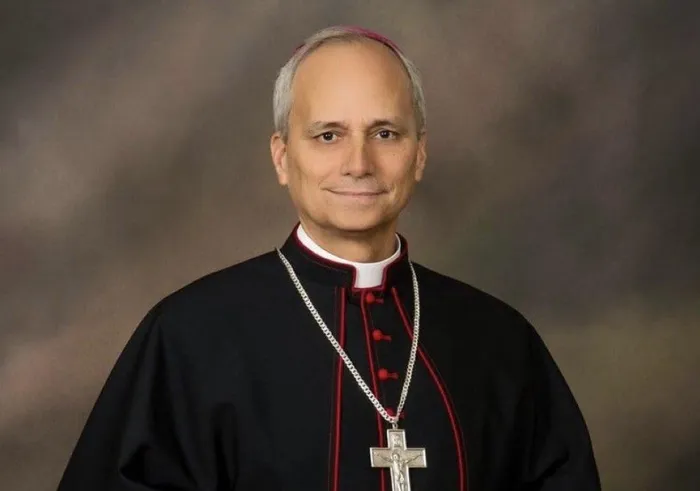
A Meeting of Global Leaders
President Cyril Ramaphosa recently met with His Holiness Pope Leo XIV at the Vatican in Rome. The meeting took place during a working visit to the Holy See, where Ramaphosa emphasized the importance of global solidarity, equality, and justice in the face of rising conflicts, deepening inequality, and environmental crises.
Ramaphosa arrived in Rome on Friday morning for the visit, accompanied by International Relations and Cooperation Minister Ronald Lamola and his daughter, Keneilwe Ramaphosa. This was South Africa’s first high-level engagement with Pope Leo XIV, who was appointed as Pontiff in May following the passing of Pope Francis.
According to the Presidency, the visit aimed to strengthen cooperation between South Africa and the Holy See in areas such as humanitarian aid, climate justice, emergency response, and peace building. The Holy See maintains diplomatic relations with over 180 countries and holds observer status at major international bodies like the United Nations. Its influence stems from its moral, religious, and diplomatic authority.
During his address to Pope Leo XIV, President Ramaphosa expressed gratitude for the pontiff’s warm welcome to the “Eternal City and the heart of the Catholic faith.” He conveyed the good wishes of the government and people of South Africa, highlighting the challenges humanity faces today.
“We meet at a time when humanity faces immense challenges,” said Ramaphosa. “To many, it seems easier to fund wars than to invest in peace. Conflicts across the globe are dividing societies and inflicting untold destruction. These global challenges cannot be resolved by nations acting alone; only through solidarity and multilateralism.”
He pointed out that rising economic inequality continues to stifle opportunity and hinder shared prosperity. Additionally, the planet is strained by current modes of production and consumption, which threaten the survival of future generations. Ramaphosa urged world leaders to think beyond the immediate and commit to sustainable solutions, calling for a new global spirit.
“Through our G20 Presidency, South Africa sees an opportunity to promote solidarity that advances the common good,” he said. “This is a moment to forge greater equality, empowering the marginalized, unlocking human potential, and ensuring justice for all.”
The president emphasized that the pursuit of a just and sustainable world must be grounded in unified action and innovation that prioritizes people and the planet over profit. He commended Pope Leo XIV for his leadership in promoting spiritual and moral guidance in world affairs, noting the passing of Pope Francis earlier this year had been “a great loss to the world.”
“Holy Father, your election as successor to St Peter has provided hope and encouragement. Faith-based communities have been at the forefront of our struggle for democracy, human rights, and social justice,” said Ramaphosa.
As South Africa prepares to host the G20 Leaders’ Summit later this month under the theme “Solidarity, Equality, Sustainability,” the country will draw on its philosophy of Ubuntu — the recognition of shared humanity — to guide discussions on global reform.
“We will prioritize pressing issues, such as inequality, food security, and the social, economic, and environmental development of Africa and the Global South,” said the president. “Solidarity has been a defining characteristic of human development. The human impulse is not towards isolation, but towards community. We are drawn to one another, to conversation, to shared labor.”
Ramaphosa added: “It is through this solidarity that the strong discover their true strength: not in dominion, but in lifting up the weak. So too must the wealthy nations embrace their duty to the poor, in health, in education, and in security, not as an act of charity, but to build a just world.”
He addressed the urgency of tackling climate change and debt burdens that chain successive generations to poverty. “At the heart of all our endeavours must lie a relentless pursuit of equality,” he said. “From the suffering in Sudan and the Democratic Republic of the Congo, to the anguish in Ukraine and Palestine, our conscience must be consistent. We must strive for peace and justice wherever human lives are held captive by war.”
Reflecting on South Africa’s own journey, Ramaphosa said the nation’s heritage of dialogue and reconciliation had equipped it to help bridge divides in the global arena. “South Africa, born from the wisdom of dialogue and the grace of reconciliation, carries a unique heritage,” he said. “It is our knowledge that even the bitterest of enemies can sit at a common table that we offer to the world.”
He said South Africa would continue to help facilitate dialogue and recovery in communities shattered by the scourge of war and famine. “Our freedom, our security, and our prosperity are bound together. To ignore the plight of any is to ultimately endanger the future of all.”
Ramaphosa reaffirmed South Africa’s commitment to equality, justice, and peace, recognizing the critical leadership role of the Holy See in human affairs. He praised Pope Leo XIV’s call for “dignified, prosperous coexistence” and said it echoed South Africa’s G20 agenda for a fairer global economy.
“In addressing the global prosperity deficit, the Jubilee Commission Report and the Church’s calls for reforms to the international financial system resonate deeply with our agenda at the G20 and our mission as a nation,” said Ramaphosa.
He highlighted that many African countries spend more on servicing debt than on education or healthcare, urging innovative financial instruments and reforms to the global financial system. “Through our G20 Presidency, working with all other nations, we hope to move towards a fairer, more just, and equitable world order — with none believing that they are better or greater than the other,” he said.
Ramaphosa extended an invitation to Pope Leo XIV to visit South Africa, joining the Southern African Catholic Bishops’ Conference in extending the invitation. “We would be greatly honored to host you in our beautiful country. It is a great blessing for us to be here and walk through the Holy Door of St Peter’s Basilica during this Jubilee Year of Hope. I will carry these blessings and the spirit of hope back to our people in South Africa.”
South Africa and the Vatican formally established diplomatic relations in 1994 and have maintained what the Presidency described as “warm and respectful relations” ever since.