
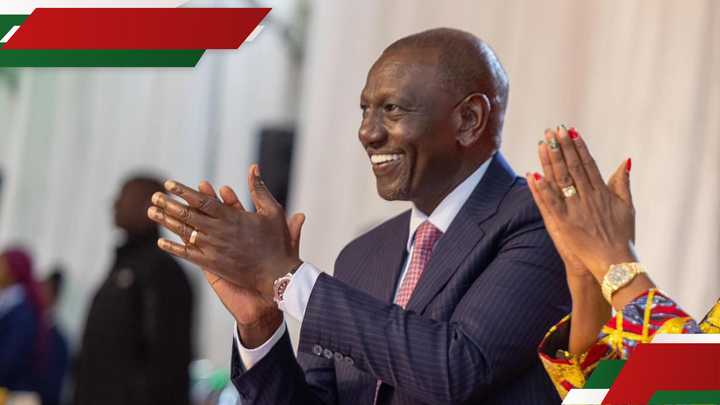
President William Ruto’s Self-Assessment of Economic Performance
President William Ruto has evaluated his performance in office as 8 out of 10, claiming that he has “fixed the economy” and improved job creation. In an interview with Al Jazeera, which aired on Sunday, Ruto stated that Kenya is in a better economic position now than when he took over from his predecessor, Uhuru Kenyatta, nearly three years ago.
“If you look at the three years I have been in office, I made huge commitments and many pledges to the people of Kenya. It is on that basis that the expectations of Kenyans are very high,” Ruto said during the interview.
“Have I met those expectations? I can confidently say that on a scale of 1-10, I have done eight. I have fixed the economy.”
Ruto highlighted a business-environment ranking by the Economist Intelligence Unit (EIU), which placed Kenya sixth among the most-improved countries between 2019 and 2023. This ranking, according to Ruto, reflects the progress made under his administration.
He also pointed to the Nairobi Securities Exchange (NSE), which recently received recognition as Africa’s best-performing stock market in USD terms. Ruto cited this as evidence of the economic reforms implemented by his government.
In addition to these achievements, Ruto mentioned increased production of maize and sugar, along with a new university funding model that he claims has made higher education sustainable. These developments, he argued, are further proof of a “working economy.”
The president also highlighted his flagship affordable-housing program, which he said has created jobs in construction and stimulated other sectors of the economy.
Challenges and Criticisms
Despite these positive developments, critics, including opposition figures, argue that many Kenyans have yet to feel the benefits of growth. They point to slow formal-sector job creation, stagnant wages, and rising public debt as ongoing challenges that need to be addressed.
While Ruto’s administration has made strides in improving economic indicators, there remains a gap between the government’s narrative and the lived experiences of many citizens. The question of whether the economic reforms have translated into tangible benefits for the general population continues to be a topic of debate.
Key Economic Indicators Under Ruto’s Leadership
- Business Environment:Kenya ranked sixth among the most-improved countries in the business environment between 2019 and 2023, according to the EIU.
- Stock Market Performance:The Nairobi Securities Exchange (NSE) was recognized as Africa’s best-performing stock market in USD terms.
- Agricultural Output:Increased production of key commodities such as maize and sugar.
- Higher Education Funding:A new model introduced to ensure sustainability in higher education.
- Housing Program:The affordable-housing initiative has generated employment and stimulated economic activity.
Ongoing Debates and Future Outlook
As Kenya continues to navigate its economic trajectory, the administration’s focus on reform and development remains central to its agenda. However, the challenge lies in ensuring that these reforms lead to widespread prosperity and address the concerns of all citizens.
The coming years will be critical in determining whether the current economic improvements are sustained and whether they result in meaningful changes for the broader population. For now, Ruto’s self-assessment serves as a reflection of his administration’s priorities and achievements, while the broader conversation about economic equity and growth continues.