
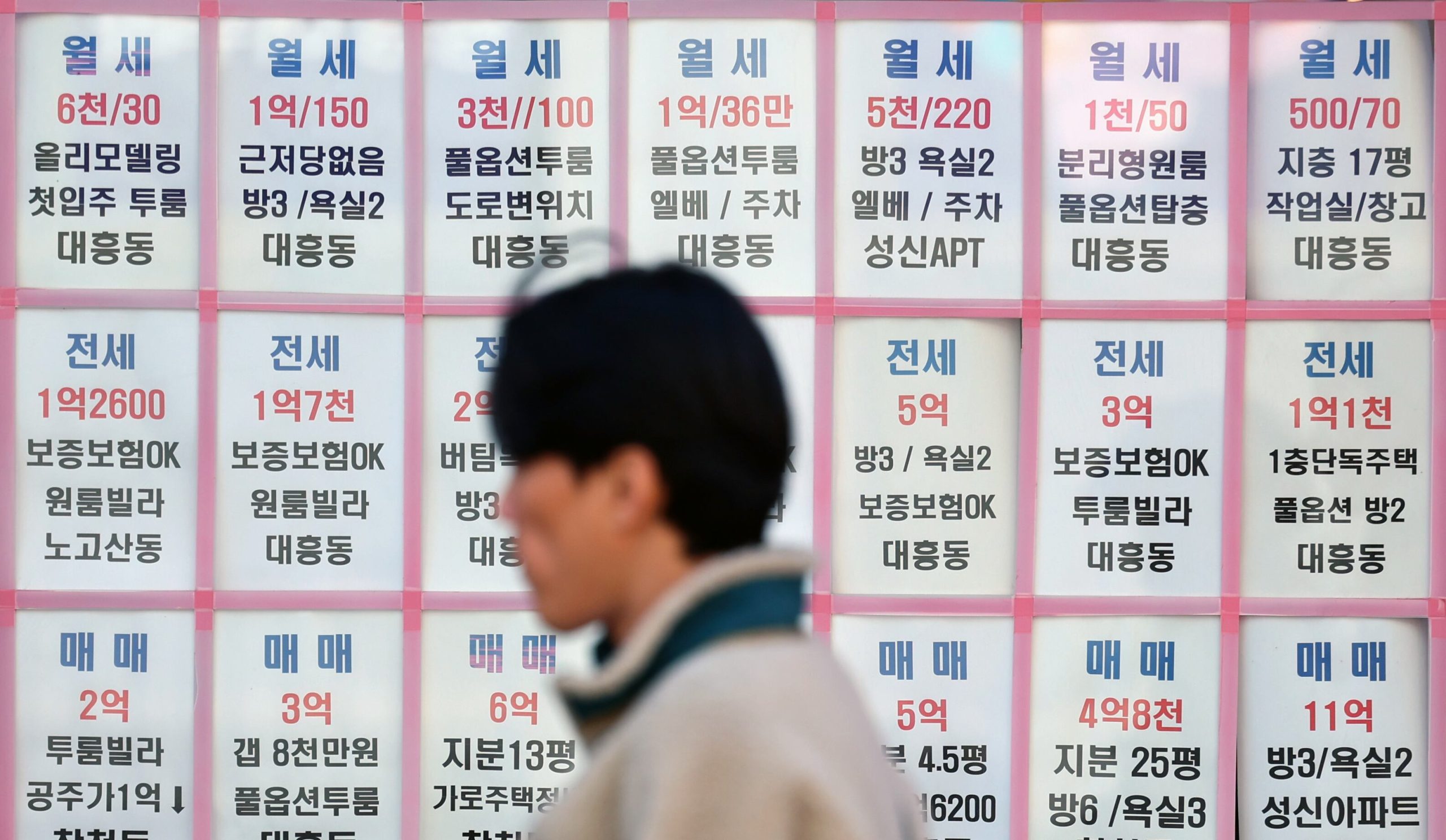
Rising Popularity of High-End Monthly Rents
The preference for monthly rent has grown significantly in recent years, with the proportion of high-end monthly rents exceeding 2 million Korean won nearly doubling over the past five years. As these high-end monthly rents continue to rise, the average monthly rent for apartments in Seoul has also seen a steady increase annually. Experts predict that if interest rates fall and tax burdens increase in the future, the pace of converting jeonse (lump-sum deposits) to monthly rents will accelerate, further increasing the share of high-end monthly rents.
According to the Ministry of Land, Infrastructure and Transport’s real transaction price disclosure system, 93,580 apartment monthly rent contracts were recorded from January to October this year. Out of these, 14,942 contracts (16%) involved high-end monthly rents of 2 million Korean won or more. In 2020, only 3,269 contracts (8%) fell into this category. This significant growth highlights a shift in tenant preferences and market dynamics.
Growth Rate Accelerates After Real Estate Regulations
Notably, the growth rate of high-end monthly rent transactions accelerated after the government announced real estate regulations this year. The proportion of monthly rent transactions exceeding 2 million Korean won dropped to 12.8% in February but remained in the 15% range until May. It then rose to 16.8% in June, 17.9% in July, 18.4% in August, and 17.7% in September. Although this ratio recorded 16.7% last month, the figure is expected to rise further as the transaction reporting deadline extends until this month.
For example, in the case of Jamsil Resense, the monthly rent for an exclusive 84 square meters rose from 4.3 million Korean won with a deposit of 100 million Korean won last month to 4.9 million Korean won within less than a month. As demand shifts from the sales market to the jeonse and monthly rent market, properties are selling out quickly, driving up prices. The RAEMIAN Wonbaeri, with an exclusive area of 59 square meters, also saw its monthly rent increase from 3 million Korean won with a deposit of 500 million Korean won last month to 4 million Korean won this month.
Ultra-High Monthly Rents on the Rise
Ultra-high monthly rents exceeding 10 million Korean won are also on the rise. From January to October this year, 209 such transactions occurred, a 21.5% increase compared to the same period last year (172 transactions). While ultra-high monthly rents were concentrated in Gangnam’s three districts, Yongsan-gu, and Seongdong-gu until last year, this year they have been recorded across Seoul, including Maiseutobil·Ssangyong Namsan Platinum in Jung-gu, Hyundai Highperion in Yangcheon-gu, D Palais in Jongno-gu, and Lotte Castle Gold Park 1-cha in Geumcheon-gu.
Surging Monthly Rent Prices
Monthly rent prices are also surging. Analysis of the Ministry of Land, Infrastructure and Transport’s real transaction price disclosure system shows that the average monthly rent for apartments in Seoul from January to October this year was 1.13 million Korean won. The average monthly rent, which was 810,000 Korean won in 2020, has continued to rise, reaching 1.04 million Korean won in 2023 and 1.08 million Korean won in 2024.
Future Trends and Predictions
This trend is expected to continue. With housing supply decreasing, jeonse loan requirements have tightened following the government’s June 27 mortgage regulations, and gap investments have become impossible across Seoul and in 12 areas of Gyeonggi Province under the October 15 measures. Additionally, if interest rates fall further and tax burdens increase, landlords are likely to pass the added tax costs to tenants through higher monthly rents, accelerating this trend.
As the market continues to evolve, the shift towards high-end monthly rents is becoming a defining feature of the real estate landscape in Seoul. This change reflects broader economic and policy influences, signaling a potential long-term transformation in how people choose to live and manage their housing expenses.