
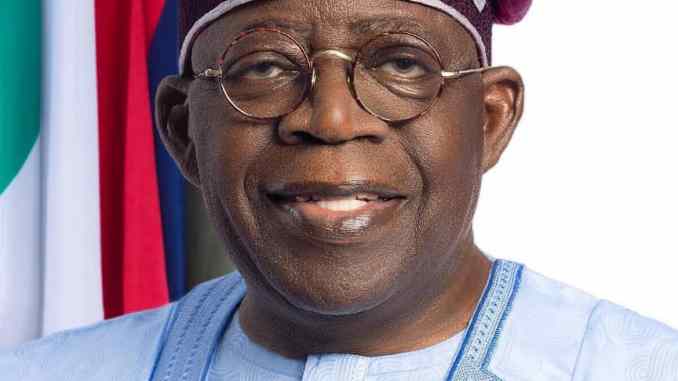
President Bola Tinubu’s Commitment to the Siemens Energy Deal
President Bola Tinubu has taken significant steps to accelerate the Siemens energy deal, reaffirming his administration’s dedication to improving Nigeria’s electricity supply and enhancing the livelihoods of its citizens. This commitment was made during a meeting with a delegation from the German energy giant at State House in Abuja, led by Dietmar Siersdorfer, Managing Director for Middle East and Africa.
Tinubu emphasized that the power sector plays a crucial role in stimulating the economy, particularly in the industrial, educational, and healthcare sectors. The power initiative, known as the Presidential Power Initiative (PPI), was launched in 2019 under the previous administration to overhaul Nigeria’s electricity supply, focusing on transmission and distribution infrastructure.
The PPI was designed to address the issue of lost or stranded electricity due to a weak grid. The project is planned in three phases, aiming to increase the amount of power reaching consumers from about 5,000 megawatts to roughly 7,000 megawatts in the first phase, then to 11,000 megawatts, and finally to 25,000 megawatts.
Despite the focus on upgrading infrastructure, such as old substations, overloaded transformers, and modern control systems, the project has faced delays. However, some progress was made during the “Phase Zero” stage, where mobile power substations and large transformers were installed in key areas, improving grid reliability.
During the meeting, Tinubu stressed that completing the phased power project would position Nigeria as a leader on the continent by harnessing its human and material resources. He also directed the expansion of major transformer substations from two to three phases to boost power supply.
Tinubu highlighted the importance of power for industrial growth and economic development, stating, “There is no industrial growth or economic development without power.” He expressed appreciation for the partnership with the German government and Siemens, emphasizing that their investment aligns with Nigeria’s future.
Challenges in Nigeria’s Power Supply
Nigeria’s power supply problem stems from a mismatch between generated and delivered electricity. While the country has the capacity to generate over 13,000 megawatts, only about 5,000 megawatts are consistently delivered to homes and businesses. The main issue lies in the weak transmission and distribution network, which struggles to carry the produced power.
Ageing infrastructure, overloaded transformers, and frequent system collapses lead to significant losses before electricity reaches users. Distribution companies also face challenges in collecting revenue efficiently, with many consumers not metered and relying on estimated billing, which reduces trust and payment discipline.
Gas supply to power plants is another bottleneck, as pipeline disruptions and pricing disputes affect power generation. These issues result in unreliable electricity, widespread use of generators, high operating costs for businesses, and lower competitiveness for industries.
Progress and Future Plans
Minister of Power, Adebayo Adelabu, highlighted critical milestones achieved in the power sector, including decentralization and liberalization. He noted the signing of the Electricity Act 2023 and the development of a National Integrated Electricity Policy after 24 years, attracting over $2 billion in fresh investments.
Adelabu reported that the PPI has recorded notable milestones since the signing of the Accelerated Agreement at COP28 in Dubai. Under the Pilot phase (Phase Zero), significant infrastructure upgrades have enhanced grid stability and reliability nationwide.
He mentioned that Siemens Energy has successfully delivered and commissioned 10 units of 132/33kV mobile substations, three units of 75/100MVA transformers, and seven units of 60/66MVA transformers across key load centers, adding 984mv of transmission capacity to the grid.
In December 2024, the Federal Executive Council approved the commencement of the Engineering, Procurement, and Construction (EPC) contract for Phase One, Batch One of the PPI. The scope includes the upgrade, installation, and inauguration of five key substations in Abeokuta, Offa, Ayede-Ibadan, Sokoto, and Onitsha.
Adelabu stated that plans for civil works mobilization across all five locations have been finalized, with two of the five substations targeted for completion by the end of 2026. He also mentioned that preparations are underway for phase one-batch two, which involves constructing new substations and upgrading existing ones across key load centers.
Benefits and Collaboration
Minister of Finance and Coordinating Minister of the Economy, Wale Edun, emphasized that the completion of the PPI will enhance Nigeria’s ease of doing business, create more jobs for the youth, and reduce poverty.
Leader of the Siemens delegation, Siersdorfer, noted that two out of the five substations under construction are expected to be completed by December 2026. He also mentioned the construction of a training center to ensure the training of local talents in electrical engineering, creating jobs and transferring technology.
Siersdorfer stated that the PPI is not just a project but a platform for long-term development and prosperity. He informed the president that the initiative will transform Nigeria into a regional power hub, reflecting the depth of relations between Germany and Nigeria.
The representative of the German Ambassador to Nigeria, Johannes Lehne, assured Tinubu of further support and collaboration with the German government.