
President Tinubu Directs Expansion of Transformer Substations to Boost Power Supply
President Bola Tinubu has issued a directive to stakeholders in Nigeria’s power sector, urging them to expand major transformer substations from two to three phases. This move aims to enhance the country’s electricity supply and support economic growth. The instruction was given during a meeting with the technical contractor handling the Presidential Power Initiative (PPI), Siemens Energy.
The meeting took place on Monday, with the Siemens Energy delegation led by Dietmar Siersdorfer, Managing Director of Middle East and Africa. During the discussions, President Tinubu emphasized the critical role of the power sector in driving economic development, particularly in industrial, educational, and healthcare sectors.
Commitment to Power Sector Development
The President reaffirmed the government’s commitment to improving electricity supply and enhancing livelihoods. He highlighted that power is essential for industrial growth and economic progress, stating, “There is no industrial growth or economic development without power. I believe that power is the most significant discovery of humanity in the last 1,000 years.”
Tinubu expressed appreciation for the partnership with Siemens Energy and the German government, noting that their investments align with Nigeria’s future. He added, “Our education, our health care and our transportation all depend on energy and without power, it is an impossible objective. We are taking it very seriously.”
Key Milestones and Progress
The Minister of Power, Adebayo Adelabu, outlined several milestones achieved in the power sector, including the decentralization and liberalization of the sector. He mentioned the signing of the Electricity Act 2023 and the development of a National Integrated Electricity Policy after 24 years. This policy has attracted over $2.2 billion in fresh investments and activated fifteen state electricity markets.
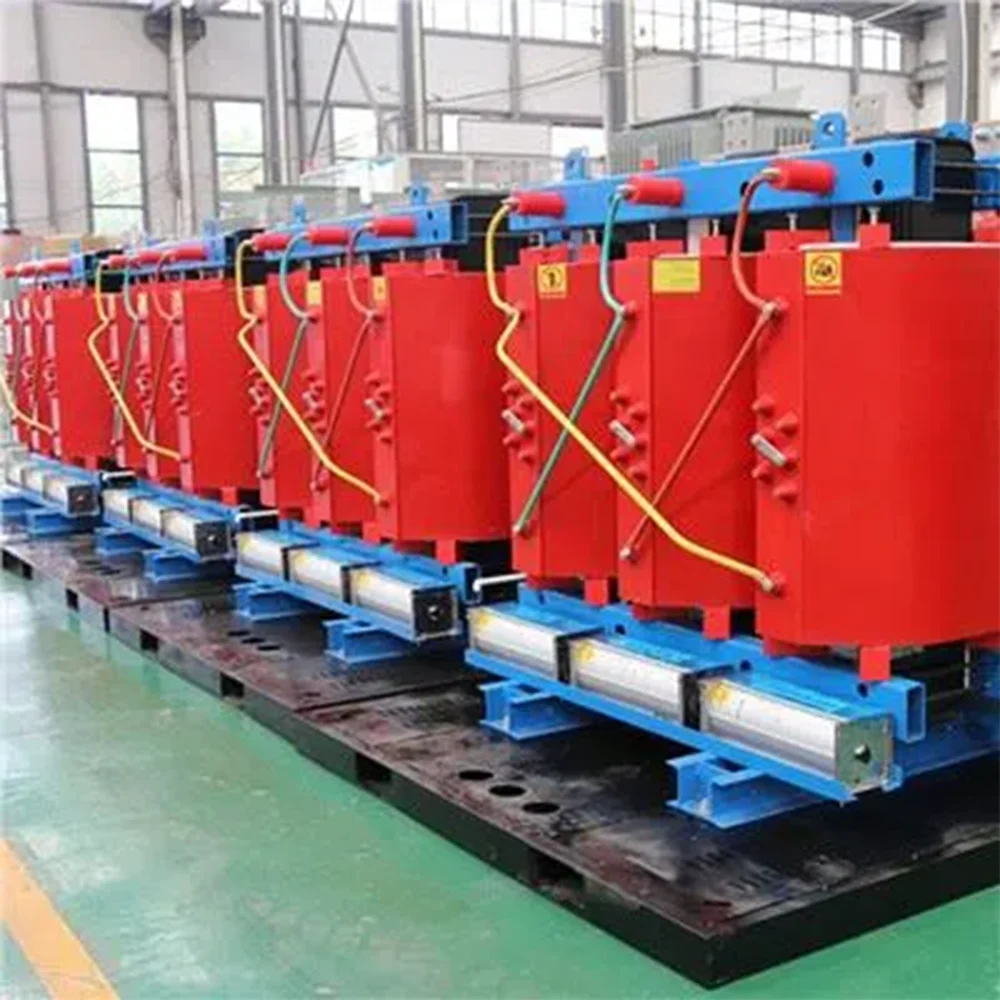
Adelabu also noted the progress under the PPI, which includes infrastructure upgrades and capacity enhancements. Siemens Energy has delivered and commissioned 10 units of 132/33kV mobile substations, three units of 75/100MVA transformers, and seven units of 60/66MVA transformers across key load centers nationwide, adding 984mv of transmission capacity to the grid.
Future Phases and Job Creation
The Federal Executive Council approved the commencement of the Engineering, Procurement, and Construction (EPC) contract for Phase One, Batch One of the PPI in December 2024. This phase involves upgrading, installing, and commissioning five key substations in Abeokuta, Offa, Ayede-Ibadan, Sokoto, and Onitsha.
The minister reported that plans for civil works mobilization have been finalized, and manufacturing of required equipment is ongoing. Two of the five substations are targeted for completion by the end of 2026. Phase One-Batch Two will involve the construction of new substations and the upgrade of existing ones across key load centers, with a cumulative impact of 4,104MW.
Economic Impact and Local Engagement
The Minister of Finance and Coordinating Minister of the Economy, Wale Edun, stated that the completion of the PPI will improve Nigeria’s ease of doing business, create jobs for the youth, and reduce poverty. The Siemens Energy delegation confirmed that two out of the five substations under construction are expected to be completed by December 2026.
A training center is being built to train local talents in electrical engineering, creating jobs and transferring technology. Siersdorfer emphasized that the PPI is a platform for long-term development and prosperity, aiming to transform Nigeria into a regional power hub.
Strengthening Bilateral Relations
The German Ambassador’s representative, Johannes Lehne, assured President Tinubu of continued support and collaboration with the German government. This partnership reflects the depth of relations between Germany and Nigeria, with Nigerian professionals directly engaged in the project sites and thousands of jobs created in local communities through purchased services, accommodation, and transportation.