
A Call for Transparency in the Daejang-dong Corruption Case
A former deputy prosecutor general has raised concerns about the prosecution’s decision to abandon its appeal in the “Daejang-dong development corruption” case. According to the individual, Justice Minister Jung Sung-ho may have played a key role in this decision, prompting calls for a full reinvestigation, including the appointment of a special counsel.
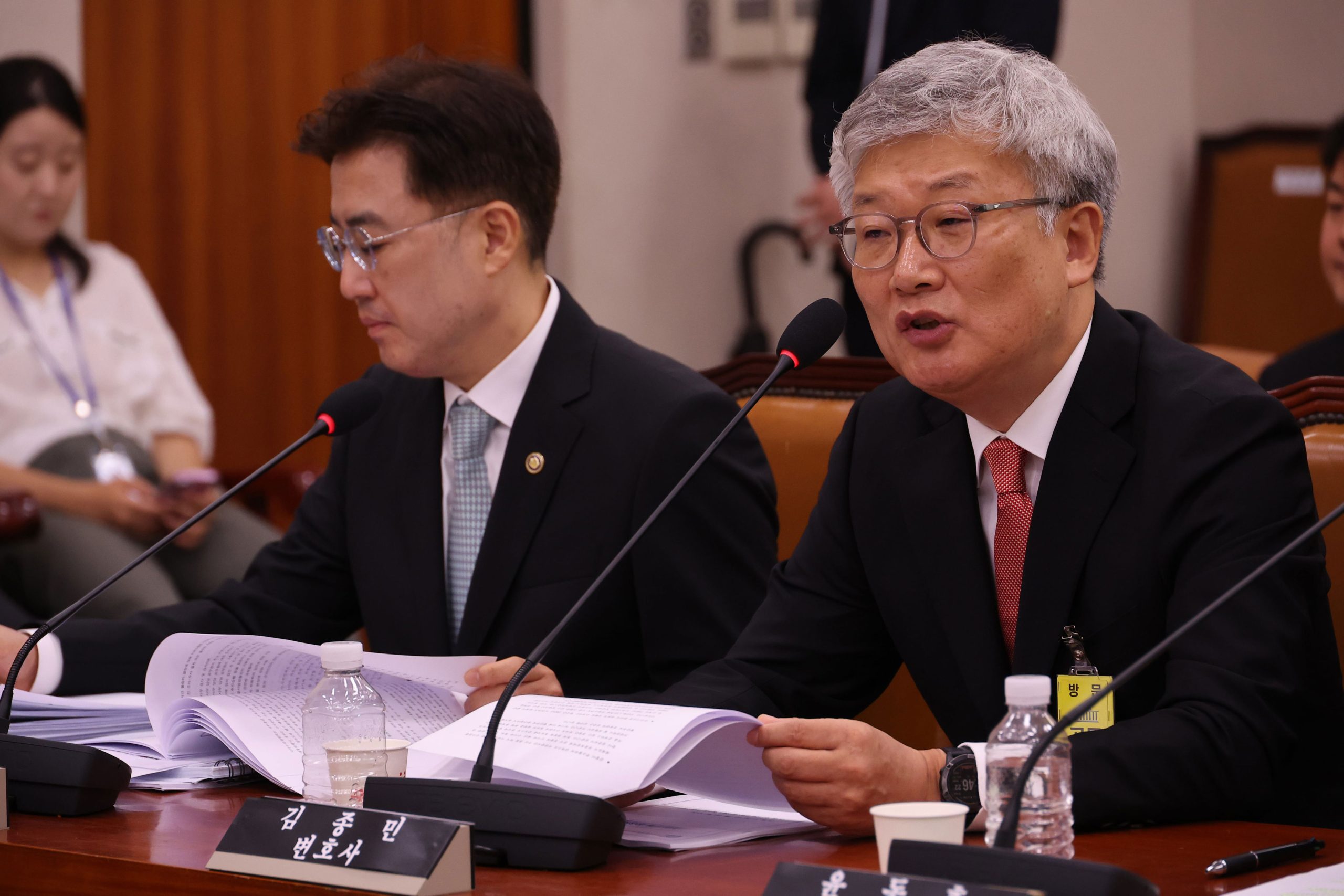
Kim Jong-min, a lawyer and former chief of the Suncheon Branch of the prosecutors’ office, shared these remarks on his Facebook page. He highlighted inconsistencies between statements from Justice Minister Jung and acting Prosecutor General Noh Man-seok. Kim pointed out that while the prosecution is required to report investigation and trial progress to the justice minister, there is no legal basis for the Ministry of Justice to “consult” on such matters, as Noh claimed.
He added, “If Justice Minister Jung believed abandoning the appeal was justified after reviewing the prosecution’s report, he should have formally exercised his authority under the Prosecutors’ Office Act to direct Noh, the acting prosecutor general, to drop the appeal. However, Jung claims ignorance of the decision, while Noh asserts the appeal was abandoned after consultation with the Ministry of Justice.”
Legal Framework and Concerns Over Interference
Kim explained that Article 8 of the Prosecutors’ Office Act limits the justice minister’s authority to direct only the prosecutor general in specific cases. This, he argued, ensures the fairness and political neutrality of investigations by preventing arbitrary interference by ruling political powers. He warned, “If the Supreme Prosecutors’ Office ‘collaborates’ with the Ministry of Justice to whitewash a massive power-related corruption case like Daejang-dong, it sets a dangerous precedent. The justice minister could then exert coercive influence behind the scenes without formally invoking authority, manipulating all cases.”
Frontline Prosecutors and Their Role
Kim also expressed regret that frontline prosecutors handling the trial did not file an appeal. He noted, “Even if a prosecutor’s decision contradicts a superior’s directive, it remains valid externally, though internal disciplinary action may follow.” He insisted, “The trial prosecutor or section chief should have ignored the order and filed the appeal—it would have been entirely legitimate and the right thing to do. Upholding substantive truth and fighting for justice is the prosecutor’s duty.”
The Nature of the Daejang-dong Case
Kim defined the Daejang-dong case as a “power-related corruption scandal where local government officials and construction companies reaped astronomical profits under the guise of public development, while landowners were unjustly expropriated and suffered greatly.” He demanded a full reinvestigation, including through a special counsel, to reveal the truth. He named Justice Minister Jung, acting Prosecutor General Noh, Seoul Central District Prosecutors’ Office Chief Jeong Jin-woo, and Anti-Corruption Department Head Park Chul-woo as potential subjects of investigation. He also called for an inquiry into whether there was “close coordination with Lee Jae-myung and the presidential office.”
Calls for Accountability
Addressing Oh Dong-woon, head of the Corruption Investigation Office for High-ranking Officials, Kim asked, “What are you doing?” He urged the office to investigate Justice Minister Jung’s alleged abuse of power in abandoning the appeal. “There is no left or right in the war against corruption,” Kim stated. “If prosecutors or police turn a blind eye to corruption, they should shut their doors.”