
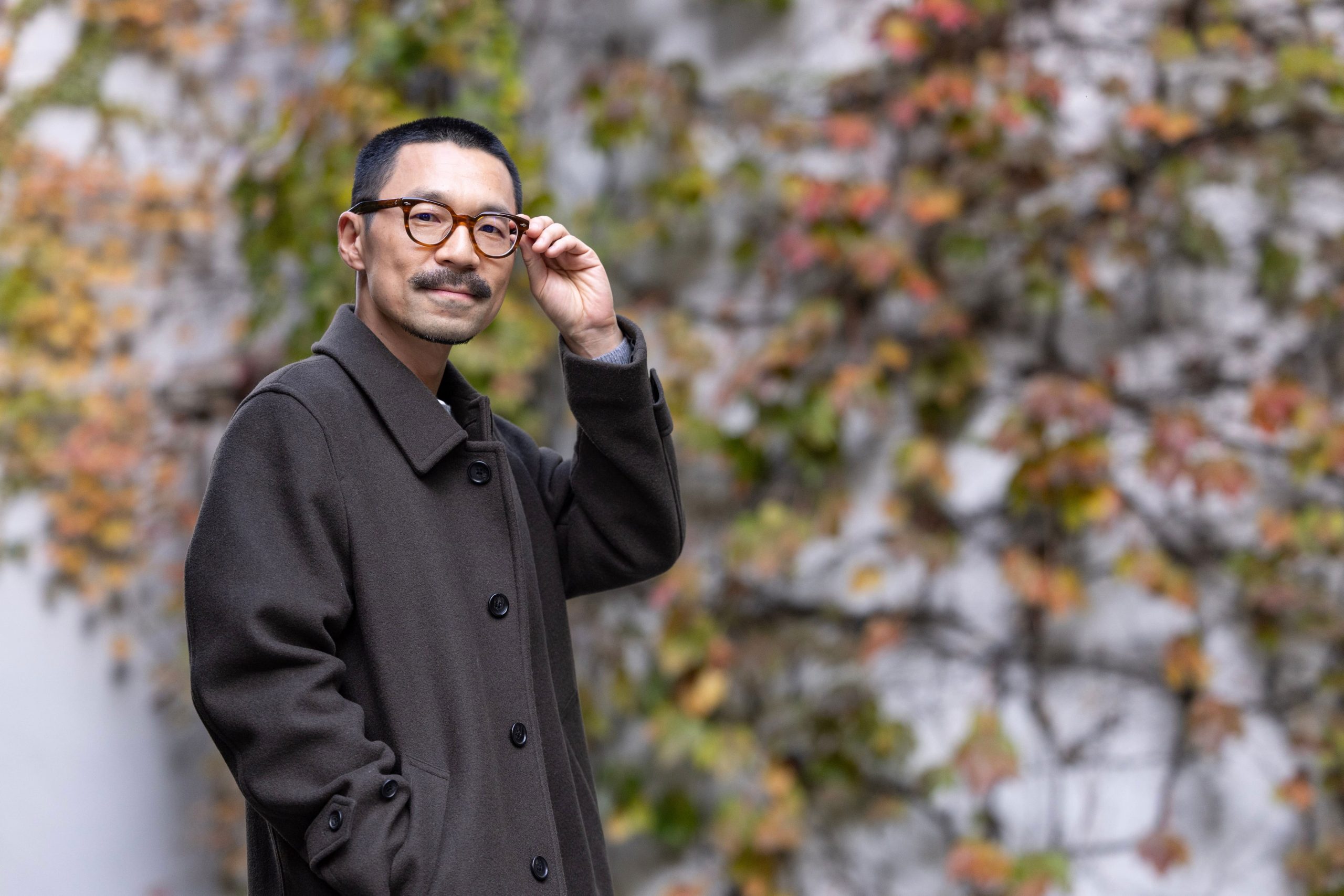
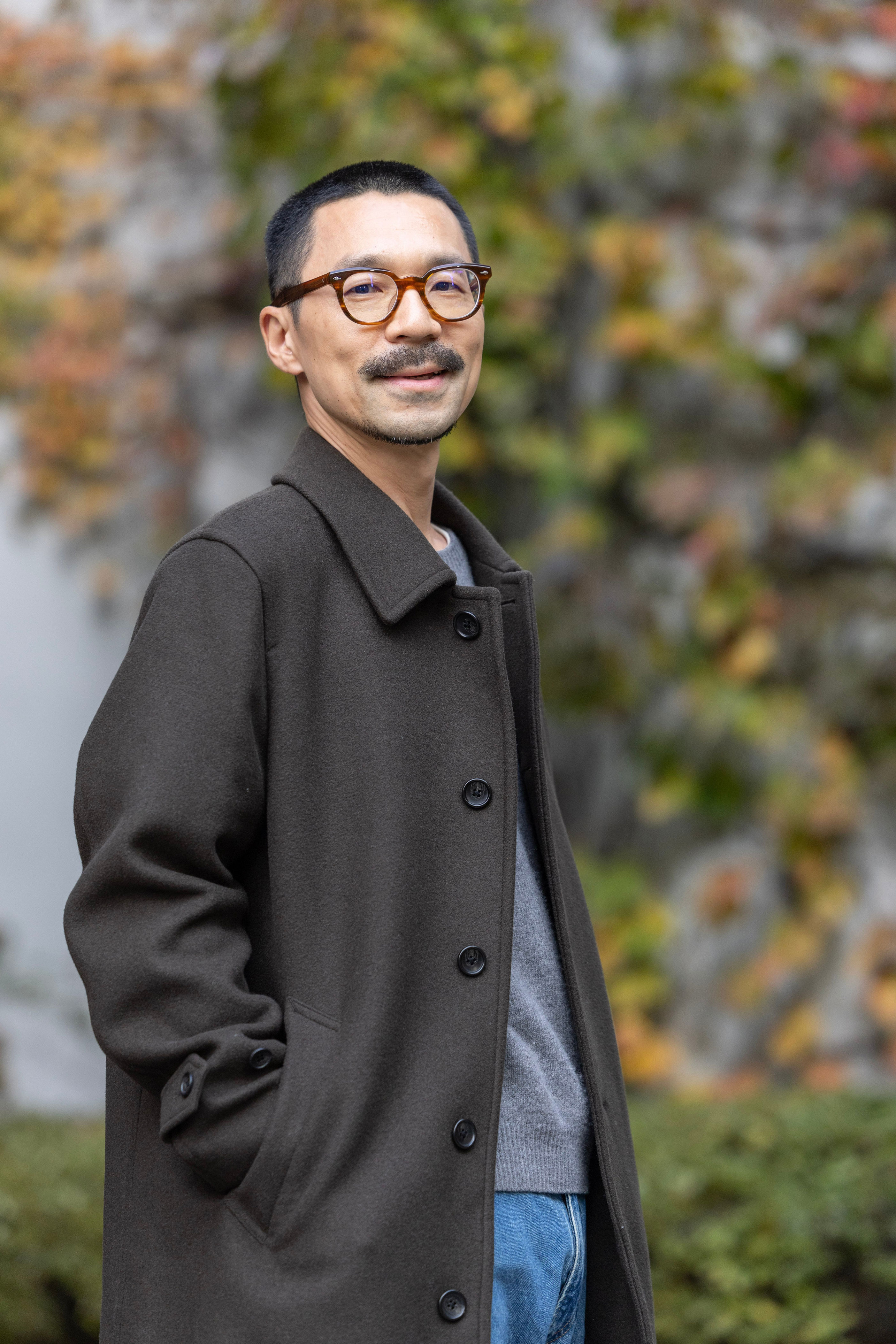
Novelist Kim Ki-chang, 47, has been recognized as the winner of the 56th Dongin Literary Award in 2025. He continues to walk his own path with steadfast determination. When met on the 5th, he shared, “I am writing novels that suit me.”
The award-winning workMasan(Minumsa Publishing) is set in his hometown. Kim, originally from Masan, Gyeongsangnam-do, studied sociology at Hanyang University. He began his writing career in 2014 with the novelMonaco. Other works includeBangkok,The Panda on Mars, and the short story collectionLove in the Era of Climate Change.
Reactions to the Award
– How did you feel when you received the award notification by phone?
“There was a moment of dizziness. I looked up past winners. Most of the authors and works were familiar. I thought the weight of the award might overwhelm me. But since esteemed judges selected me, I must take responsibility (laughs), and I steadied myself.”
The Significance of the Setting
– The prologue mentions “the pattern of the Masan sea.”
“The sea off Masan does not have surging waves. However, when large ships pass, ripples form and waves crash. The waves of a city that burned like flames. I thought the patterns of life might be etched into those waves. The undulations of the Masan sea overlap greatly with the twists of modern Korean history and industrialization.”
The Novel’s Structure
– The novel’s setting is divided into three periods (1974, 1999, 2021). The main characters of each era are all in their 20s.
“There are no 20-somethings who lived simple lives in any era. In the 1970s, factory workers; during the IMF crisis, those who could not pay tuition and faced family bankruptcy… In 2021, I thought of local university students struggling with unemployment. Today’s 20-somethings in the provinces are likely growing up with a far greater sense of deprivation than in the past.”
Depicting the Hometown
– Do you feel guilty for depicting your hometown so desolately?
“I suppose I conceived the ending as a funeral for a certain era of Masan. But on the other hand, it’s a novel written while imagining and hoping for a new era and a new appearance of Masan.”
Reflections on Writing
– What have you realized after writing novels for over a decade?
“I once heard that ‘writers fall into slumps little by little every time.’ Writing is a series of slumps, and how to overcome them wisely is key. I tend to step away instead of clinging. When I go out and walk, I manage to salvage at least a sentence or two.”
Themes and Ethics
– In a final round interview last year, you mentioned ‘connection’ and ‘relationships’ as important themes. A character in your previous work also said, “I keep my ethical antennae sharp.”
“Society is a jungle, and humans are animals, but if there’s one thing that sets us apart from other animals, it’s that ethics have played a significant role in maintaining communities and sustaining civilization.”
Style and Perception
– Judges described your work as ‘analog novels.’ How do you see your own novels?
“I mainly read crime novels. Plot, characters, and narrative structure are crucial. At times, I feel like I’m writing social novels. My style has a dry, hard-boiled tone. InMasan, I wanted to depict clumsy and lonely crimes in quiet rural areas or provincial cities with a desolate feel. Above all, I value dialogue over description. Novels with good dialogue stay with me the longest. I hope people say my novels have good dialogue.”
The Selection Process
The Dongin Literary Award committee narrowed down 18 final candidates from Korean novels published between August last year and July this year. The finalists were Kim Ki-chang’sMasan, Kim Sol’sPure Contradiction, Kim Hong’sDon’t Cry Here, and Ahn Yoon’sMorin.
Judges held the final deliberation in Icheon, Gyeonggi Province, late last month and decided the winner through secret ballots. Each judge submitted one vote, and the candidate with a majority won. In the first round, two authors received two votes each, and one received one vote. An unknown judge held the ‘casting vote.’ In the second round, Kim Ki-chang’sMasansecured three votes and won. Judges praised its “truthfulness to reality” and “honest observation of Masan.”