
Vietnam’s Economic Resilience and Growth Outlook
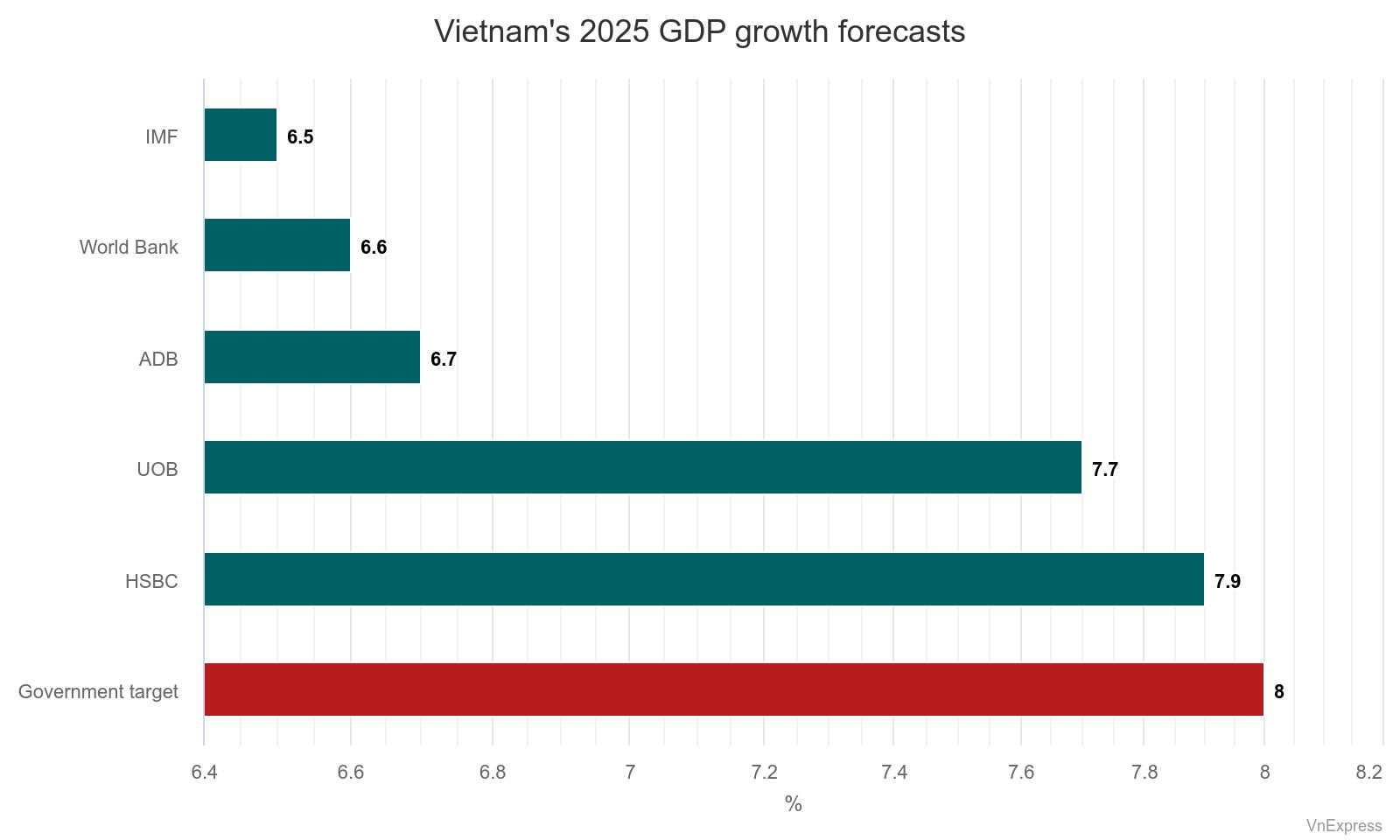
Vietnam has demonstrated remarkable economic resilience, with several financial institutions raising their growth forecasts for the country. One of the most notable updates comes from Singapore-based United Overseas Bank (UOB), which recently increased its GDP growth forecast for Vietnam to 7.7%, up from an earlier projection of 7.5%. This adjustment was made following a stronger-than-expected performance in the third quarter of the year.
Despite ongoing concerns over U.S. tariff threats, Vietnam managed to achieve a growth rate of 8.23% during the quarter. The bank attributed this strong performance to robust exports and manufacturing activities. Over the first nine months of the year, exports surged by 16% year-on-year, while manufacturing expanded by 10.8%. These figures highlight the country’s ability to maintain momentum despite external challenges.
The Purchasing Managers’ Index (PMI) also showed positive signs, expanding for the third consecutive month in September. This marks a reversal of the three-month contraction that had occurred earlier in the year. The PMI expansion is seen as a key indicator of improved business conditions and a more stable economic outlook.
Another factor contributing to Vietnam’s positive trajectory is the increased pace of foreign direct investment (FDI). In the first nine months of the year, FDI inflows grew by 8.5% to reach $18.8 billion. This trend could potentially lead to full-year numbers that match the record $25.4 billion achieved in 2024. Such sustained investment is a strong signal of confidence in Vietnam’s long-term economic prospects.
Tariff Concerns and Trade Vulnerabilities
While the economic outlook appears promising, trade-related risks remain a concern. Earlier in July, U.S. President Donald Trump announced a 20% tariff on Vietnam’s exports to the U.S., which is significantly lower than the initially threatened 46%. However, UOB has warned that Vietnam remains vulnerable to trade tensions due to the open nature of its economy.
Exports of goods and services account for 83% of Vietnam’s GDP, making it one of the most export-dependent economies in Southeast Asia. Only Singapore, with an even higher ratio of 182%, surpasses Vietnam in this regard. This heavy reliance on international trade makes the country particularly susceptible to global market fluctuations and policy changes.
Although Vietnam’s trade activities have remained robust despite the U.S. tariffs, there are potential risks on the horizon. One possible outcome is that export orders could begin to decline once the frontloading of orders eases. Additionally, rising prices may impact U.S. consumer demand, especially in 2026, which could affect Vietnam’s export sector.
Currency Challenges and Regional Comparisons
The Vietnamese dong has faced significant pressure in the foreign exchange market. It was the second-worst performing Asian currency in the first nine months of 2025, declining by 3.55% against the U.S. dollar. Only the Indian rupee fared worse, with a 3.58% depreciation during the same period.
This currency weakness highlights the need for more proactive measures to stabilize the local currency and support investor confidence. Addressing these challenges will be crucial for maintaining Vietnam’s economic momentum in the coming years.
Rising Confidence from International Institutions
Several other financial institutions have also raised their growth forecasts for Vietnam this year. British lender HSBC now estimates a growth rate of 7.9%, while the Asian Development Bank projects a slightly lower figure of 6.7%. These revised forecasts reflect growing confidence in Vietnam’s economic resilience and its ability to navigate global uncertainties.
Prime Minister Pham Minh Chinh recently stated that, given the current growth momentum, Vietnam has the potential to achieve its GDP growth target of over 8% for the year, provided there are no major disruptions. This statement underscores the government’s optimism about the country’s economic trajectory.
Overall, Vietnam’s recent performance and the positive outlook from key financial institutions suggest that the country is well-positioned to continue its growth story, despite the challenges it faces.