
The Gen Z Uprising and the Transformation of Nepali Politics
Nepal has recently been a focal point of political and social transformation, particularly due to the rise of the Gen Z movement. This generation is not only challenging existing power structures but also redefining the language and concepts used to understand political actions. The concept of “alterity,” which refers to the psychology of difference, has become central in discussions about how political parties and social groups operate. This moment in Nepal is marked by an awakening and self-reflection among political entities that have long relied on established ideologies.
Historically, there have been two dominant models of politics: one oriented towards dictatorship and the other towards democracy. The democratic model emerged after the overthrow of authoritarian regimes, and Nepal’s journey through history has been defined by this struggle. Today, the country finds itself in a democratic order, built through the sacrifices of its people. Revisiting Professor Lok Raj Baral’s bookNepal: From Monarchy to Republic(2023) provides insight into this pivotal era, offering a critical perspective on the events that shaped modern Nepali politics.
A New Political Landscape
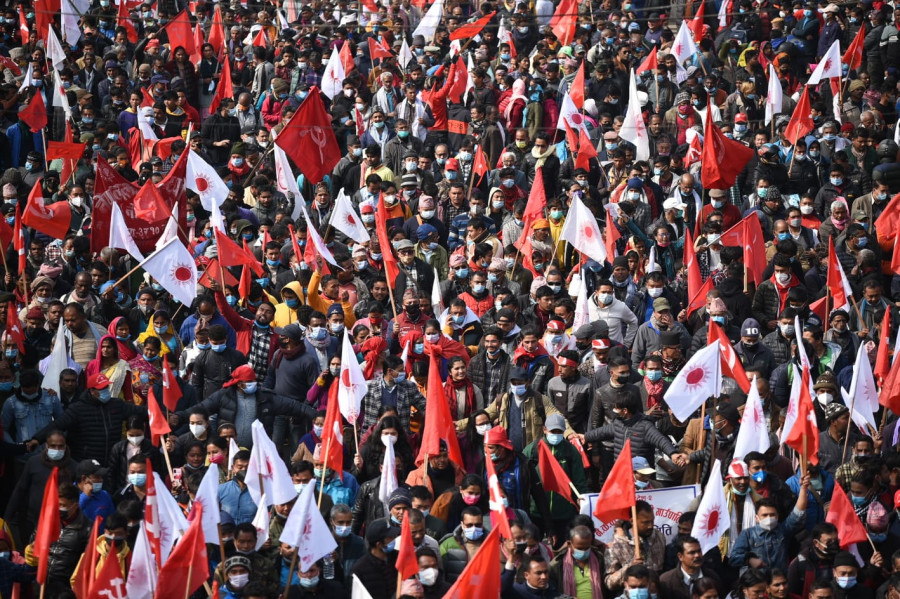
The current moment in Nepal is unique, driven largely by the Gen Z uprising. Established political parties, which have traditionally operated under ideological frameworks, are now facing internal challenges. The communist parties, in particular, are experimenting with new organizational models. Scholars describe this as a period of angst, where the very foundations of their ideologies are being questioned. The unification of nine communist parties under a single banner on November 5 is a notable development, yet some key parties, like the CPN-UML, remain outside this arrangement.
This shift reflects a broader trend in Nepali politics, where traditional structures are being reevaluated. The story of a humble communist cousin illustrates the deep-rooted connection between ideology and personal faith. His unwavering belief in communism, even when it meant questioning others’ views, highlights a psychological dimension that continues to influence political movements today.
Ideology and Leadership
Manmohan Adhikari, a prominent figure in Nepali communism, once described the spirit of communist ideology as something akin to Dharma. His vision was shared by international scholars like Frederic Jameson, who emphasized the importance of forming a communist-led government. This idea came to fruition when Adhikari became the first communist prime minister of Nepal in 1994, just a year after his meeting with Jameson. His visit to India, where he met EMS Namboodiripad, further underscored the global significance of Nepali communism.
Despite these achievements, the current landscape shows signs of uncertainty. The rapid formation and dissolution of coalitions suggest a reevaluation of past strategies. This is especially true in the context of the Gen Z uprising, which is reshaping expectations around leadership and ideology.
The Role of Gen Z in Nepali Politics
Gen Z represents a new energy in Nepali politics, challenging traditional notions of generational leadership. The Nepali Congress, often seen as the largest political party, is now debating whether the youth inspired by this movement should take the lead. An article from 1981 by BP Koirala, published by Kantipur, highlights the optimism surrounding the role of youth in driving change.
Stereotypes about party ideologies and organization are evolving. There is a growing call for action rooted in a new spirit, breaking away from old norms. This transformation is not just about politics; it is about redefining what it means to be part of a changing society. As Nepal navigates this complex terrain, the influence of Gen Z will continue to shape the future of its political landscape.