
Rastriya Swatantra Party Considers Alliances for Upcoming Elections
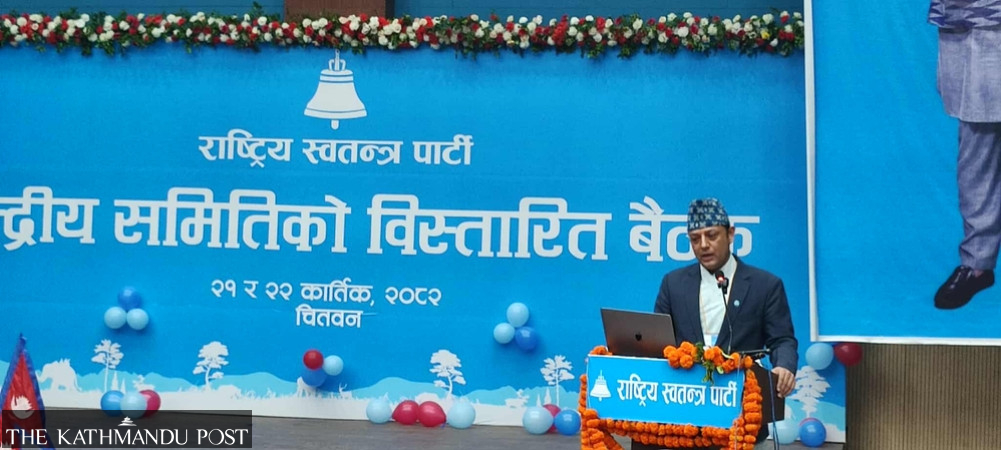
In a significant shift, the Rastriya Swatantra Party (RSP) has opened the door to forming alliances for the upcoming parliamentary elections on March 5. Previously opposed to any form of collaboration, the party is now considering partnerships with new and alternative political forces. This change was outlined in a political document tabled by the party’s acting chairman, DP Aryal, during the RSP plenum held in Chitwan.
Openness to Electoral and Operational Alliances
Aryal emphasized that the RSP will keep the option of forming electoral and operational alliances open. However, he did not specify which parties or organizations might be involved. According to party leaders, this openness is primarily aimed at possible cooperation with newly emerging political parties. The RSP has long maintained a critical stance towards alliances among traditional political parties, but it has made it clear that any such alliance must not compromise its distinct identity.
Addressing the meeting, RSP Vice President Swarnim Wagle expressed confidence that the party will win the next elections. He stated that the RSP remains open to cooperation and forming alliances during and after the election process, but under no circumstances will the party allow its identity to be overshadowed.
Governance Model and Structural Reforms
The party has proposed a governance model featuring an independent, non-partisan, and respected individual as the nation’s President, and the chair of the National Assembly for Vice President. It envisions the National Assembly as a body of experts reflecting national unity, non-partisanship, and inclusiveness.
Aryal also proposed a directly elected executive, where the prime minister would have the authority to choose ministers from among qualified and subject-expert Nepali citizens. Members of Parliament would have a legislative role only. Additionally, the party has suggested restructuring federalism with a directly elected chief minister and five provincial ministries for each province. Local governments would be empowered but limited to fewer than 500 in total.
Electoral and Judicial Reforms
Aryal has raised concerns about the need for improvements in the electoral system, including the abolition of constitutional and judicial councils and the restructuring of the judiciary. He also proposed setting up an empowered, resourceful, and politically interference-free anti-corruption body, the Commission for Investigation of Abuse of Authority. Furthermore, he suggested state grants to nationally recognized parties based on the proportion of votes they receive.
Criticism of Political Parties and the Current Government
Aryal criticized some political parties for refusing to acknowledge the existence of the RSP. He stated that this refusal stems from envy and fear rather than political character. On the Gen Z movement, the party highlighted that actions by old parties, including anti-people activities, exploitation of the state, and corruption/mis-governance, have fueled frustration among youths.
The report also addressed the events of September 9, stating that they were a result of the state’s highhandedness on September 8. It called for impartial investigations into both days’ events and prosecutions based on individual involvement and crime.
Regarding the Sushila Karki government, the party described it as having a limited six-month mandate to hold the House of Representatives election within the constitutional framework. While supporting the current ‘citizen government,’ the party emphasized that its support is conditional and based on the government’s conduct, including good governance, ending impunity, and handling election-related tasks.
Role of the RSP in New Political Forces
As the largest among alternative and new political forces, the RSP sees itself as responsible for integrating transformational parties, organizations, groups, or individuals. Aryal welcomed these groups but stressed the importance of understanding the RSP’s history and identity. He openly opposed the intention to take over the party.
Aryal stated that the RSP seeks radical reform rather than superficial changes. The party aims for broad reforms in people’s mindset, bureaucratic working styles, political leadership vision, and the entire governance system.
Calls for Internal Reform
Amid calls for party reform, Aryal acknowledged that the RSP is not in a position like the old parties that have faced or are on the verge of collapse. However, he emphasized that reform is needed. He noted that the party is still in the process of building itself and faces concerted attempts to strike at its core leadership. He warned that failing to understand this threat could lead to loss for both the party and the people.
“Now is the time to establish leadership, not displace it,” said Aryal.