
A New Challenge in Indie Gaming
In the tradition of QWOP, a new indie game has emerged that brings a fresh twist to co-op platforming. What sets this game apart is its unique and challenging control scheme, which adds an extra layer of difficulty to the gameplay experience.
There are several games that, despite their overall quality, suffer from poor control schemes. For example, Metal Gear Solid: Portable Ops attempted to implement standard first-person shooter controls on the PSP, which only has one analog stick. This resulted in a less-than-optimal experience for players. Similarly, Red Dead Redemption 2, while widely regarded as a classic, is also known for its awkward aiming mechanics and a complex system of single-button context-sensitive commands. These issues often lead to unexpected actions by the game’s protagonist, Arthur Morgan.
Then there are games that intentionally feature bad controls. One of the most infamous examples is QWOP, where players control different muscle groups of an athlete’s legs using separate buttons. This design choice, while unconventional, has proven to be successful, as evidenced by the large fanbase of Getting Over It with Bennett Foddy. The chaotic and humorous nature of trying to climb mountains with a sledgehammer in a round-bottomed cauldron has made for entertaining Twitch streams.
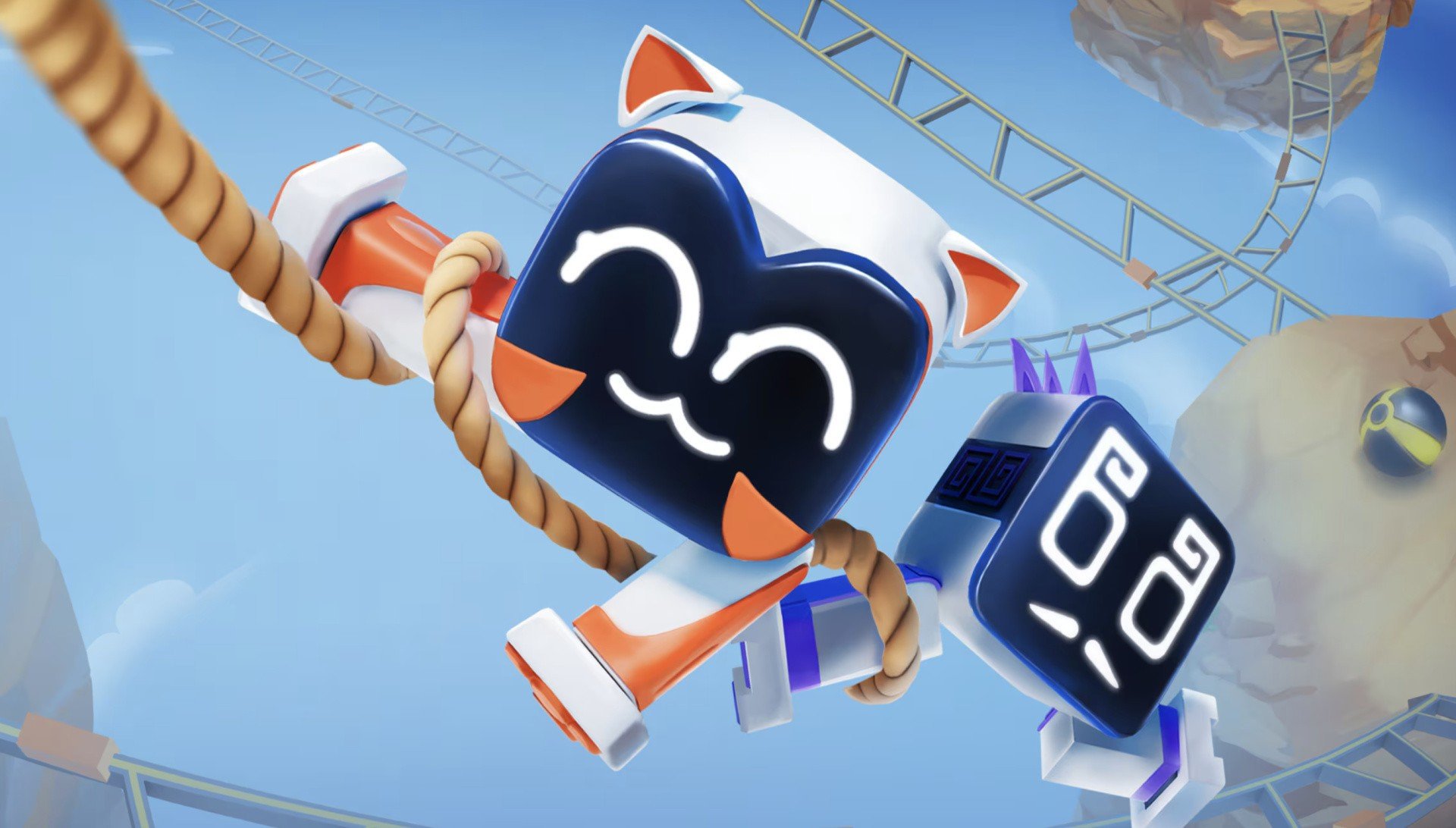
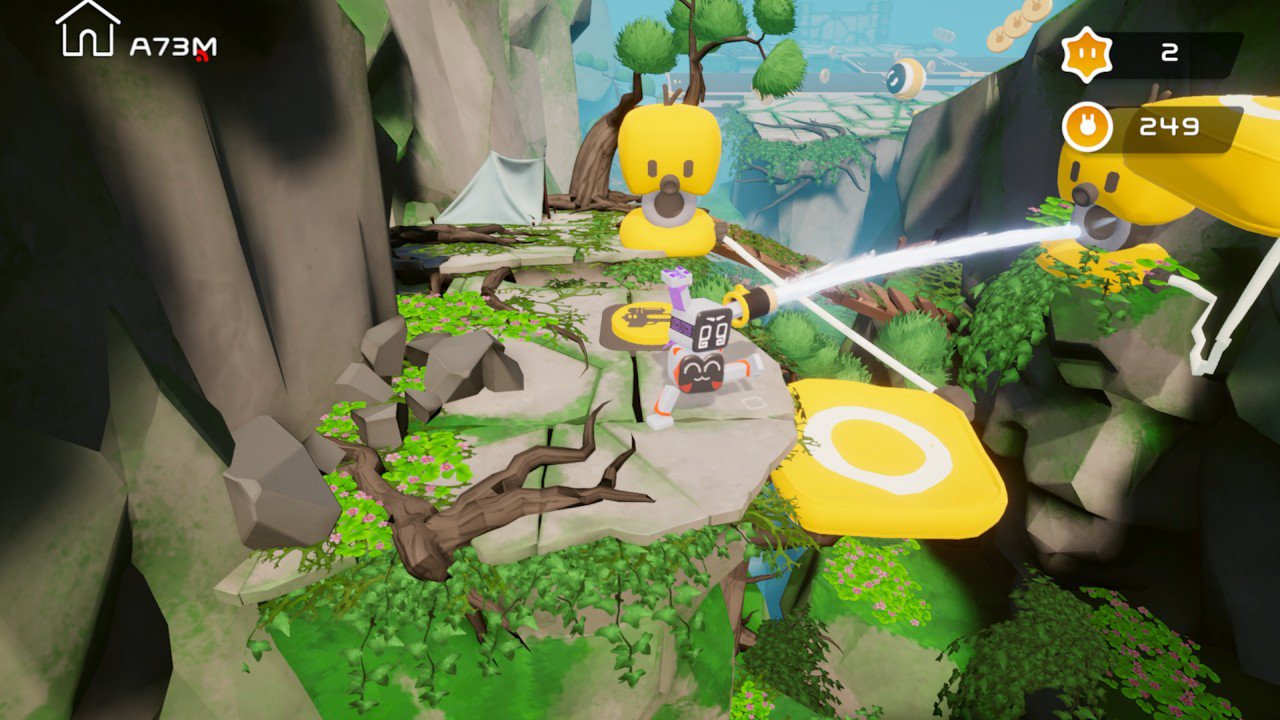
Now, we turn our attention to Biped 2. The original game, released five years ago, featured small, cubic robots that resembled the stars of Astro Bot but controlled more like the athlete in QWOP. Each leg was mapped to a different analog stick, making walking an intricate process of swinging one leg and then the other. While this method is not as awkward as QWOP, it is still significantly more challenging than most other games.
One advantage of the control scheme is the ability to push both sticks in the same direction, causing the robot to glide forward like a figure skater. This movement provides a sudden burst of speed and elegance that is impossible with the robot’s standard locomotion. However, this maneuver can only be used when far from the game’s many intricate platform challenges.
The sequel maintains the same control system, and while it is possible to adapt to it, even after extensive practice, players never feel like they have fully mastered it. The robot’s unpredictable gait always carries an air of uncertainty. After just a few hours of play, the initial experience is an infuriating mess of flailing legs and plunges into the cartoon abyss, with players gripping their controllers tightly.
This is because Biped 2 does not hold back on its challenge. Even in its “Easy Mode,” the difficulty is substantial. In the game’s first level after the training, players must transport energy cores on their heads, which become unstable and explode if they take too long to reach their goal. Then, they must avoid swinging, shiny wrecking balls before navigating platforms that break after a few seconds of standing on them.
Conclusion
Biped 2 offers a unique and challenging experience that pushes the boundaries of traditional platforming games. Its unconventional control scheme may be frustrating at first, but it also provides a sense of accomplishment once players begin to master it. For those looking for a game that tests their skills and patience, Biped 2 is definitely worth the effort.