
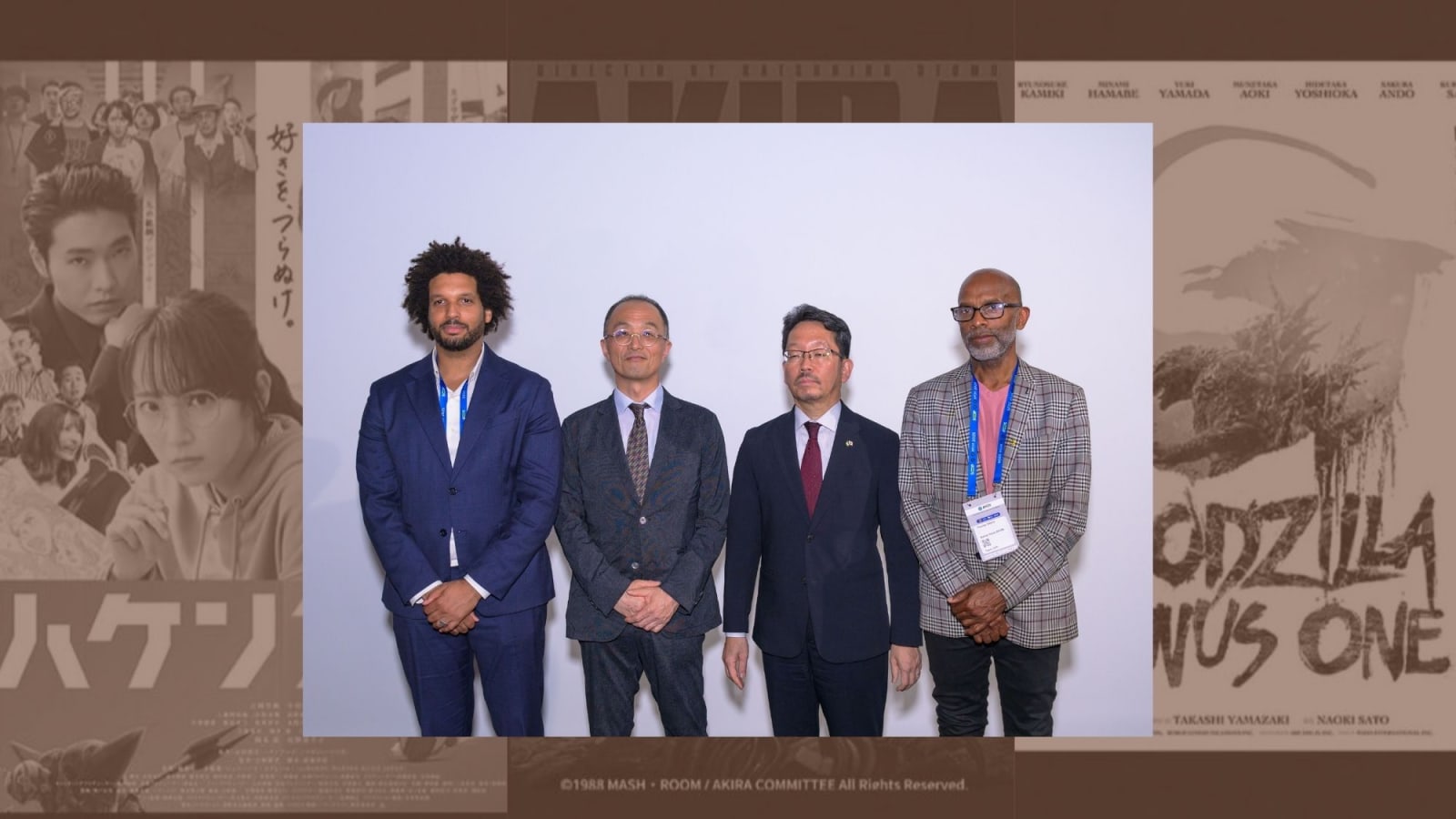
A Meeting of Cultures and Creativity
The previous day had been filled with discussions about fashion and filmmaking, exploring how Nigerian designers, stylists, and directors could collaborate to tell stories that reflect their identity. The next morning, the conversation took an unexpected turn, shifting from one continent to another.
It was “Japan Day” at the 14th African International Film Festival (AFRIFF), and the atmosphere at Filmhouse Twin Waters was charged with quiet excitement. This event, hosted under the AFRIFF Film & Content Market (AFCM), brought together influential figures from both Nigeria and Japan. Among them were Jean Fall, Head of Production at AFCM; Themba Sibeko, Market Head at AFCM; Masakazu Takahashi, General Manager of the Japan Foundation; and Hideo Suzuki, the Ambassador of Japan to Nigeria.
On paper, “Japan Day” was primarily about film screenings. The films being shown—cult classicAkiraand Oscar-winningGodzilla Minus One—are iconic exports that have shaped global perceptions of Japanese cinema. According to Themba Sibeko, AFCM’s Market Head, the event aimed to showcase the richness of Japanese cinema while fostering cultural exchange between the two nations.
Cultural Exchange and Economic Growth
The festival serves as a bridge for increasing trade between Japan and Nigeria, supported by AFRIFF and its new initiative, AFCM. This platform opens up new opportunities for collaboration and business ventures. By showcasing Japanese films, the festival not only inspires Nigerian filmmakers and audiences but also introduces Japanese culture to a wider African audience.
Cultural exchange through film can lead to increased economic cooperation. When two nations share their artistic expressions, it builds mutual understanding and trust. As Nigeria and Japan strengthen their cultural ties, it paves the way for more trade, investment, and overall economic growth, benefiting both countries.
A Shared Vision for Authenticity
Sitting in the audience, it was hard not to draw parallels between this event and the discussions held the day before during the “Fashion × Film × Afrobeats” panel. Nigerian filmmakers and designers had emphasized the importance of authenticity, respect, and collaboration. Here, the Japanese delegation echoed similar sentiments, both in words and in their presence.
The screenings, which took place from November 6–7, featured a mix of anime and live-action classics. If the previous day’s panel had demonstrated how fashion could help Nollywood’s stories reach a global audience, “Japan Day” illustrated how film could create a shared creative language between nations.
A New Era of Collaboration
This event highlighted the growing potential for cross-cultural collaborations. It showed that when artists and creators from different backgrounds come together, they can inspire each other and build stronger connections. The dialogue between Nigerian and Japanese participants reflected a mutual desire to learn, grow, and create something meaningful.
As the festival continued, it became clear that the conversations started on the first day were not just about art—they were about building relationships, understanding, and future opportunities. The fusion of fashion, film, and culture was not just a theme; it was a movement.
With events like these, the world becomes a little smaller, and the possibilities for collaboration become limitless. Whether through storytelling, design, or music, the message is clear: when we embrace our differences and celebrate our similarities, we create something truly powerful.