
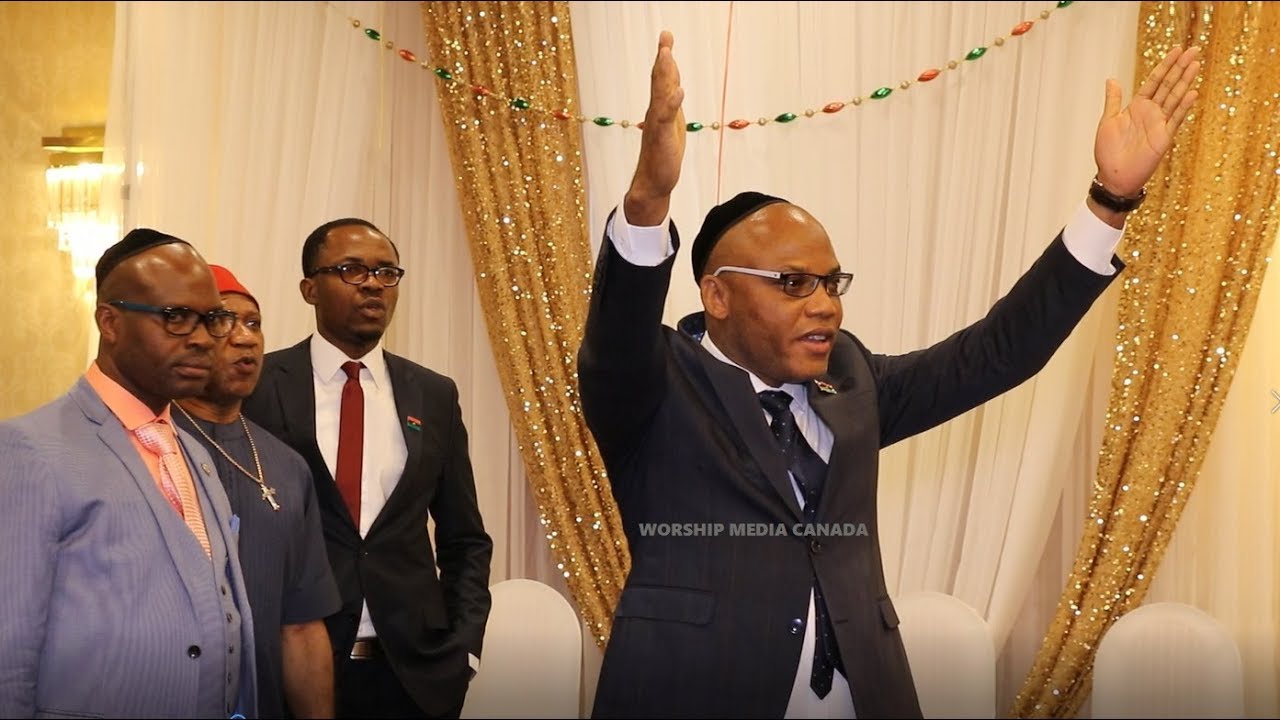
Nnamdi Kanu Begins Filing His Defence in Terrorism Trial
Nnamdi Kanu, the separatist leader of the Indigenous People of Biafra (IPOB), has finally begun the process of filing his defence in his terrorism trial at the Federal High Court in Abuja. This development comes after days of resistance from Kanu to comply with the court’s instructions to present his case.
The trial resumed on Friday following an adjournment on Wednesday. During this session, Kanu informed the court that he had an important legal process to complete, which he claimed had been obstructed. In response, Judge James Omotosho ordered the temporary relocation of the court’s registry to the courtroom to facilitate Kanu’s filings.
The lawyer representing the federal government, Adegboyega Awomolo, confirmed that he would accept the documents submitted by Kanu and proceed accordingly. At the time of the report, proceedings were paused for one hour to allow the filing to be completed.
Kanu had previously refused to open his defence, asserting that he had “no case to answer.” This stance was not new; the judge had given him a final opportunity to present his defence just days before, as part of a recurring pattern in the past month.
Since 2015, the Nigerian government has been prosecuting Kanu on seven charges, primarily related to terrorism. These charges stem from his alleged involvement in violent secessionist campaigns aimed at achieving independence for the Igbo-dominated South-eastern region of Nigeria as Biafra.
Despite the charges, Kanu has consistently denied any wrongdoing. The prosecution concluded its case in June with five witnesses. Afterward, Kanu filed a no-case submission, arguing that the evidence presented by the prosecution was insufficient to warrant a defence.
However, in September, the judge dismissed this submission, ruling that Kanu did have a case to answer and should proceed with his defence. Since then, several court sessions have been scheduled for Kanu to begin his defence. He unexpectedly withdrew his lawyers and declared that he would represent himself.
The case has been adjourned multiple times over the past month to ensure that Kanu had ample time to prepare his defence. Throughout this period, he maintained that there were no valid charges against him. Kanu argued that the charges were brought under a repealed terrorism law, which he claimed made them legally invalid.
In response to Kanu’s insistence, Judge Omotosho reminded him of the need to “keep his gun powder dry” for his defence. Kanu then stated that he needed to consult with his four legal consultants: Nnaemeka Ejiofor, Aloy Ejimakor, Maxwell Okpara, and Mandela Umegborogu. Following this, the case was adjourned to Friday.
Key Developments in the Case
- Filing Process: Kanu began filing his defence documents in the courtroom, as directed by the judge.
- Legal Consultations: Kanu plans to consult with four legal advisors before proceeding further.
- Court Adjustments: The court temporarily relocated its registry to the courtroom to accommodate Kanu’s filing.
- Previous Defences: Kanu initially refused to open his defence, claiming he had “no case to answer.”
- Judge’s Ruling: The judge dismissed Kanu’s no-case submission, stating that he had a case to answer.
- Prosecution Closure: The prosecution closed its case in June with five witnesses.
- Legal Challenges: Kanu argues that the charges against him are based on a repealed law.