
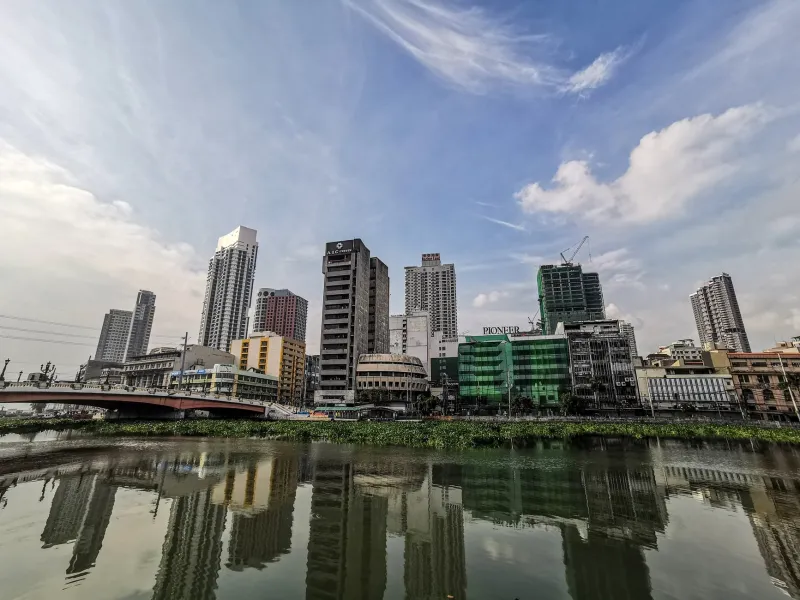
Market Dynamics in Metro Manila Office Sector
The current state of the Metro Manila office market is being shaped by a combination of economic factors and evolving tenant preferences. As tenants increasingly prioritize quality, the market is showing a clear preference for newer, high-quality buildings. This trend is evident in the recent findings from a Savills report, which highlights the resilience of demand from the BPO and technology sectors despite challenging economic conditions.
Resilient Demand Amid Economic Challenges
In Q3/2025, the Metro Manila office market demonstrated resilient demand, driven by a 5.5% GDP growth. However, structural inflation and a high-interest-rate environment have created a difficult climate for tenants. In response, many are focusing on efficiency and a “flight to quality.” This selective demand has resulted in a net take-up of 53,900 sq m, leading to a reduction in the overall vacancy rate from 20.7% to 20.4%.
The market performance was uneven across different districts. Makati CBD emerged as a leader, with a strong net take-up of 35,100 sq m, reinforcing its status as a premium area. On the other hand, the Bay Area was the only district to record a negative net take-up, indicating weaker demand in that region.
Delayed Supply and Its Impact
High-interest rates and elevated construction costs are contributing to delays in new supply. The increased capital cost is pushing back completion timelines, which is a critical factor in supporting the market’s recent stability in vacancy rates. Out of the 338,000 sq m of supply estimated for completion by Q3/2025, only 10% was finalized, with the remainder delayed for another quarter.
Looking ahead, the market is now focused on the scheduled completions for 2026 and 2027. However, a prolonged high-rate environment poses a risk of further project deferrals beyond 2027. This could lead to a potential supply shortage of new office space in the medium term.
Rental Rates and Tenant Behavior
The prevailing economic climate continues to exert downward pressure on rental rates across Metro Manila. For Q3/2025, the average prime office rental rate settled at PHP825.4 per sq m per month, reflecting a 2.6% quarterly decrease. This decline was most pronounced in the top-tier Central Business Districts of Makati and BGC, despite their sustained high demand.
The drop in rental rates indicates that landlords are becoming more willing to offer significant rent concessions, even for prime assets, to secure quality tenants and drive the positive net take-up observed.
Future Outlook and Market Segmentation
The Metro Manila office market is expected to become increasingly two-tiered in the near future. Demand from BPO and technology companies remains strong and is likely to continue, especially for newer buildings in key areas like BGC. These top locations should see their rents remain steady or rise slightly.
However, older buildings and offices outside the major business districts will still need to offer lower rents and deals to fill space. While current construction delays are helping to keep overall vacancies tight, the large number of projects scheduled for 2026 and 2027 could sharply increase the vacancy rate if tenant demand does not catch up quickly.
Conclusion
In summary, the Metro Manila office market is undergoing a transformation driven by tenant preferences, economic conditions, and construction dynamics. The focus on quality and efficiency is shaping the market landscape, with newer buildings gaining an advantage over older ones. As the market moves forward, it will be crucial to monitor how these trends evolve and impact the overall office space availability and rental rates.